Your NAAC Score Isn’t the Problem — Your Data Is

Every NAAC cycle starts with confidence.

Committees are re-formed.
Departments are instructed to submit updated information.
IQAC teams begin intense coordination across the institution.

Yet despite months of preparation, many universities exit the accreditation process with the same quiet frustration:

“We did everything right. Why didn’t the score reflect it?”

The uncomfortable truth is this:

NAAC outcomes rarely disappoint because institutions misunderstand the framework.
They disappoint because institutions overestimate the strength of their data foundation.

Until leadership recognises this gap, accreditation will continue to feel stressful, unpredictable, and disproportionately demanding—no matter how committed the teams involved.

NAAC Is Not an Event You Prepare For

One of the most persistent myths in higher education governance is that NAAC is an event.

In reality, NAAC is a mirror.

Peer teams are not evaluating how efficiently documents were assembled over a few months. They are observing whether academic intent, execution, monitoring, and outcomes align over multiple years.

Institutions that treat NAAC as a documentation exercise inevitably struggle. Those that treat it as a governance outcome experience far less disruption.

This difference becomes evident when examining why legacy campus platforms fail to provide institutional clarity, a challenge clearly explained in Why Traditional University ERPs Struggle with Institutional Visibility — and How Modern Platforms Are Architected Differently.

When systems are built for transactions rather than academic evidence, accreditation exposes the gap mercilessly.

Where Accreditation Actually Breaks Down

Accreditation does not fail during the peer visit.

It breaks down much earlier—inside daily academic and administrative workflows.

Every institution generates data continuously:

  • Teaching plans
  • Attendance records
  • Internal assessments
  • Learning outcomes
  • Student feedback
  • Action-taken reports

The problem is not data creation.
The problem is data continuity.
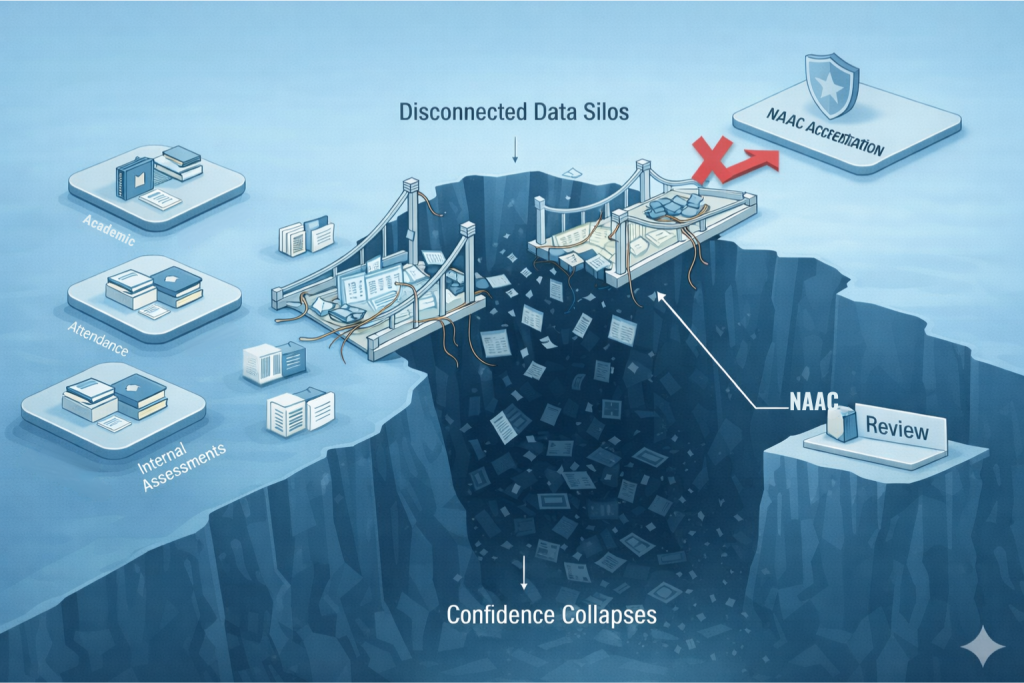
Disconnected academic data silos preventing continuity in NAAC accreditation outcomesAccreditation rarely fails during the peer visit—it breaks inside daily workflows.

When these elements live in silos, are maintained independently by departments, and reconciled manually only during accreditation cycles, confidence collapses.

This is precisely why accreditation bodies focus on institutional processes rather than isolated evidence, as outlined in How Accreditation Bodies Evaluate Higher Education Institutes for Quality Assurance.

“We Have the Data” Is the Most Dangerous Assumption

Almost every university believes it has the data NAAC requires.

Technically, this is true.

But NAAC does not assess whether data exists.
It assesses whether data is reliable, traceable, and defensible.

Reliable data means:

  • Metrics are defined consistently across departments
  • Numbers can be traced back to academic actions
  • Evidence holds across academic cycles
  • No individual “fixes” data under pressure

When IQAC teams must reconcile multiple versions of the same metric, leadership is forced to rely on trust instead of verification. At that point, accreditation outcomes become uncertain—regardless of effort.

Why Documentation-First NAAC Preparation Is Structurally Weak

The conventional NAAC preparation model follows a familiar pattern:

  1. Collect departmental data
  2. Standardise formats
  3. Resolve inconsistencies manually
  4. Draft criterion-aligned narratives
  5. Validate with leadership

This approach fails because documentation is being asked to repair fragmented data.

Documentation cannot do that.

Accreditation-ready evidence must be produced as a natural by-product of academic operations—not assembled retrospectively under pressure.

This philosophy underpins modern Digital solutions for higher education, particularly platforms designed to automate evidence continuity rather than reporting effort, as explained in A Guide on Various Aspects of Accreditation and How iCloudEMS Automates the Groundwork of Accreditation.

NAAC Is a Governance Stress Test

Viewed objectively, NAAC is not merely a compliance exercise.

It is a governance stress test.

Implicitly, it asks leadership:

  • Can you see institutional performance clearly?
  • Can decisions be defended with evidence?
  • Can improvement cycles be demonstrated over time?
  • Can data speak without reinterpretation?

These are governance capabilities, not clerical ones.

This shift in thinking explains why leadership now evaluates platforms as governance infrastructure rather than simple software tools, a perspective discussed in How University Leaders Should Evaluate an Education Management System (EMS).

The Registrar’s Invisible Risk Load

No role experiences accreditation pressure more acutely than the Registrar.

During NAAC cycles, the Registrar becomes:

  • The final checkpoint for conflicting data
  • The escalation point for unresolved inconsistencies
  • The institutional guarantor of accuracy

When systems are fragmented, every query requires manual reconciliation. Every reconciliation increases dependency on individuals and introduces institutional risk.

This is not a workload issue.
It is a system-architecture issue.

In a mature Education Management System (EMS), the Registrar validates data rather than repairing it—dramatically reducing exposure during audits.

Evidence-Assembled vs Evidence-Ready Institutions
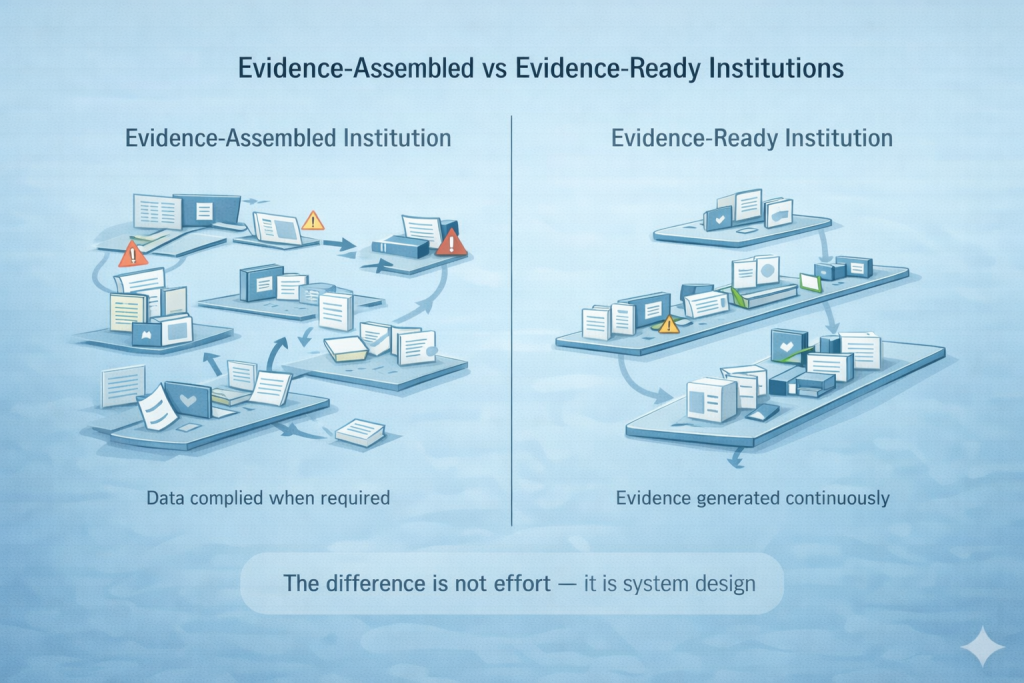
Comparison between evidence-assembled and evidence-ready institutions during NAAC accreditationThe difference between stress and confidence in NAAC cycles is system design.

After observing accreditation outcomes across institutions, a clear pattern emerges.

Evidence-Assembled Institutions

  • Data compiled only when required
  • Heavy reliance on spreadsheets
  • High dependency on individuals
  • Elevated audit stress
  • NAAC perceived as disruption

Evidence-Ready Institutions

  • Data generated continuously
  • System-validated records
  • Minimal individual dependency
  • Calm audit environments
  • NAAC perceived as confirmation

The difference is not effort or intent.

It is system design.

Why ERP Thinking No Longer Supports Accreditation

Many institutions still search for “college ERP” or “university ERP software.” This reflects historical market language, not present-day requirements.

Traditional ERP systems were designed to manage transactions—fees, payroll, inventory—not academic outcomes, assessment mapping, or accreditation intelligence.

This maturity gap is analysed in University ERP in India: Why Most Systems Never Reach Institutional Maturity.

A modern Education Management System (EMS) goes beyond ERP logic by connecting:

  • Academics to assessments
  • Assessments to outcomes
  • Outcomes to feedback
  • Feedback to action plans
  • Action plans to leadership decisions

This is the architecture NAAC implicitly evaluates.
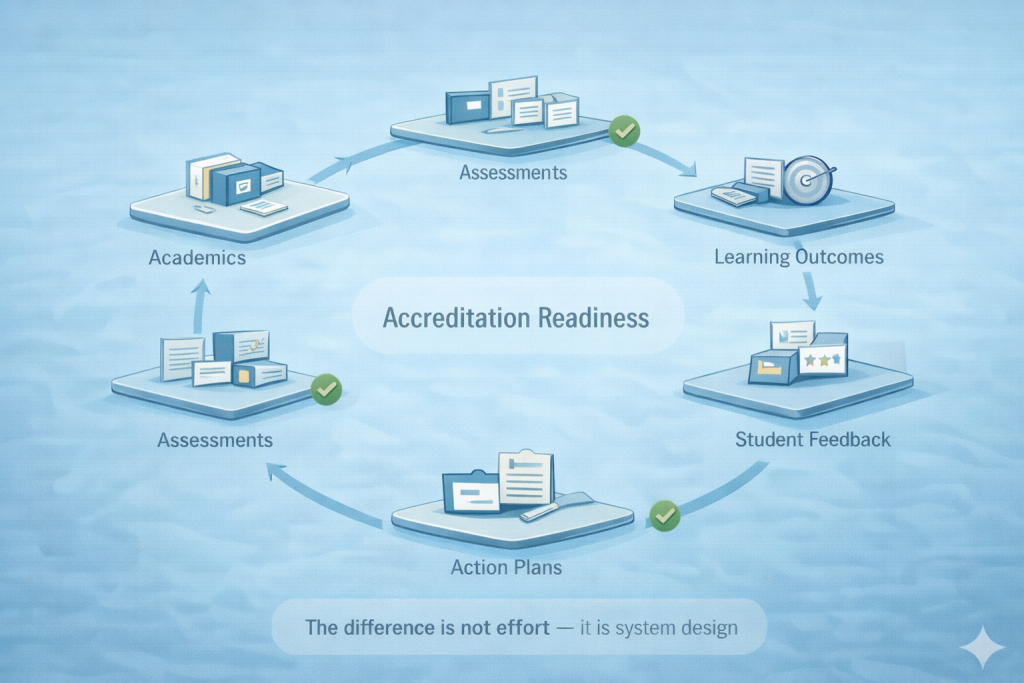
Continuous academic governance loop supporting ongoing NAAC accreditation readinessNAAC readiness is produced continuously—not assembled under pressure.

Early Awareness Changes Accreditation Outcomes

Institutions that perform confidently during NAAC cycles share one trait: they are rarely surprised.

Issues are identified early—long before they escalate into audit findings.

AI-driven early awareness systems detect:

  • Attendance anomalies
  • Academic risk patterns
  • Assessment inconsistencies
  • Compliance drift

This proactive approach is detailed in AI in Universities Is Not About Automation — It’s About Early Awareness.

Accreditation improves not because AI generates documents, but because it prevents data decay.

Where iCloudEMS Fits—Quietly but Structurally

The purpose of iCloudEMS is not to impose additional processes or cultural disruption.

It exists to:

  • Align academic workflows with outcomes
  • Maintain evidence continuity across years
  • Embed accreditation readiness into daily operations
  • Support leadership with decision-grade insights

As a cloud-native, AI-powered Education Management System (EMS), iCloudEMS strengthens governance quietly—so accreditation reflects reality, not last-minute preparation.

Why Less Anxiety Often Produces Better NAAC Scores

This is the paradox leadership often overlooks.

Institutions that worry less about NAAC tend to perform better.

Because quality is not created under pressure.
It is revealed under review.

Frequently Asked Leadership Questions

Is NAAC primarily about documentation or data systems?

Documentation matters only when backed by consistent, traceable data generated through daily academic operations.

Can spreadsheets still support accreditation?

They may work temporarily, but they increase dependency, inconsistency, and audit risk as institutions grow.

Is ERP sufficient for NAAC readiness?

Traditional ERP systems were not designed for outcome mapping, evidence continuity, or accreditation intelligence.

When should NAAC preparation actually begin?

NAAC readiness should be continuous and embedded into governance, not initiated close to assessment cycles.

Does technology alone improve NAAC scores?

No. Governance discipline supported by the right Education Management System (EMS) does.

What is leadership’s role in data governance?

Leadership must demand clarity, not just reports. Systems should support decision-making, not paperwork.

Is NAAC becoming stricter?

NAAC is becoming more data-driven. Transparency exposes inconsistencies faster than ever before.

A Final Reflection for Institutional Leaders

If NAAC feels exhausting,
the framework is not the problem.

The fragility of data truth is.

Strengthen the data foundation, and accreditation stops being a struggle—and starts becoming validation.

If you’ve experienced this challenge—or solved it differently—your perspective matters.
What has NAAC revealed about your institution’s data reality?

iCloudEMS: Revolutionizing Accreditation Management with Unified Solutions

In the ever-evolving landscape of education, effective management of accreditation processes has become essential for educational institutions worldwide. iCloudEMS has emerged as a market leader, offering end-to-end Unified Education Management Solutions that streamline and enhance the accreditation management experience. With their state-of-the-art accreditation management system and software, iCloudEMS is transforming the way institutions manage and maintain their accreditation status.

Streamlining Accreditation Processes:

iCloudEMS accreditation management system provides educational institutions with a comprehensive platform to simplify and automate the complex accreditation procedures. By integrating all aspects of the accreditation process into a unified system, institutions can easily manage tasks, documents, and communication related to accreditation, saving time and resources.

Cutting-Edge Accreditation Management Software:

iCloudEMS offers cutting-edge accreditation management software that caters to the unique needs of educational institutions. The software provides a user-friendly interface with intuitive features, enabling institutions to effortlessly navigate through the accreditation process. From data collection and analysis to generating reports and tracking progress, iCloudEMS software empowers institutions with efficient and accurate accreditation management.

Ensuring Compliance and Quality Assurance:

Accreditation management is crucial for maintaining compliance and ensuring quality assurance in education. iCloudEMS understands this importance and has developed advanced tools within their solutions to help institutions meet accreditation standards. By centralizing data and facilitating real-time collaboration, iCloudEMS solutions enable institutions to identify gaps, address areas of improvement, and maintain continuous compliance with accreditation requirements.

Enhanced Collaboration and Communication:

Effective collaboration and communication are vital in accreditation management. iCloudEMS unified solutions foster seamless collaboration among stakeholders, including faculty, administrators, and accreditation bodies. The system enables efficient document sharing, feedback exchange, and progress tracking, promoting transparency and accountability throughout the accreditation process.

Customizable and Scalable Solutions:

Recognizing the diverse needs of educational institutions, iCloudEMS offers customizable and scalable solutions. Whether it’s a small school or a large university, iCloudEMS solutions can be tailored to fit the unique requirements of any institution. Their flexible architecture allows for easy integration with existing systems and the ability to adapt to future accreditation changes.

Conclusion:

In the rapidly evolving educational landscape, iCloudEMS stands out as a market leader, providing end-to-end Unified Education Management Solutions that revolutionize accreditation management. With their state-of-the-art accreditation management system and software, iCloudEMS empowers institutions to streamline processes, ensure compliance, enhance collaboration, and maintain quality assurance. By choosing iCloudEMS, educational institutions can embrace a seamless and efficient accreditation journey, making them well-equipped to meet the challenges of the modern education industry.

How our Accreditation Management System can assure and enhance the Quality of Higher Education

In today’s fast-paced world, Higher Education Institutes (HEIs) are preparing graduates to make meaningful contributions to society via their research and creative endeavors. Continuous quality improvement has become crucial to ensure that the educational institution achieves the learning outcomes and that the education meets the minimum standards. 

Quality assurance and Quality improvement both are necessary for HEIs to build the overall character of graduates. HEIs are always required to ensure that they maintain an acceptable quality standard and keep devising the processes to find the gaps and work on the same with the help of regular internal as well as external reviews. 

Accreditation is a quality stamp of approval showing that an institute, program, or course has been evaluated and found to be of sufficient quality. The thorough procedures for accreditation involve gathering and arranging data over a period of years and producing multi-level self-analysis reports to iteratively compare standards. We at iCloudEMS help HEIs to leverage our cutting-edge products and services in aligning their administrative and non-administrative workflow for the best educational management. 

HEIs encounter numerous obstacles along the way to accreditation, including repetitious data collection, formatting, data privacy, and the creation of self-assessment and evaluation reports. When the entire data and reports are consolidated over multiple years, the complexity of these processes increases.

iCloudEMS offers a cloud-based Accreditation Management System to generate, gather, organize, and manage all necessary data and reports in the specified forms provided by regulatory authorities like the NAAC, NBA, etc. with the following special features:

  • Accreditation bodies demand the evaluation of data and report over a couple of years. Manual organization of such huge databases is time-consuming and error-prone. But we promise to simplify the problem with our cloud-based solution that enables data administration and formatting that complies with rules.
  • Accreditation starts with the compilation of self-assessment and self-analysis reports. We save your important time and effort and get your all-important reports ready with a couple of clicks only.
  • Before a peer team’s visit, data must be uploaded to accreditation portals; our special features make this process simpler, including the option to utilize prefilled data on the portal throughout the multi-year data collecting process.
  • Data is required to be entered as answers to pre-set questions based on specified parameters, and the pre-defined questionnaires are in compliance with various standards of accrediting agencies. We provide digital assistance to make it simpler and only need to submit data and outcomes.
  • We support faculty members by automating the creation of the primary self-assessment reports as well as different supplemental reports during accreditation examinations and qualification analyses.
  • Using chronologically organized data compilation and management, our experienced database verification team explores the standards and criteria to be verified.
  •  Institutes may quickly analyze the benchmarking criteria and get a quick read on the current situation using our tiered assessment technique.
  • Our user-friendly solution helps to govern bodies perform an accurate and thorough audit of well-organized data and reports with only a few clicks.

We aid in streamlining the accreditation process of HEIs and ensure all the standard quality standards are compiled and evaluated correctly in line with the norms of regulatory bodies. We are always ready to join hands with HEIs and enhance their digital competence such that the best quality education practices can be adapted at par with the standards of governing bodies.

How workflow automation system helps in comprehensive management of Higher Education Institutes

In the last few decades, India’s education sector has seen a massive increase in the number of schools, colleges, universities, and private institutions. Admissions, teaching, timetables, fee management, examinations, and other educational duties have become complex, and policies and functions connected to them are often updated. 

However, in today’s fast-paced world, manually managing of administrative activities is difficult and lead to following challenges:

  • Missed or Duplicate information 
  • Compiling and Formatting errors of information 
  • Wastage of physical resources
  • Constraints in Communication and Networking

Latest technologies such as artificial intelligence, machine learning and internet of things etc. promote the automation that offer numerous benefits to Higher Education Institutes including:

  • Cloud-based data storage and retrieval to maintain data backup and privacy.
  • Smart administration and management for effective utilization of resources. 
  • Web analytics tools to track and measure students’ learning and performance. 
  • Digital tools for faculty to enhance their course curriculum and customized teaching.
  • Advanced learning and research across borders which empower globalization.

iCloudEMS has been a market-leader in today’s technology-driven education sector, extending digital capabilities of colleges and universities throughout India. Our cutting-edge products and services are built with the most up-to-date technologies, ensuring that they are extremely reliable, secure, optimised, and user-friendly. We provide a comprehensive Education Management System for any educational organisation, and we have also successfully produced individual modules based on requirements. Our unequalled support system ensures great dependability and confidence, allowing any educational organisation to attain its learning goals with its full potential by eliminating manual errors and cutting costs of resources.

Following are our important products and services that provides cloud-based unified solution to various Colleges and Universities:

Personalized Learning Management System: It provides students and professors with a collaborative digital platform to create a creative learning environment that bridges knowledge gaps and aids in the institute’s constructive learning aims. Our OBE-based LMS enhances the learning environment under the framework of OBE and Bloom’s taxonomy to promote the holistic development of students.

Online LIVE Classes and Examination Management System: It is an advanced solution that helps the stakeholders to effortlessly conduct and manage virtual classroom and examination settings keeping integrity as priority. We mobilise the utilisation of digital platforms and cutting-edge learning initiatives such as national MOOC courses, DIKSHA, and SWAYAM to support global education sustainability.

Student Lifecycle Management System: iCloudEMS assists Colleges and Universities in accessing and processing a profusion of students’ information with a few clicks, anytime and anywhere. It provides a technologically advanced ecosystem for administration and students to streamline student recruitment and management, freeing up time and resources to focus on more innovative goals.

Accreditation Management System: iCloudEMS is a well-managed digital environment that automates and simplifies time-consuming and repetitive accreditation operations. We propose a cloud-based approach to automate the groundwork of Accreditation operations such as generate, collect, organize and administer the cumulative data and reports in the standard formats of regulatory bodies such NAAC, NBA, ABET, NIRF etc.

Managed Services for Colleges and Universities: We offer managed services to Colleges ERP & Universities ERP and automate various academic and non-academic procedures. Our specialized modules streamline the workflow governed by important operations including Pre-admission, admission, fee payment, attendance, assignment, examination, library administration, accreditation management in a comprehensible and paperless manner.

iCloudEMS has played a huge and pivotal part in automating the workflow of higher education. The main benefits of our innovative venture include the digital transformation of universities and colleges, which leads to improved quality education, personalised learning, blended classroom experience, learner-centric classroom, and increased industry collaboration, as well as generating new revenue streams and increasing productivity for all stakeholders – students, faculty, management, accreditation bodies, alumni, and industry experts.

How Accreditation stimulates and appreciates the Quality and Excellence in Higher Education

In today’s globalised world, quality higher education is required to foster creativity, talent, innovation and research attitude in youth but under present dynamic situations, it is critical to guarantee that the educational institute accomplishes the learning outcomes and education meets the minimum criteria. Accreditation, a significant quality assurance instrument, is used to evaluate the national higher education system. Accreditation is regarded as a quality seal that certifies that an accredited institute or programme meets certain criteria. It serves two major purposes: quality assurance and quality improvement. Quality assurance is the process of determining a minimum acceptable standard of quality and performance in the public interest. Quality improvement is the process of providing a service that is designed to improve institutions and programmes through an external review process.

Quality and Excellence in Higher Education

Various people have different perspectives on quality. Nonetheless, everyone understands what “quality” means. The degree of satisfaction expressed by the consumer receiving the service can be used to rate the service’s quality. The definition of quality in the dictionary is “the degree of excellence.” It indicates that a product, organisation, or institution must have some key criteria, qualities, or distinguishing factor that provides satisfaction to the people who use the service. It has to do with people’s feelings of satisfaction and perceptions.

In different contexts, excellence in higher education can mean different things. It can be characterised as demonstrating an institution’s position and academic reputation from the standpoint of students. This, however, is contingent on the experiences of students and the purposes of the institutions. Accreditors have frequently used the phrase “excellence.” to determine the level of quality processes and services provided by institutions in order to ensure the satisfaction of stakeholders. Many accrediting authorities have described quality and excellence as a measurable parameter that include a mix of skills, knowledge, experience. as well as continuous improvement in outputs.

Need of Accreditation in Higher Education

Several events have occurred recently that have altered the perception of quality assurance standards in higher education. These include:

Growth and Development of Higher Education

The broadening of the foundations of elementary and secondary education has emerged from national initiatives to ensure education for all. As a result, demand for and availability of higher education has risen dramatically in recent decades. The fact that higher education is a visible component of society and contributes to national growth and well-being is now universally acknowledged by governments all over the world. Many institutions had to examine and vary not only their course offerings, but also many areas of their internal reorganisation and teaching-learning process as a result of the increased amount of activity and diversity of their student body. To ensure institutional responsibility to funding agencies and other stakeholders, the extent to which relevant institutional efforts adequately respond to changing societal and economic requirements must be examined.

Influence of Technology

Changes in study requirements, teaching and learning arrangements, and areas such as research organisation and university administrative practise have all been influenced by major advancements in information technology. There is a greater emphasis on multi-media tactics for boosting teaching and learning, which necessitates a rethinking of traditional quality assurance structures.

Alternative sources for Higher Education

The introduction of non-traditional higher education providers, such as open and virtual universities, private schools’ growth, multi-campus institutions’ growth, and franchising, has fractured the higher education market. As a result, quality assurance techniques that have shown to be effective for a system of essentially national, government-funded self-accrediting traditional and distant education institutions must be revisited.

Competitiveness on the global avenue

Most higher education institutions have proven to be quite effective and entrepreneurial in attracting students from both within and outside of their own country. Because there is a clear policy encouraging Indian students to pursue higher education overseas, it has become a significant contributor to India’s external accounts through fees paid by international students and the selling and promotion of services. Many other countries’ universities are likewise interested in enrolling students and delivering services. In a way, educational services are both imported and exported. India today finds itself in an international setting where the quality of tertiary education and research will determine its success.

Keeping all such parameters in consideration, it is believed that India would benefit from establishing a national system of external certification. The policies, attitudes, behaviours, and procedures required to ensure that quality is maintained and improved are referred to as Quality assurance. Accreditation is the process of determining whether or not a certain institution is eligible for a qualifying certificate. The status may have repercussions for the institution (e.g., permission to operate), its students (e.g., grant eligibility), and/or its graduates (e.g., qualifications for specific jobs).

Current Quality Assurance Practices in Higher Education

For the establishment and operationalization of higher education institutions, government organisations such as the University Grants Commission (UGC) and the All-India Council for Technical Education (AICTE) have developed regulations and recommendations. These bodies’ information can be utilised to make quality improvement and assurance decisions based on the data they collect and analyse. The credentials framework outlines the types of awards available in higher education, and apex authorities keep track of recognised programmes and providers.

Universities have internal mechanisms for evaluating new course ideas and promoting staff development, and most have established relationships with other universities to support staff exchanges, research collaboration, and course delivery benchmarking. A variety of mechanisms are in place for assessing and improving teaching, as well as reporting and scrutinising staff publishing and research records. The majority of promotion criteria centre on teaching excellence, research engagement, and community service initiatives.

For a variety of reasons, it has been standard practise to have external assessors conduct programme reviews in order to evaluate the quality of academic activities with that of other leading universities. External reviewers developed a quality assurance mechanism that relies on one or a combination of methodologies, the most important of which are self-studies or self-evaluation, peer review by expert panels, use of relevant statistical information and performance indicators, and service to key groups such as students, graduates, and employers.

Role of iCloudEMS to ensure quality and evaluating arrangements for the effective implementation of strategies for accomplishing specified goals in Higher Education Institutes.

With our innovative products and services, we at iCloudEMS are continually assisting Higher Education Institutes in improving their quality standards. Our Accreditation management system is a cloud-based programme with SIS and other modules that is designed for all sorts of technical and nontechnical Higher Education Institutes and delivers results in compliance with the Washington Accord, LIMA Accord, and Bologna Process.

• Accreditation bodies often demand and analyse data over a couple of years, but manually organizing and formatting such a vast volume of data is a time-consuming operation prone to redundancy and missing data. Our cloud-based technology makes data management and rule-compliant formatting a breeze.

• Accreditation journey starts with self-analysis reports formation only. Our system can generate a range of self-assessment and analysis reports for your institution, such as SER/SAR/AQAR/IQAC/AACSB, with just a few clicks.

• Uploading data to accreditation portals is a pre-requisite prior to a peer team’s visit; our unique features make this process easier, including the possibility to use prefilled data on the portal during the multi-year data collection process.

• There are pre-defined questionnaires in line with different criteria of accreditation bodies, and the answers are requested to be entered through responses to such pre-set questions based on certain parameters. We digitally support in making data and results uploading easier and in the required manner only.

• Self-evaluation is a crucial part of the accrediting process, and reports are more effective than words at communicating findings. Throughout accreditation assessments and qualification analysis, we assist faculty members by automating the preparation of the main self-assessment reports, as well as various supplementary reports.

• Our expert database verification team investigates the standards and criteria to be certified by compiling and managing data in chronological order.

• Using our tiered evaluation approach, institutes can swiftly analyse the benchmarking standards and obtain a fast reckoner on the current situation.

• With only a few clicks, our user-friendly system assists governing bodies in conducting a fair and complete audit of well-organized data and reports.

It can be stated that iCloudEMS provides a well-managed digital environment for automating and simplifying the time-consuming and repetitive accrediting processes. For quality monitoring and improvement, our complete Accreditation management system allows for an error-free mapping of learning outcomes with the institute’s objective and vision. In today’s competitive environment, it’s more important than ever for Higher Education Institutes to invest in a digital partner like iCloudEMS that can align workflow with the institute’s strategic plans to assure quality assurance and improvement on a regular basis.

Role of iCloudEMS in Enhancing efficiency of Higher Education Institutes in the Era of Digitalization of Higher Education: A Glance

Digitalization of Higher Education: A Brief Overview

In the last two decades, particularly at the turn of the twentieth century, the advancement in science and technology transformed higher education. The Education Technology (ET) with the help of Information and Communication technology (ICT) democratized higher education, consequently it brought learners to the global platform where they can exchange their knowledge. Considering the advancement of science and technology, the governments of the different countries have access to higher education, regardless of their gender, ethnicity, or social, geographic, or economic background. They emphasize that education should facilitate good access to labor and skills across the country. Lifelong learning is important in order to help not only individuals but also society and the labor market at large to adapt and innovate in the different domains of human knowledge. However, the process of digitization opens avenues for access to education and for cooperation. Further, new, innovative, and varied forms of teaching and learning are being used in regular campus-based courses by combining analogue and digital media (blended learning), and new models are being provided for purely online-based learning processes.

The process of the digitalization of higher education is recognized as an efficient, diverse, and robust sector in almost every country in the world. It has become a tool for making fundamental changes to the processes, content, and forms of work that can present higher education in a better position to achieve the goals of education and research including high quality and relevance, and access to education for all. In this connection, Open Educational Resources (OERs) are the best examples which can be accessed anytime, and anywhere. OERs can be reused, revised, retained, remixed, and redistributed. 

The primary goals for digitalization of higher education and ICT in the higher education may be identified as:

  • High quality in education and research
  • Research and education for welfare, value creation, and adaptation
  • Good access to education
  • An efficient, diverse, and robust higher education sector and research system

However, in order to meet the above goals, the process of digitization of higher education, and ICT in the higher education must support the following goals:

  • Course Instructors have high levels of digital and pedagogical skills (knowledge of how to use digital tools to promote learning in their subjects). 
  • Course Instructors can exercise their choice for a wide range of applications and digital tools and services that support the implementation of education, from planning, through teaching itself and interaction with students/stakeholders both internally and externally, to take a follow up and evaluation of students at individual and group levels.
  • Teachers can be encouraged to focus on the development of higher education-oriented activities by collecting documented results in the field of education.

Significance and Advantages Roles of Integrating iCloudEMS in Digital Higher Education

The iCloudEMS facilitates digital learning in higher education. The different significant functions of iCloudEMS have enriched the teaching-learning environment in the students-centric classrooms of the twenty-first century. It not only helps the course instructors and learners to maintain learning processes or make learning happen smoothly, but it also diminishes the distance between the teacher and the teacher, by supporting and connecting both digitally.  In recent years, iCloudEMS has played a significant and key role in the digitalization of higher education. The major advantages of this software include— transforming universities and colleges by helping them become digital, which leads to enhanced quality education, personalized learning, blended classroom experience, learner-centric classroom and higher industry collaboration, driving newer revenue streams and increasing productivity of all stakeholders – Students, Faculty, Management, Accreditation bodies, Alumni and Industry experts.

The software, iCloudEMS governs digital space to automate and simplify the tiresome and redundant activities of accreditation. The comprehensive Accreditation Management System of iCloudEMS enables an error-free mapping of learning outcomes which further aligns with vision and mission of an institution. It enables faculty members to be more creative and channelize their efforts in a more productive way as we are here to take care in aligning their workflow in compliance with the visionary requisites and guidelines. Consequently, the enhanced efficiency of the institute deliberates on the quality monitoring and improvement.
In the 21st century, marked as an era of competitive environment, it is essential for Higher Education Institutes to invest in a digital partner like iCloudEMS that can align the workflow with the visionary strategies of the institute to ensure quality assurance and enrichment of efficiency of its employees, staff, learners etc.

  • iCloudEMS has a dashboard entry of students’ databases with all their necessary personal and academic details at the admission stage that can be easily fetched any time for maintaining and updating records.
  • Manages services to the ERP of Higher Education System to automate and simplify the administrative and non-administrative tasks of Colleges and Universities.
  • iCloudEMS has an automatic timetable generation system to prepare multiple types of timetables i.e., class wise, room wise, faculty wise without any clashes and redundancy.
  • Personalized learning management system to create an online repository of lecture notes and facilitates other study material that can be easily downloaded for documentation of course files.
  • The Online Examination system of iCloudEMS fosters examination process and makes the evaluation procedure easier. It reports in the OBE paradigm including all imperative COs-Pos, mapping analytical reports to gauge the abilities of students and empower continuous quality improvement.
  • Semester-wise mapping and evaluation of students’ performance against PO parameters.
  • Incorporate direct/indirect assessment tools to measure the attainment of each PO.
  • More focus is on rote learning than the achievement of 21st century competencies.
  • Map COs with POs appropriate to the levels of Bloom’s Taxonomy
  • Develops appropriate ICT based and learner-oriented Pedagogy Framework Tools to enhance efficiency of course instructors to design, develop, monitor and review curricula based on the stakeholder’s /Industry / Expert feedback.
  • Includes references to appropriate learning material for all the defined outcomes, and integrates case study, unsolved problems, and resources in the respective outcomes.

A guide on various aspects of Accreditation and how iCloudEMS automates the groundwork of Accreditation for Higher Education Institutes

India has the largest pool of Universities and Colleges to offer Higher Education but with the increase in the number of Higher Education Institutes, the responsibility also gets increased to maintain quality and standards in education. Globalization has removed the boundaries of learning and innovation; thus, exceptional strategies and efforts are necessary to integrate the Indian education system with world-class regulations such as to explore its true potential. The 21st century education system demands improvement in many horizons of our education system including trained staff, infrastructure, facilities, curriculum, assessment that can develop youth with the competencies such as critical thinking, communication skills, research, problem solving skills etc. Our government has brought many meticulous reforms for the development of a globally competitive Higher Education System and encouraged us to make India, the preferred global destination for higher studies. 

Accreditation and its need: The modern education system is more focussed on the holistic development of students that can inculcate professional and technological skills to make them capable of entering in the challenging world. The quality of education standards is required to be raised or maintained continuously to meet the academic demands of the 21st century. Accreditation is a self-raised process of an educational program or institution that involves a systematic mechanism to ascertain that they meet strict quality operational standards. 

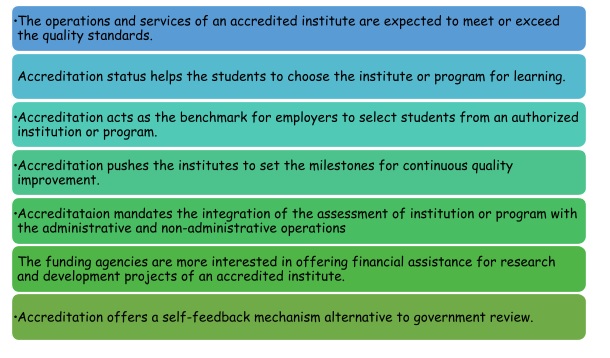
While enrolling for a program in an institute, accreditation is the important aspect to look for the reliability of a degree program or institute to check, whether or not the services meet or exceeds minimum quality standards that becomes helpful to student for choosing recognized institution or program.

Some Important Accreditation Bodies Include:

  • UGC (University Grants Commission)
  • AICTE (All India Council for Technical Education
  •  AIU (Association of Indian Universities)
  •  NAAC (National Assessment and Accreditation Council)
  •  NBA (National Board of Accreditation)
  • NIRF (National Institutional Ranking Framework)
  • AIMA (All India Management Association) 
  • DCI (Dental Council of India)
  •  DEC (Distance Education Council)
  • MCI (Medical Council of India)
  •  NCTE (National Council for Teacher Education)
  • PCI (Pharmacy Council of India)
  • VCI (Veterinary Council of India)
  • NCHRH (National Council for Human Resource in Health)

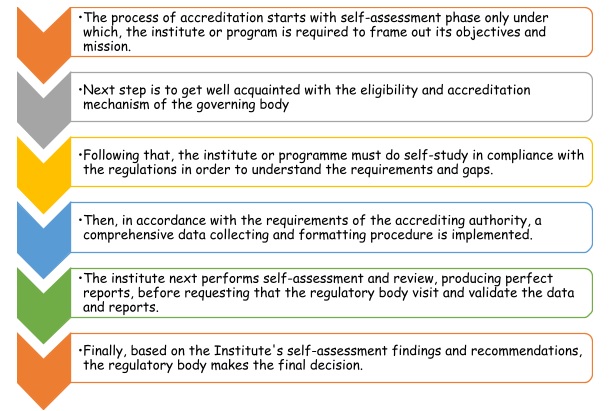
The Process of Accreditation is more or less the same for all accreditation bodies. Generally, the whole process includes following phases from registration to results:

Importance of Accreditation: Accreditation plays a significant role due to following reasons:

With reference to the above context, one can easily observe the potential of accredited institutes to ensure accountability in the institutes among students and families for their upskilling and advance learning. To achieve the best place in accreditation, institutes are required to undergo rigorous processes for data and reports compilation. We at iCloudEMS are always assisting Higher Education Institutes in upgrading their quality standards with our ingenious products and services. Our accreditation management system is a cloud-based software
which includes SIS and other modules, and is designed for all types of technical and nontechnical Higher Education Institutes, delivering results in accordance with the Washington Accord, LIMA Accord, and Bologna Process.

  • Accreditation bodies typically require an analyse data span of several years, but manually organising and formatting such a large amount of data is a laborious process that is prone to redundancy and missing data. Our cloud-based system makes data administration and formatting compliant with rules much easier.
  • With only a few clicks, our system can generate a variety of self-assessment and analysis reports, such as SER/SAR/AQAR/IQAC/AACSB, that are necessary for your institution.
  • Today, it is essential to upload data to accreditation portals prior to the visit of a peer team; our unique functions make this process easier, including the ability to use prefilled data on the portal during the multiple-year data collection process.
  • The information is primarily requested to be entered via responses to a few predetermined questions with respect to different criteria. Our system facilitates the data and results uploading in the same approach.
  • Examining one’s own abilities is an important step in the accreditation process, and reports communicate results more effectively than words. We help faculty members by automating the generation of the main self-assessment report, as well as various supporting reports, during accreditation assessments and qualification analysis.
  • Through the compilation and management of data in chronological order, our skilled database verification team examines the standards and criteria to be confirmed.
  • Institutes can quickly examine the benchmarking standards and acquire a ready reckoner on the present state using our tiered evaluation procedure.
  • Our user-friendly system helps the governing bodies in fair and thorough audit of well-organized data and reports with a couple of clicks only.

It can be concluded that iCloudEMS offers well governed digital space to automate and simplify the tedious and repetitive activities of accreditation. Our comprehensive Accreditation management system enables an error-free mapping of learning outcomes with the institute’s mission and vision, for quality monitoring and improvement. Today in the competitive era, it is the best time for Higher Education Institutes to invest in a digital partner like iCloudEMS that can align the workflow with the visionary strategies of the institute to ensure quality assurance and improvement on a regular basis.

How iCloudEMS eases the journey of Accreditation for Higher Education Institutes

Today the quality education is the benchmark of Higher Education Institutes to build their trust in the society, nation and the world.  To up-skill the youth according to today’s demand of employability and Higher Studies, the number of professional programmes is increasing at a high rate. Thus, the Quality Assurance has become imperative for the Higher Education programmes to prepare a knowledgeable and skilled workforce. Accreditation is a quality monitoring measure to check how well the Institutes or Programmes are able to stand on the pre-defined parameters by the governing bodies. New Education Policy recommends the holistic development of students to foster 21st century education competencies, which are more focused on the development of critical thinking, communication skills, research, problem solving skills etc.

Accreditation is a series of rigorous procedures that ensure social, technological and industrial development in the students. In 1994 University Grants Commission (UGC) and All India Council for Technical Education established autonomous bodies named National Assessment and Accreditation Council (NAAC) and The National Board of Accreditation (NBA) to evaluate the all-round quality parameters of Higher Education Institutes. Accreditation impetuses the Higher Education Institutes towards continuous quality development.  The exhaustive measures of Accreditation include organizing and compiling the data of several years with generation of multi-level self-analysis reports to iteratively benchmark the standards. NEP has emphasised the extensive use of technology in teaching and learning practices and for efficient educational planning and management. This has promoted the Institutes to leverage the reliable Edu techs in aligning their administrative and non-administrative workflow standards compliance with the external audit or regulatory bodies

iCloudEMS was founded in 2017 on the notion that “We honour Great Education and Great Educationists”. We offer various cutting-edge cloud-based products to give the unified Education Management Solutions. Our Accreditation Management System assists the institutes and the associated staff to smoothen their workflow towards achieving the best position in accreditation endeavours. 

Our key utilities include:

  • We offer a comprehensive accreditation information system comprising SIS and other different modules which is designed for every kind of technical and non-technical Higher Education Institutes and that delivers results compliance with Washington accord, LIMA accord and Bologna process.
  • Our system supports powerful reporting tools to generate numerous self-assessment and analysis reports such as SER/SAR/AQAR/IQAC/ AACSB required for your institution with a couple of clicks only 
  • We deliver the services for errorless mapping the learning outcomes with the mission and vision of the institute that ensures to follow continuous quality monitoring and enhancement mechanisms. 
  • We present a digital space to easily review accreditation phases and determine the plans and strategies to align the pre-set goals of the institute. It validates the right Implementation of OBE and consistent feedback practice for regular quality check and upgradation. 

Benefits of our Accreditation Management System to Higher Education Institutes.
Our Accreditation Management system offers the following advantages to Higher Education Institutes:

  • Accreditation bodies generally demand and evaluate data of several years, but organizing and formatting such a huge data manually is a herculean task and is also vulnerable to redundancy and missed information. Our cloud-based system simplifies the data management and formatting in line with the regulations.
  • Today it has become necessary to upload the data on Accreditation portals before the visit of the peer team, our innovative functionalities facilitate the bulk data uploading process that also includes the facility to use the prefilled data on the portal during the process of the multiple years data collection.
  • The data is mainly asked to be filled as the answers of a few predefined Questions, following the same guidelines we help the administration to fill their data according to the Answers of Questions in different evaluation criteria.
  • Examining its own abilities is an important step in Accreditation process, and reports mention results better than words. We assist faculty members by automating the generation of main self-assessment reports along with different supporting reports in the course of accreditation assessments and qualification analysis. 
  • Our expert database verification team performs close analysis of the standards and the criteria to be validated upon through the compilation and management of data in chronological order.
  • Our quick and flawless results alleviate the DVV clarification by governing bodies.
  • We have a multilevel evaluation process with the help of which, Institutes can rapidly check the benchmarking standards and get a ready reckoner on the current status.

In today’s competitive world, Quality assurance of Higher Education Institutes or Programmes is necessary to prepare educated and skilled young minds who can contribute towards global progress. Thus, quality enhancement at all levels is the focus of the modern Higher Education system. Accreditation bodies such as NAAC, NBA, ABET, AACB help the institute to benchmark their standards and motivate them towards Continuous Quality Improvement. All these bodies have established their quality parameters, and the Institutes willing to get accredited are required to follow their guidelines and series of steps on which these can be evaluated for quality maintenance and improvement. iCloudEMS strengthens the Higher Education Institutes by digitizing the groundwork of accreditation and aligns myriad preparatory activities in compliance with the regulatory bodies to assure the flow of quality in the successful journey of accreditation.

How accreditation bodies evaluate Higher Education Institutes for Quality assurance

Accreditation is a rigorous process under which Higher Education Institutes (HEIs) are evaluated if they meet pre-established standards of governing bodies. Ministry of Human Resource Development (MHRD) and the University Grans Commission (UGC) have taken many initiatives time to time for the assessment of quality standards of HEIs. Subsequently, the National Policy on Education (1986) and Programme of Action (1992) recommended to establish an autonomous Accreditation and Assessment body for the maintenance and promotion of standards of Higher Education. In 1994 University Grants Commission (UGC) established an autonomous institution named National Assessment and Accreditation Council (NAAC) to evaluate and promote the quality in Higher Education. NAAC strives hard to undertake plans and activities for the accomplishment of its vision and mission to make quality, an Integrated element of Higher Education in India with major concern on prepare youth with high values and global competencies who can contribute to national and global development.

Benefits of Accreditation: Following are the important benefits of getting accredited:

  • Accreditation pushes the Institution towards its SWOT analysis and its improvement.
  • Accreditation builds the trust and accountability of Institutes among students, parents and society on quality education offered.
  • Funding agencies are more interested to invest their financial resources in the progress of accredited institutes,
  • Accreditation directs the Institutes for Continuous Quality Improvement.

Process of NAAC accreditation

The NAAC follows a combination of self and external quality measures for promotion and sustenance of quality parameters that include:

  • First the HEIs willing for accreditation get themselves registered on the NAAC website
  • Then Institutes are required to prepare and submit Institutional Information for Quality Assessment (IIQA) first and Self Study Report (SSR) on acceptance of IIQA
  • Next step is to proceed to Student Satisfaction Survey (SSS) and Data Validation & Verification (DVV) process for thecalculation of Pre-qualifier Score
  • Once all the reports and scores are there with NAAC then an on-site visit of peer team is done following the grading of Institute is declared.

Criteria for assessment:
Following seven criteria are considered as the basis of assessment procedures:

Curricular Aspects: NAAC Criterion I is all about the evaluation of curriculum features of Higher Education Institutes that comprise the planning, designing and implementation of curriculum of various programme and courses of HEIs. The Curricular Aspects are the backbone of Higher Education System. Though, the curriculum practices are different according to the academic and administrative levels of Institute i.e., whether the task has been performed by university, affiliated institute or autonomous institute. The key concern for evaluation deals with the assessment of curriculum enrichment of various programme and courses to check its relevant of national and global needs in terms of multi-skill development and academic flexibility. Curriculum updating is also judged by assessing the involvement of feedback procedures and stakeholders’ participation

Criterion I is assessed in the following Key areas:

  • Curriculum design and development,
  • Curriculum planning and implementation,
  • Academic flexibility,
  • Curriculum enrichment,
  • Feedback system.

Teaching-learning & Evaluation: NAAC Criterion II is to gauge the efforts made by institution towards catering the needs of students belonging to different backgrounds, with its effective teaching-learning practices. The innovative teaching skills that promote students’ engagement with the help of interviews, focused group discussions, debates, projects, presentations, experiments and applications of technology resources are reviewed. As the teaching-learning are key concern hence the proficiency of faculty is analysed with the institutional efforts for their continuous faculty development.

Criterion II is assessed in the following Key areas:

  • Student Enrolment and Profile
  • Catering to Student Diversity
  • Teaching-Learning Process
  • Teacher Profile and Quality
  • Evaluation Process and Reforms
  • Student Performance and Learning Outcomes
  • Student Satisfaction Survey

Research Consultancy and Extension: NAAC Criterion III pertains the information collected on the policies, practices and outcomes of the institution, with reference to research, innovations and extension. It is concerned with the fostering of research culture by undertaking research projects useful to the society and efforts made by institution for the same.

Criterion III is assessed in the following Key areas:

  • Promotion of Research and Facilities
  • Resource Mobilization for Research
  • Innovation Ecosystem
  • Research Publications and Awards
  • Consultancy
  • Extension Activities

Infrastructure and Learning resources: NAAC Criterion IV focusses on the resources available in an Institution and how are these deployed for quality sustenance in the academic programmes. I also seek information on the benefits students, teachers and other staff using these available facilities in the campus. Criterion IV is assessed in the following Key areas:

  • Physical Facilities
  • Library as a Learning Resource
  • IT Infrastructure
  • Maintenance of Campus Infrastructure

Student Support and Progression: NAAC Criterion V reviews the efforts made by an institution towards the holistic development of students to make them well capable to enter into the challenging world.  either to pursue Higher Education or to get rewarding profession after they leave the campus.

Criterion V is assessed in the following Key areas:

  • Student Support
  • Student Progression
  • Student Participation and Activities
  • Alumni Engagement

Governance Leadership and Engagement: NAAC Criterion VI pertains the operational policies and practices in the institution with respect to recruitment, training, performance appraisal of human resources and the effective financial management and overall leadership role.

Criterion VI is assessed in the following Key areas:

  • Institutional Vision and Leadership
  • Strategy Development and Deployment
  • Faculty Empowerment Strategies
  • Financial Management and Resource Mobilization
  • Internal Quality Assurance System (IQAS)

Institutional Values and Best Practices: NAAC Criterion VII An educational institute has its social responsibility to be solution giver for the emerging national and global challenges with its variety of programmes. Every institute is expected to implement unique practices towards the major domains such as gender equity, environmental consciousness and sustainability, inclusiveness and professional ethics. These academic and administrative practices to be impactful in these pressing issues are considered as best practices of the institute and these unique ways are reviewed during the accreditation process for the evaluation.

Criterion VII is assessed in the following Key areas:

  • Institutional Values and Social Responsibilities
  • Best Practices
  • Institutional Distinctiveness

Following table represents the weightage given to the various Criteria.

Source: NAAC Website

(U) – applicable only for Universities and Autonomous Colleges (A) – applicable only forthe Affiliated / Constituent Colleges

Grading System of NAAC Accreditation:

CGPA Letter Grade Status
3.51- 4.00 A++ Accredited
3.26-3.50 A+ Accredited
3.01-3.25 A Accredited
2.76-3.00 B++ Accredited
2.51-2.75 B+ Accredited
2.01-2.50 B Accredited
1.51 – 2.00 C Accredited
≤ 1.50 D Not Accredited

                     Source: NAAC Grading

“A grade qualifier is kept for the institution on qualify for valid accreditation. In order to qualify for any Grade (C to A++) Institution needs to score at least 1.51 CGPA aggregated score (quantitative and qualitative) in each criterion”.  [from NAAC grading system].  Once the grade qualifier is finalized, accordingly the Cumulative Grade Point Average (CGPA) of an institution is calculated by collating scores of the total, the scores obtained during Peer Team through on site visit and the scores computed using the Student Satisfaction Survey, on a five-point scale.

Accreditation Management System: iCloudEMS offers a a cloud-based accreditation management system designed to cater the groundwork needs of higher education institutions and helps them to generate, collect, organize and administrate all required data and reports in the predefined formats given by regulatory bodies such NAAC, NBA, ABET, NIRF etc. The academic leaders can get the following advantages with our Accreditation Management System that helps to save their time and efforts in performing tedious and repeated tasks with a couple of clicks only:

  • We offer a centralized platform to enter and govern data on a with respect to criterion wise predefined Question set.
  • There is also a provision for kind perusal of data by concerned authorities to track the progress in real-time that helps to identify gaps compliance to pre-established standards.
  • Our system supports Powerful reporting tools with standard formula set to generate analysis reports such as SER/SAR/AQAR/IQAC/ AACSB and many supporting reports in the course of accreditation assessments and qualification analysis.
  • Our system is equipped with different templates that ease the bulk data uploading process of several years.
  • The system also includes facility to use the prefilled data on portal during the process of the multiple years data collection.
  • We empower Outcome based Education model in HEIs and centralizes the outcome-based data and reports of programmes and courses such as PO-CO mapping results, survey reports, rubrics data for calculation of direct and indirect attainment levels.
  • We have an Expert Database Verification team for close analysis of the standards and the criteria to be validated upon.
  • You can rapidly check the benchmarking standards and get a ready reckoner on the current status.

iCloudEMS supports Colleges and Universities to streamline the planning, assessing and analysing the several years of data and reports. We bring the organization under one roof to channelize the collective efforts of all stakeholders towards the achievement of their goals in the journey of accreditation.

iCloudEMS Accreditation Management System

An Authentic Assistance to the Educational Institutions for getting Accreditation

In the recent years, Student learning outcomes have been given utmost importance and attention by implementing innovating techniques of assessment which can specify the expected attainment of knowledge, skills and attributes by the students after the completion of their graduation from their respective institutions. These learning objectives and outcomes are becoming the main gauge of higher education’s effectiveness and that’s why accreditation committees expect learning outcomes to be clearly defined, enunciated, evaluated, corroborated and used as a guide for future enhancement.

When any higher educational institute goes through a rigorous process to authenticate that it meets all the benchmarked educational standards then it is known as accreditation. There are integral and reputed accrediting bodies like NAAC, NBA, AICTE, UGC, AIU, DCI, NCTE, BCI, PCI, INC etc. that stage various criteria for the institutes to review their performance and to ensure their credibility to meet expected levels of quality.

Why is Accreditation important?

Accreditation impetuses all the educational institutions to meet the given criteria and maintain their teaching & learning standards so that they can establish a boosting accountability among the public and develop confidence in the aspiring students and their parents to place their trust considering the accreditation received by these institutes. To keep it simple, it can be said that accreditation generates accountability and confirms innovative and effective levels of quality education so that the students and their parents don’t nurture any doubt while taking admission.

Accreditation is important because:

-> It determines if an institute fulfils all the criteria to meet the standards of quality or not.

->It guides students to choose the apt institution for the betterment of their future career.

-> It helps the employers to identify the validity of programs accomplished by the candidates graduated from an institute.

-> It becomes an evidence for the employers of government and non-government companies so that they can hire the graduates determining their eligibility.

-> It helps the students to take various certificate exams for their skills enhancement and further studies.

-> It helps faculty members and staff as well to strengthen their experience portfolio as working in an accredited institute has its own glory and dignity.

-> It helps to set goals for the institutions for self-improvement and to be more futuristic.

The eligibility needs for accreditation vary according to the agencies which set them but they are, indeed, laborious and all inclusive. Common requirements include demonstration of institutional stability, educational programs that meet minimum standards, presence of high-quality faculty members, and integrity in communication efforts with the public and the accrediting commission in question.As accreditation focuses on inputs such as staffing, resources, curricula designing, content creation, evaluation of outcomes etc., it’s quite obvious that universities and colleges face many challenges to achieve the desired results.
These challenges can be:

1. Tedious & Time- consuming Paperwork
2. Collection & Maintenance of Students’ Records
3. Designing & Implementation of Syllabus, Lessons and other study resources
4. Identifying Curriculum gaps and upgrading them at regular intervals.
5. Tracking students’ performance and their results analysis
6. Course Assessment & Students’ Feedback Management
7. Storing Alumni information and maintaining contacts with them
8. Collecting details of university events & activities and their documentation
9. Budgeting & Financial Control

iCloudEMS offers its support by:

1. Simplifying the accreditation process by customizing the needs and requirements of the institutions

2. Automating your tasks by aligning them with reputed Accrediting & Governing bodies

3. Maintaining Outcome Based Education (OBE) system & generate effective results based on analytics

4. Generating authentic and accurate reports for the smooth auditing procedures.

5. Controlling the examination conduction and evaluation process to assure 100% genuine results.

6. Providing transparent portal for students’ feedback on the basis of which Faculty members’ performance can be assessed.

7. Offering Learning Management System (LMS) for proper scheduling of classes and their smooth execution.

8. Streamlining the process of uploading the course materials, videos, notes etc. for the students who can avail this opportunity anytime.

9. We operate on effective planning and regular assessment of students.

10. We manage the Fee payment, receipt generation and storing the data of every single student as even a minor manual error can create a big chaos.

11. We play a key role in bringing all the stakeholder …. students, teachers, administration, management and the parents on one digital platform where everything is clear and result-oriented.

In a nutshell, we can say that iCloudEMS assists you by automating tasks through the accreditation process with configurable workflow that is aligned with reputed accredited bodies and enables you to save your valuable time,efforts and resources. We help Educational Institutes in accomplishing the four major tasks which are required for getting accredited as follows:

1. Self-assessment: An institute should familiarize itself with the committee’s standards for the accreditation and then compare its work with them. If all the documents are authentic and updated, then a review report can be sent along with a formal request for the evaluation.

2. Review of the Documents: The accreditation body reviews the documents and gives its consent if they appear genuine and all correct.

3. Then there is on-site pre-assessment meeting and later on full-assessment as per the decisions taken by Accreditation body. During the entire evaluation process, everything should remain up to date as even a minor mistake can affect the grades given by the committee.

4. Finally, the committee grants accreditation after rigorous and strict inspection and evaluation of the provided data.

Accreditation Management System: Schedule a demo with us: http://www.icloudems.com/contact-us/