
How an AI-Powered Student Portal Improves Student Experience and Retention
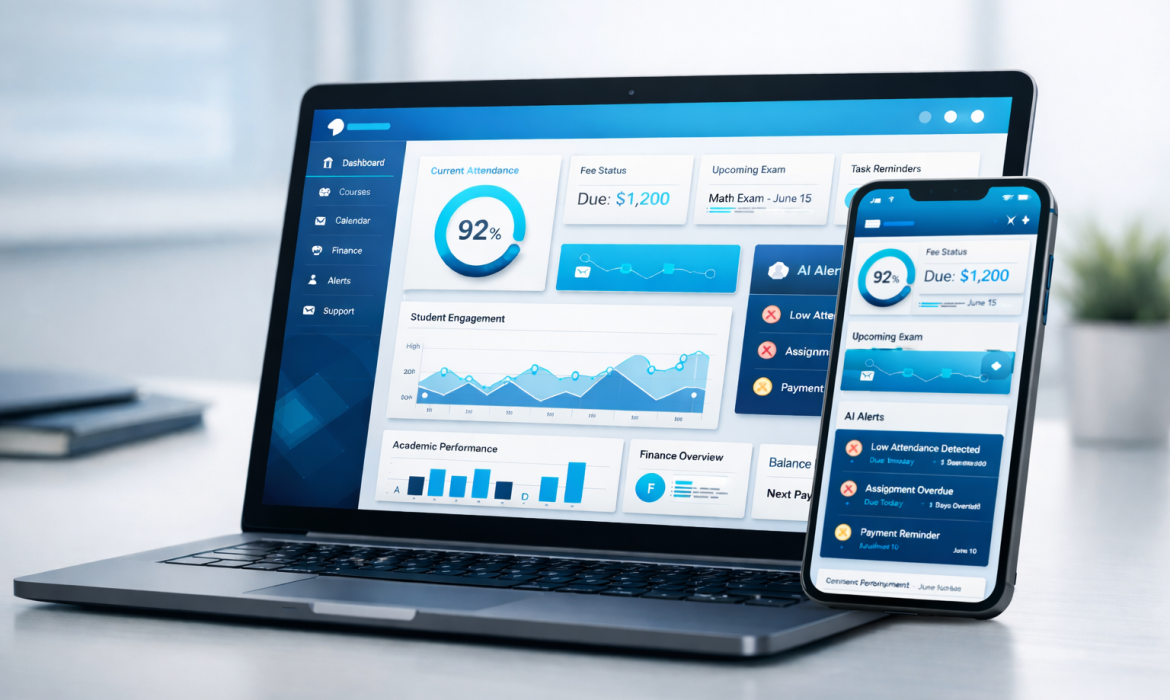
In today’s digital-first academic environment, the Student Portal has evolved from a basic information window into a strategic engine for institutional success. Universities that still rely on fragmented systems often struggle with delayed insights and reactive decision-making — a concern highlighted in this analysis of hidden gaps in traditional student information environments.
However, a modern AI-powered student portal changes the equation. It transforms disconnected student data into actionable intelligence, enabling institutions to deliver personalized support, proactive communication, and seamless digital experiences.
For university leaders focused on outcomes, the Student Portal is no longer just a convenience layer — it is a critical lever for improving both student experience and retention.
The Growing Pressure on Universities to Deliver Better Student Experiences
Higher education expectations have shifted dramatically. Students now compare their university experience with the digital convenience they receive elsewhere.
Yet many institutions still operate with:
- Fragmented student touchpoints
- Limited visibility into engagement patterns
- Manual follow-up processes
- Delayed academic risk identification
- Disconnected communication channels
As explored in the discussion on the silent dropout challenge, many risks remain invisible until it is too late.
Without real-time intelligence, even well-managed universities remain in reactive mode. This is where a modern university student portal powered by AI begins to create measurable impact.
What Defines a Modern AI-Powered Student Portal
A traditional portal typically acts as a static dashboard. In contrast, an AI-enabled Student Portal functions as an intelligent engagement layer that continuously analyzes student behavior, academic signals, and interaction patterns.
A modern student self-service portal should provide:
- Centralized access to academic, financial, and administrative data
- Real-time status updates across the student lifecycle
- Intelligent alerts and notifications
- Personalized dashboards for students and faculty
- Seamless mobile accessibility
- Cross-department data visibility
Institutions adopting Digital solutions for higher education through iCloudEMS are already seeing how unified intelligence changes campus decision-making.
How an AI-Powered Student Portal Elevates Student Experience
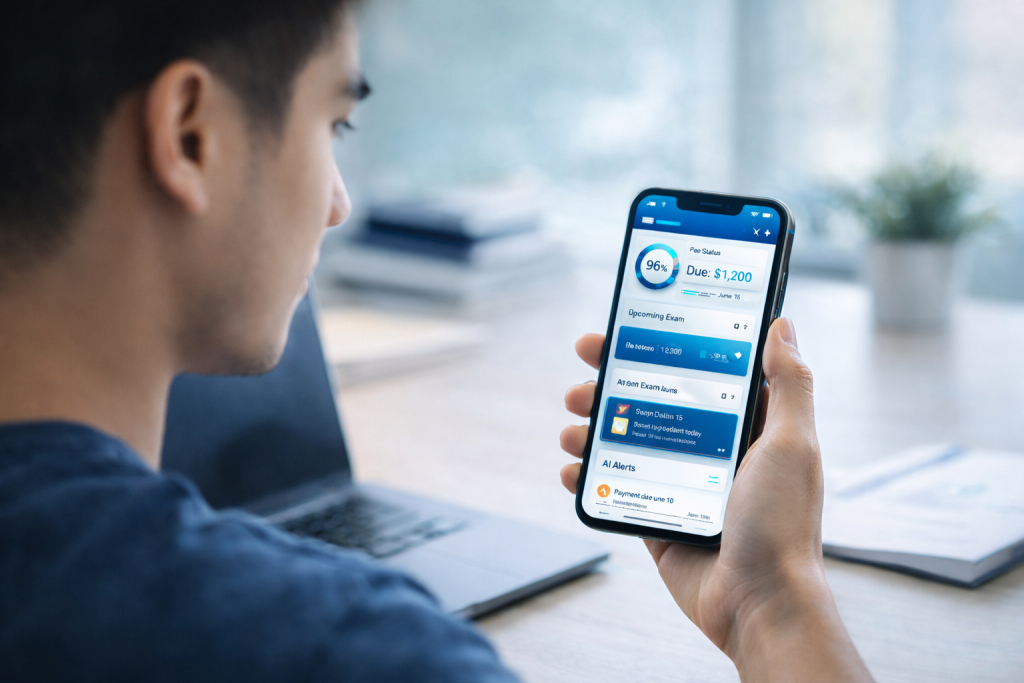
Student experience is shaped by speed, clarity, and personalization. When these elements are missing, frustration builds quietly across the campus ecosystem.
An AI-powered higher education student portal improves experience in several high-impact ways.
Real-Time Transparency Builds Student Trust
Students no longer want to chase departments for updates. With a modern portal:
- Attendance updates appear instantly
- Fee status is always visible
- Examination information is centralized
- Academic progress is continuously tracked
This level of visibility becomes even more powerful when integrated with intelligent finance workflows such as the AI-powered fee management approach.
Personalized Digital Journeys Increase Engagement
AI enables the Student Portal to move beyond one-size-fits-all dashboards. Instead, it can:
- Highlight pending student actions
- Recommend academic resources
- Surface important deadlines
- Provide contextual reminders
When combined with outcome-driven learning environments like the Outcome-Based LMS, universities can create deeply personalized academic journeys.
Frictionless Self-Service Reduces Administrative Dependency
Modern students expect autonomy. A well-designed student engagement platform allows them to:
- Download documents instantly
- Submit requests digitally
- Track approvals in real time
- Access learning resources on demand
Institutions modernizing their academic operations — as discussed in the future-ready academics management strategy — are seeing measurable reductions in administrative load.
Unified Communication Eliminates Information Gaps
One of the biggest experience failures in higher education is fragmented communication. An AI-enabled modern student portal centralizes:
- Academic notifications
- Fee reminders
- Institutional announcements
- Faculty communications
When paired with integrated online classes and exams management, communication becomes both timely and contextual.
The Direct Link Between Student Portal Intelligence and Retention
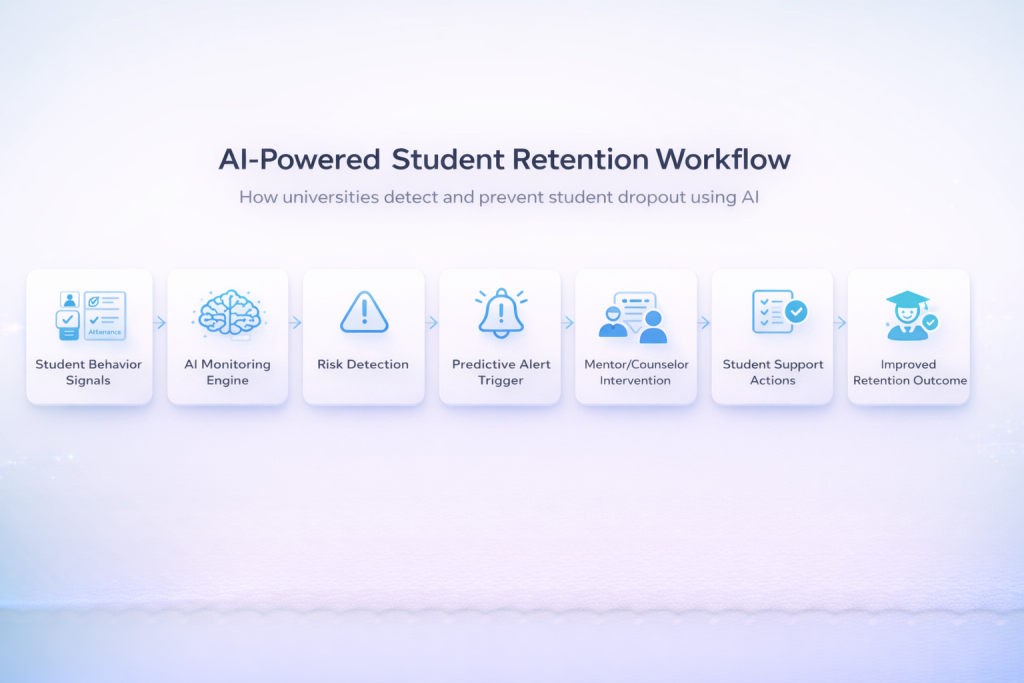
While experience improvements are visible, the deeper strategic value of a Student Portal lies in retention intelligence. Universities rarely lose students suddenly — warning signals usually appear months in advance.
AI helps institutions detect those signals early.
How AI-Powered Portals Strengthen Student Retention
Early Risk Detection Through Behavioral Signals
An advanced AI-powered student portal continuously monitors patterns such as:
- Declining attendance
- Reduced portal activity
- Assignment delays
- Fee payment irregularities
- LMS engagement drops
These signals align closely with modern student recruitment and lifecycle management strategies.
Predictive Alerts Enable Proactive Intervention
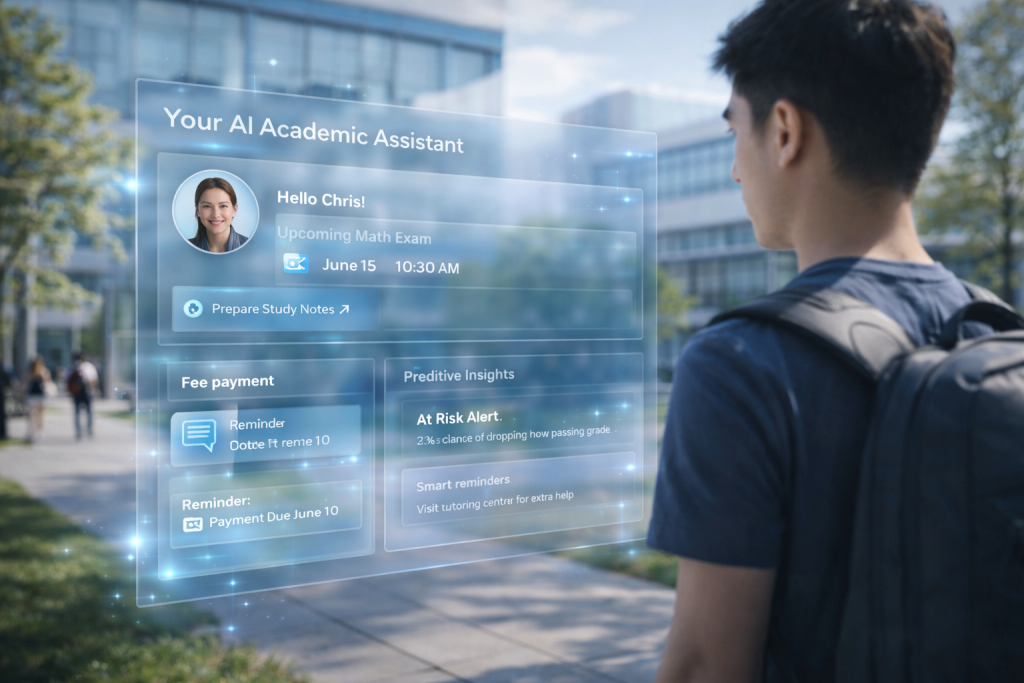
Instead of waiting for semester-end surprises, leadership teams receive:
- Automated risk alerts
- Engagement anomaly notifications
- Academic performance warnings
- Escalation triggers for counselors
This shift toward predictive operations reflects the broader evolution explained in the AI shift in university systems.
Data-Driven Retention Strategies Replace Guesswork
Historically, retention initiatives relied heavily on manual reviews. A modern Student Portal now provides:
- Cohort-level engagement analytics
- Department-wise risk heatmaps
- Intervention tracking dashboards
- Outcome-based retention insights
These capabilities strongly complement institutional quality frameworks supported by accreditation management systems.
Automated Workflows Ensure No Student Falls Through the Cracks
AI-powered workflows can automatically:
- Notify mentors
- Trigger counseling workflows
- Escalate unresolved issues
- Track follow-up completion
Institutions evaluating next-generation platforms often compare traditional approaches versus modern EMS capabilities in the EMS vs traditional systems comparison.
The Strategic Role of iCloudEMS in Enabling Intelligent Student Portals
Forward-looking universities are increasingly adopting Digital solutions for higher education that unify data, intelligence, and user experience.
The iCloudEMS Education Management System (EMS) provides a cloud-native, AI-powered Student Portal that enables institutions to:
- Achieve unified student visibility across departments
- Monitor engagement through intelligent dashboards
- Activate predictive alerts for at-risk students
- Deliver personalized digital experiences at scale
- Automate cross-campus workflows
- Maintain real-time operational transparency
Institutions exploring comprehensive modernization paths often review capabilities across both the university solution environment and the college solution environment to understand the full transformation scope.
The Future of the Student Portal: From Access Point to Intelligence Hub
The next generation of the Student Portal will not merely display information — it will actively guide student success.
We are already seeing the emergence of:
- AI copilots for student support
- Hyper-personalized academic pathways
- Predictive campus ecosystems
- Intelligent nudges for engagement
- Autonomous administrative workflows
Universities that modernize early will build stronger student relationships, while those that delay risk operating with blind spots in an increasingly data-driven education landscape.
Conclusion
The Student Portal has quietly become one of the most influential digital assets in higher education. When powered by AI, it delivers visibility, personalization, and predictive intelligence that directly impact student experience and retention.
For university leaders navigating rising expectations and competitive pressures, the real question is no longer whether a portal exists — but whether it is intelligent enough to support proactive student success.
Reflection
How effectively is your current Student Portal helping your institution identify disengaged or at-risk students early?
University leaders who are re-evaluating their digital student experience strategy often uncover significant improvement opportunities once they begin examining real-time engagement intelligence.
Key Questions University Leaders Ask
What is a student portal in higher education?
A student portal is a centralized digital platform that gives students secure access to academic records, fees, schedules, communication, and institutional services. Modern portals use AI to provide real-time insights, personalized dashboards, and proactive alerts that improve engagement and operational visibility.
How does an AI-powered student portal improve retention?
An AI-powered student portal improves retention by continuously analyzing behavioral and academic signals to identify at-risk students early. It generates predictive alerts, enables timely interventions, and helps universities track engagement trends so leadership teams can act proactively before disengagement turns into attrition.
Why do universities need a modern student portal?
Universities need a modern student portal to provide real-time transparency, seamless self-service, and unified communication. Traditional systems lack predictive intelligence, whereas AI-enabled portals help institutions monitor engagement, reduce administrative friction, and support data-driven decision-making across the student lifecycle.
What features should a university student portal include?
A robust university student portal should include real-time dashboards, AI-driven alerts, mobile accessibility, self-service workflows, unified communication tools, and cross-department data visibility. These capabilities ensure students receive timely information while administrators gain actionable insights into engagement and performance.
How does a student portal improve student engagement?
A student portal improves engagement by centralizing information, delivering personalized notifications, and simplifying access to academic and administrative services. When students can easily track progress, receive reminders, and interact digitally with the institution, their participation and satisfaction levels typically increase.
Can a student portal support personalized learning journeys?
Yes, AI-enabled student portals can support personalized learning journeys by analyzing academic performance, behavior patterns, and engagement data. The system can recommend resources, highlight risks, and surface relevant actions, helping institutions guide each student more effectively toward academic success.
