
Why Online Examination System is a Better Option for Higher Education Sector
The Human Resource Development Ministry has always encouraged Higher Education Sector to expand their digital capabilities for upskilling their students according to demand of 21st century Education system.
Now the Quality Education is not confined to four walls of classroom, digitization has facilitated uninterrupted education regardless of time and space. It is well said that
“The students of the future will demand the learning support that is appropriate for their situation or context. Nothing more, nothing less. And they want it now the need arises. Not sooner, not later. Mobile devices will be a key technology for providing that learning support.” — Dr. Marcus Specht
COVID-19 pandemic pushed all the Higher Education Institutions (HEIs) to showcase their best skill and converted their education model online.
It was very challenging time for Education sector but as far as technology implementation is concerned, it proved a blessing in disguise.
Leveraging technology enabled accessibility of Quality Education and Assessment to all students globally.
iCloudEMS understands the skill-oriented demands of modern Education system. We encourage HEIs across India to implement student-centric learning in digital ecosystem.
Our Online Examination system fosters paperless approach to conduct all examination activities from pre-examination to post-examination.
We offer cloud-based platform to conduct and evaluate flawless examination in HEIs. We promise to understand the complexities of tedious examination activities and offer our best services to save your priceless time and efforts.
All stakeholders of HEIs can make use of our Online Examination utilities in following ways:
Faculty
- Can use ingenious Question paper formation approach to prepare papers of different difficulty levels.
- Can make use of pre-structured Question bank and templates to construct question papers.
- Can formalize outcome-based questions under the framework of OBE and Bloom’s taxonomy.
- Can safeguard the integrity and transparency of Examination with LIVE proctoring.
- Can utilize on-screen evaluation and reporting tools for tamper-free assessment.
Students
- Can live through the comprehensible digital examination and evaluation system.
- Can access their records anytime and track their learning trajectory
- Can self-govern their learning matrix and accomplishment of learning goals with respect to their holistic development.
Administration
- Can have quick access to huge records with a few clicks only.
- Can retrieve earned credits of every student at each level using digital academic bank.
- Can experience effortless management of valuable resources and a seamless workflow.
Management
- Can scrutinize digital ecosystem of examination and evaluation settings anywhere and anytime.
- Can maintain the integrity of Examination system and foster continuous improvement in academic standards.
We at iCloudEMS will be glad to empower online governance of vital tasks of HEIs from admissions to accreditation. Now you can easily invest your precious time in nurturing a student-centric learning environment.
Give us a chance to serve you and we are ready to demonstrate how you can make the best use of our cloud-based web space and transform your Institute from Good to Great.

How Higher Education Institutes can Strengthen their ERP Solutions using Managed Services of iCloudEMS
COVID-19 pandemic has greatly impacted the entire Education ecosystem. Not only academics but also the complete institutional management has become dependent on digital technologies to streamline the multilevel workflow of Higher Education Institutes (HEIs).
Today digital transformation of HEIs is not confined to e-learning, it is a comprehensive approach to leverage latest technologies such as Cloud-computing, Machine learning etc. to cater the customized needs of its all stakeholders.
Thanks to the Education Management System (EMS) in HEIs that support ERP (Enterprise Resource Planning) solutions which helps to save the valuable time and efforts of all the stakeholders. An EMS has proved to be a worthy investment towards the development of a paperless environment where the management of numerous daily activities is a click away only.
iCloudEMS offers cutting-edge Managed Services to support ERP software of HEIs that streamline and improve the institutional management. Our Managed services incorporate many constructive modules like Attendance, Examination, Learning Management System (LMS), Accreditation Management etc. to ensure effective outcomes of HEIs.
Various Integral functions operated by Managed Services of iCloudEMS in HEIs include:
- Online Admission System: Our managed services streamline the whole admission process including all activities from pre-admission to post-admission. We create a hassle-free approach for the conversion of potential leads.
- Fee Payment Management: Our managed services integrate ERP with a user-friendly Fee Payment and Management module. It makes the tiresome fee payment and record maintenance an effortless process for guardians and for management.
- Attendance Management: We offer cloud-based managed services that incorporate attendance taking and tracking functionalities. Our utilities also include SMS features to provide real-time attendance information to the parents. Our online attendance management system makes the attendance records manageable and trackable at all levels.
- Time-table preparation & management: Our innovative managed services save considerable time and effort of the associated staff by generating multiple timetables with a few clicks only. The automatic preparation and management of different timetable avoids possible clashes during manual handling of timetable.
- Training & Placement Management: Our smart solutions create a common digital platform for students, institute and employers to perform and publish multiple placement related information. We also generate feedback services to encourage better planning and management for upcoming opportunities.
Apart from above mentioned features, our managed services also support Library management, human resource management, recruitment management, finance management and many more utilities. We encourage the digitization of campus to improvise their ways to handle the operations. Our specialized services provide real-time insights to all stakeholders for tracking the function and progress of academic operations. Our unified management system offers ERP solutions for the top colleges across India and aims to bring global advancement and automation in the Education System.

How Hybrid learning has become an adequate Education Model in Higher Education Institutes
The use of Information and Technology has been increasing since a long time. However, pandemic COVID-19 has made it to gain incredible momentum.
Shifting from Classroom learning to Online mode due to sudden closure was a challenge for educators and learners. But our education administration did not leave any stone unturned in making the accessibility and availability of Quality Education globally.
Online education was a difficult initiative, but its promising results were observed. Students experienced self-govern learning and the instructors could follow their learning trajectory easily, that bridged the learning gap between
Now as the situations started to become better, one more curling from Online to Classroom learning has not been less than a challenge for many students. Many Students feel more comfortable in learning under digital ecosystem. This requirement germinated an admirable Learning model i.e., Hybrid Learning. them.
What is Hybrid learning
In a hybrid learning environment, students have the choice of learning at the location of their own choice. In this model instructors can utilize the digital services like video conferencing technology and LMS to make the session available simultaneously for the in-class and remote students.
Advantages of Hybrid Learning
Hybrid learning is a model developed by combining the features of both Online and in-person learning strategies that gives rise to a seamless instructional approach irrespective of the students’ location, and its various advantages can be observed as:
– > It supports flexible learning where students have freedom to learn at their own space that aids convenience in the achieving their learning
outcomes.
– > It gives better exposure towards interactive peer learning as both in-site and remote students are connected for learning sessions at same time.
– > It fosters self-management and disciplined approach in students for the accomplishment of their learning goals.
– > It enables the best use of resources, as different resources can be used to make concepts clear according to requirement of course and topic.
Hybrid approach has not only been proved advantageous in teaching-learning, but also for administration and management of Education Institutes. Therefore Higher Education Institutes are working exceptionally well in stretching their digital capablities in line with the demands of 21 st century education system.
We at iCloudEMS always take care of visionary needs of Higher Education Institues. Our following unique products and services have encouraged student-centric learning and facilitated their administartive functions consistently.
– > We offer cloud-based platform to effortlessly manage enormous amounts of data and reports.
– > Our dedicated managed services offer seamless management of their administrative and non-administrative operations.
– > We deliver digital choice-based credit system, that facilitate faculty and students to select and allocate courses.
– > Our personalised learning management system supports creative teaching and boosts student engagement in sessions.
– > We allow students to learn at their own pace and space through an online repository using their login information.
– > We present digital setting for the administration and preparation of on line examination and evaluation while protecting system integrity.
– > Our dashboard reflects Student lifecycle management system enables effectively tailor future plans for students’ overall development.
In a nutshell, we can say that Hybrid learning is a comprehensive technological Education model that can deliver Quality Education without any time or space constraints.
We at iCloudEMS make every effort to digitally strengthen organizational and administrative arrangements of Higher Education Institutes to nourish the learning preferences of 21st century’s youth.

Boost the Classroom Attendance and Minimize the attendance management with Our Cloud-Based Attendance Management System
We live in the digital world where access to any information is possible with a couple of clicks only. Although, there are immense resources present for each and every topic, yet we need a mentor who can facilitate our learning and help us to gain knowledge from the best available resources. We have an abundance of text books on every subject, still the role of instructors can never be ignored to make us understand Between Lines.
It is necessary to channelize the energy of youth in constructive ways to make them grow and shine in the global arena. Here comes the importance of discipline learning, and attendance of students in Higher education is more concerned with the development of discipline and personal relationships among students. Thus, it is necessary to motivate the students of Higher Education Institutes to be regular in classes where they can participate in active and cooperative learning.
Apart from boosting attendance in HEIs, there is one more important concern is to maintain the analytics of students’ attendance by regular tracking and managing attendance records. Manual management of such functions is a tedious and error-prone task. However, thanks to the Cloud-based management system that acts as a digital companion in solving such issues and saves the valuable time and efforts of the instructors.
iCloudEMS is a trustworthy digital partner of Higher Education Institutes (HEIs) that offers cutting-edge products and managed services for the smooth and automated workflow of institutions. Our attendance management services boosts efficiency and decreases workload of teachers and administrators by tracking real-time attendance and seeking solutions for absentees. We promote a paperless approach for generation of multiple type attendance reports while avoiding redundant or missed data entry. The key purpose of our attendance support system is to enhance the attendance in classroom along with minimization of attendance management tasks that include:
Transparent attendance insights: We offer dashboard attendance marking that makes the attendance analytics easily presentable to all the stakeholders of HEIs. Students can easily observe the real-time attendance trajectory and govern their attendance & learning in no time.
Synchronous attendance notifications: Our digital attendance services allow the synchronous mail and notification of absentees to the students as well as to their parents that has proven to maintain a good attendance record without any manual efforts.
Integrating Feedback with learning: We propose an innovative learning management system that includes feedback after learning sessions, assisting the teachers to understand the learning gap and promoting the students’ interest and retention in the classroom.
Understanding the students’ cognitive abilities: We encourage the designing of outcome-based curriculum and assessment under the framework of Bloom’s taxonomy that fosters deeper learning and skill development in students by increasing students’ engagement and interest in classroom activities.
Paperless attendance reports: Our Cloud-based attendance services can easily generate visual attendance analytics including charts and statistics online, on multiple criteria that can be accessed anytime and anywhere. These reports can act as an early warning indicator for the students failing in different criteria that allow them to take necessary action on time.
iCloudEMS is a market-leader assisting Higher Education Institutes to accomplish their Institutional goals and save valuable time of the associated staff by eliminating their manual efforts in daily tasks so that they can invest their efforts in more productive goals.
What is the Impact of EMS System on Academic Performance
With the advancement of Modern Technology our educational system is getting better day by day. An automated system software ERP being modified into EMS (Educational Management System) plays a very important role in the section of Academics in the Educational Sector. It promotes the free flow of communication and sharing of knowledge across the organization. It’s the integration of systems for improved productivity and efficiencies and increased synergies across teams and departments.
Role Played by EMS in Educational Institutions
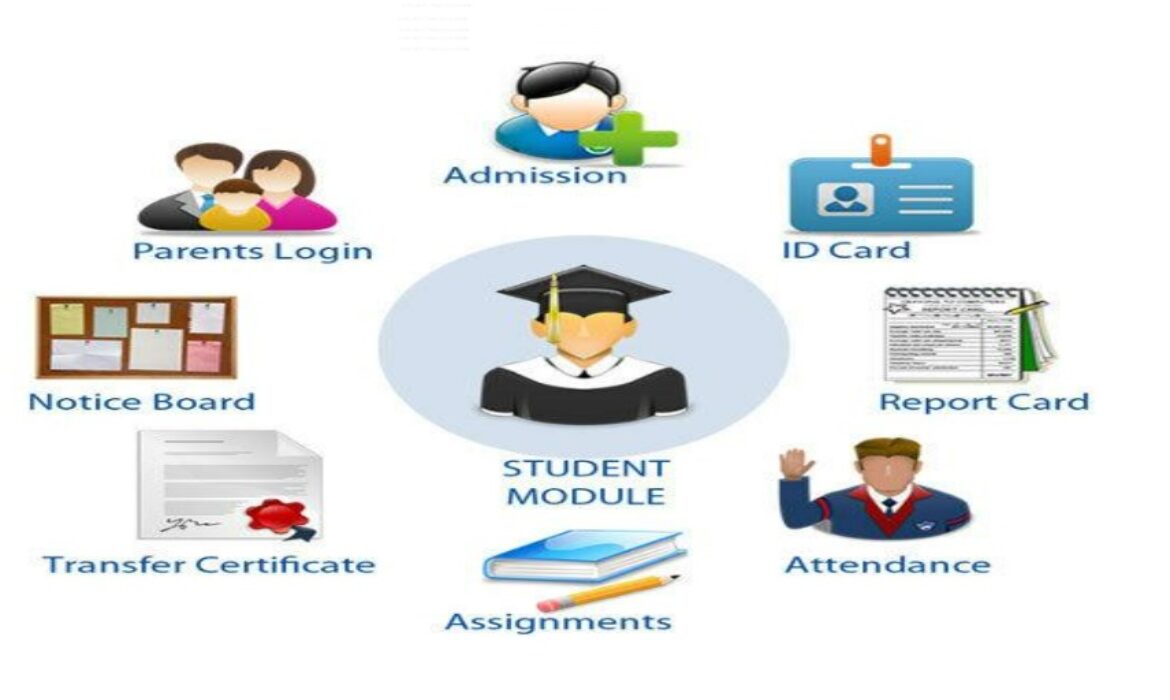
It facilitates the information flow within an educational institution thus simplifying the process of student management with efficiency. They track every academic activity helping in bringing improvements in the current system and facilitating the working of future plans and also Improving and organizing the portfolio of teachers, students and staff.
EMS System (Software)
- Enquiry management.
- Admission Management.
- Fee Management.
- Complete Library Management.
- Attendance Management.
- Time Table, Certificates & ID Card Management.
Top Benefits of Having EMS for Academics
- Centralized Management of Information.
- Automated Data Collection & storage.
- Improved Operations and Source Management.
For Institutions:
Day by day correspondence with guardians sharing examination materials online participation, declaration and imprints can be transferred for all understudies.
For Parents:
Parents can be updated and refreshed with all the data identified with their ward.
Our Company iCloudEMS provides proper assessment at initial stages, partnering with vendors with right expertise and bringing clear requirements from the start will help an efficient and successful implementation of EMP software in the system. Scalability,customization and any integration of adhoc modules as needed.
The future of education is changing rapidly but having an EMS system you can make sure to adopt every change with the same consistency and flow and it will make the processes easy and smooth providing access to every single thing with just one click.
It enables the institutions to make data driver decisions that can lead towards the growth and success of the institution. Cloud based EMS software is easy to deploy, along with facilitating everything like admission, attendance, fee collection, communication among students, teachers, faculties providing online and easy access to everything.
iCloudEMS helps institutions to automate and manage entire campus Operation, academics, administrations needs in a very effective way. It’s the automation of the complete activities of day to day tasks. Educational Institutions play a very pivotal role in the cognitive and academic development of their pupils. Therefore the educational institution and their academics deserve the best tools for their management practices, carrying out their academic and administrative activities in the most efficient and effective manner.
They should be abreast with the latest and modern management tools for constant improvement in systematic and strategic formula of child development through academics.
In order to maintain every department be it Academics, Accounting, Administration, they need to be inter-connected and there is a constant flow of students, staff information from one department to another. It’s an unified system that works across multiple departments with necessary controlled access.
Academic Management
- Admission Management.
- Course Management.
- Fleet Management.
- Exam Management.
With the information given above, following are the advantages and Impact of Implementing EMS in Academics. We get Centralized Data Management. It’s very cost effective with the Quicker Management Process.
Conclusion :-
Hope the information helps in understanding the future of EMS in academics along with its usage and benefits. If you are interested our company can help you get the best after having a free demo with a team of experts. It will provide flexible, robust and better services, managing the complete operations of the institute at a very effective cost.
How digitization encourages the student-centric learning in Higher Education Institutes
In the 21st Century, technology acts as a catalyst of creativity and innovation to improve the quality and significance of education and learning. Today the youth is more interested in becoming active learners and want to govern their own learning where the major responsibility of Higher Education Institutes is the development of Critical thinking, Creativity, Communication and Collaboration in the learners. Integrating technology into conventional teaching-learning practices enhances digital literacy skills that open the doors of a wide range of opportunities for youth.
Let’s examine how technology can improve the educational outcomes for students:
Students’ Interest and demand: We are living in the world of gadgets. Students outside the campus are used to their smartphones and laptops for their entertainment. So, using these gadgets as their instructional tools where instructors act as facilitators helps to create a conducive and dynamic learning environment for the achievement of their academic goals.
Learners’ Engagement in Classroom: Technology enhances the creativity of teaching approaches that has the potential to change the traditional teacher-centred learning environment into one where students are more actively engaged in performing and learning. Nothing is more satisfying than witnessing your pupils actively participating!
Self-regulated Learning: All students are blessed with different capabilities. However, it is difficult for instructors to manually manage their teaching momentum according to the learning needs of students, but the usage of ICT tools and digital services makes self-regulated and independent learning possible for students. Moreover, educators can also identify the learning gaps easily and help individual students according to his learning requirements.
Self-govern learning: It is a studied fact that if students are made to take ownership of their own learning, they are more likely to carefully track their learning trajectory and take the lead to achieve their objectives. Digitization allows students to build a regular routine for students to revisit their goals and decide what is working for them in their plan of success.
iCloudEMS complements the traditional ecosystem of Higher Education Institutes with its digital capabilities and allows its learners to timely attain their academic goals. We promise to bring creativity in the classroom that reduces the gap between teaching-learning and assist the instructors to cater the assorted needs of their all learners. Our innovative products and services make the academics and research free from physical boundaries for the instructors and the students, that promote student-centric learning in HEIs:
- We offer a cloud-based cyberspace where instructors can access, process, and keep track of their massive data and records that can be fetched without any time or place constraints.
- Now attendance taking and tracking is no longer a tedious task for teachers because now they can maintain error-proof attendance records of all students with a few clicks only.
- Instructors and students can easily be networked 24*7 for regularly updating the schedule of classes, setting due dates for assignments, and posting them online.
- Students can easily register and access their desired courses from anywhere at any time by using our web-based communication tools.
- Our integrated feedback services allow students to give feedback on the learning sessions that helps the instructors to follow their learning trajectory.
- We save valuable administration hours with our cutting-edge Online Examination System that gives a digital examination portal with LIVE proctoring to maintain an integrity of the system.
- Teachers and Students can enjoy our quick evaluation approach along with easy-to-read OBE mapped digital statistics reports that reflect students’ performance under the framework of Bloom’s Taxonomy.
iCloudEMS fosters a learner-centred environment in HEIs that is not restricted to physical limitations and encourages a paperless administration. We take care of 21st century education needs and synthesizes technology integrated innovative learning ways to connect and learn from real-life situations.

How workflow automation system helps in comprehensive management of Higher Education Institutes
In the last few decades, India’s education sector has seen a massive increase in the number of schools, colleges, universities, and private institutions. Admissions, teaching, timetables, fee management, examinations, and other educational duties have become complex, and policies and functions connected to them are often updated.
However, in today’s fast-paced world, manually managing of administrative activities is difficult and lead to following challenges:
- Missed or Duplicate information
- Compiling and Formatting errors of information
- Wastage of physical resources
- Constraints in Communication and Networking
Latest technologies such as artificial intelligence, machine learning and internet of things etc. promote the automation that offer numerous benefits to Higher Education Institutes including:
- Cloud-based data storage and retrieval to maintain data backup and privacy.
- Smart administration and management for effective utilization of resources.
- Web analytics tools to track and measure students’ learning and performance.
- Digital tools for faculty to enhance their course curriculum and customized teaching.
- Advanced learning and research across borders which empower globalization.
iCloudEMS has been a market-leader in today’s technology-driven education sector, extending digital capabilities of colleges and universities throughout India. Our cutting-edge products and services are built with the most up-to-date technologies, ensuring that they are extremely reliable, secure, optimised, and user-friendly. We provide a comprehensive Education Management System for any educational organisation, and we have also successfully produced individual modules based on requirements. Our unequalled support system ensures great dependability and confidence, allowing any educational organisation to attain its learning goals with its full potential by eliminating manual errors and cutting costs of resources.
Following are our important products and services that provides cloud-based unified solution to various Colleges and Universities:
Personalized Learning Management System: It provides students and professors with a collaborative digital platform to create a creative learning environment that bridges knowledge gaps and aids in the institute’s constructive learning aims. Our OBE-based LMS enhances the learning environment under the framework of OBE and Bloom’s taxonomy to promote the holistic development of students.
Online LIVE Classes and Examination Management System: It is an advanced solution that helps the stakeholders to effortlessly conduct and manage virtual classroom and examination settings keeping integrity as priority. We mobilise the utilisation of digital platforms and cutting-edge learning initiatives such as national MOOC courses, DIKSHA, and SWAYAM to support global education sustainability.
Student Lifecycle Management System: iCloudEMS assists Colleges and Universities in accessing and processing a profusion of students’ information with a few clicks, anytime and anywhere. It provides a technologically advanced ecosystem for administration and students to streamline student recruitment and management, freeing up time and resources to focus on more innovative goals.
Accreditation Management System: iCloudEMS is a well-managed digital environment that automates and simplifies time-consuming and repetitive accreditation operations. We propose a cloud-based approach to automate the groundwork of Accreditation operations such as generate, collect, organize and administer the cumulative data and reports in the standard formats of regulatory bodies such NAAC, NBA, ABET, NIRF etc.
Managed Services for Colleges and Universities: We offer managed services to Colleges ERP & Universities ERP and automate various academic and non-academic procedures. Our specialized modules streamline the workflow governed by important operations including Pre-admission, admission, fee payment, attendance, assignment, examination, library administration, accreditation management in a comprehensible and paperless manner.
iCloudEMS has played a huge and pivotal part in automating the workflow of higher education. The main benefits of our innovative venture include the digital transformation of universities and colleges, which leads to improved quality education, personalised learning, blended classroom experience, learner-centric classroom, and increased industry collaboration, as well as generating new revenue streams and increasing productivity for all stakeholders – students, faculty, management, accreditation bodies, alumni, and industry experts.
How can Higher Education Institutes Leverage Automation to Accomplish their Academic Goals
In today’s world, where everyone is surrounded by gadgets, the stakeholders in Higher Education Institutes can efficiently automate their workflow to make best of their important time and accomplish their learning goals.
Now there is no need to spend numerous hours doing tedious and repeated tasks such as attendance tracking, admission and examination activities. The cutting-edge technologies are changing the ways of performing administrative and non-administrative activities in Higher Education Institutes(HEIs).
Learners are overwhelmed with abundant information on the Internet, so they no longer enjoy the traditional practices of one size fits all and automation has encouraged Individual learning rather than group learning in HEIs. The digital facilitators complement the physical facilitators in HEIs to bring revolution in the Education sector and put emphasis on holistic development of youth.
Automation
The term automation in Education deals with leveraging labour-saving mechanisms to promote Quality Education System in Education Institutes. The instructors can resolve the intricacies of daily activities with a couple of clicks and spend more time serving their learners.
Automation not only saves time but also proves to be more cost effective in the long run. Various advantages of automation can be seen as:
- Instructors can spend quality time on delivering skills and knowledge according to 21st Century education demands to shape bright minds.
- Students can learn at their own pace and at their space that enables them to follow their learning trajectory.
- Administration can be benefited with the paperless approach to perform various admission and examination activities.
- Automation of education processes like grading and attendance decreases the risk of errors and missing data.
- Automation of progress records helps the stakeholders to follow the milestones and decide the further steps to be taken.
Let’s have a virtual tour on digital capabilities of iCloudEMS that can comply with the institutional workflow with the visionary requisites and rules, allowing faculty members to be more creative and channelize their efforts in a more effective way. The Higher Education Institutes
- iCloudEMS streamlines the admission process by maintaining students’ databases on cloud with all of their relevant personal and academic details, that can be retrieved at any time for preserving and updating records.
- Specialized Managed services for the ERP of HEIs, in order to automate and streamline administrative and non-administrative activities of colleges and universities.
- We offer an automatic schedule generation system that can create numerous sorts of timetables, such as class-by-class, room-by-room, and faculty-by-faculty without any conflicts or redundancies.
- Personalized Learning Management System that permits the creation of an online repository of lecture notes and other study material that can be quickly downloaded for course file documentation.
- Our Online Examination system provides a digitally governed cyberspace that can optimize the overhead cost of resource management keeping the integrity of system at priority.
- We empower the smooth implementation of Outcome based Education in HEIs and ensure the continuous quality improvement of the system.
- We propose an ICT based curriculum designing approach under the framework of OBE and Bloom’s taxonomy framework.
The Bottom Line
The above-mentioned features can be taken only a glance of benefits that you can reap with iCloudEMS. Apart from them, there are numerous activities such as attendance monitoring, record maintenance, accreditation groundwork and so on, which can be performed at your fingertips that saves your ample time to build a productive and efficient work system.

How Outcome Based Education empowers Quality Learning in Higher Education
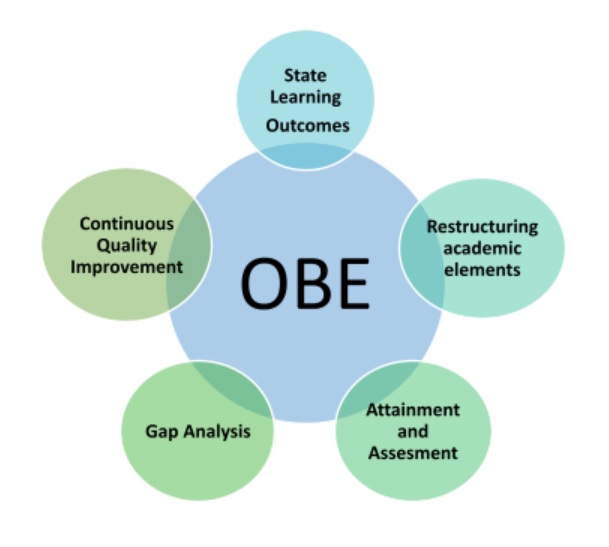
Unlike the traditional education system, that is more focussed on what teacher teach rather than what their pupils learn, Outcome-based education (OBE) places the student at the centre of the educational system and focuses on what the student is expected to achieve at the end of their course rather than how they achieved it. Outcome-based education is an educational strategy in which curriculum decisions are centred on the outcomes that students should demonstrate by the conclusion of the course-professional knowledge, skills, abilities, values, and attitudes-rather than the educational process. It emphasises the importance of knowing your eventual destination before embarking on your journey. Tertiary education must equip graduates with both professional knowledge/skills and all-round traits in order for them to meet the diverse but global needs of 21st century society. Today higher education institutes in various countries are emphasising on continuous quality improvement by reforming their curriculum, plan and assess learning outcomes at all levels, collect evidence of learning and analyse outcomes accomplishment using a variety of assessment techniques, to guarantee that the learning outcomes are actually met.

What makes OBE different from Traditional Education System
Change is inevitable in today’s dynamic world, and that also demands from the education system to update and adapt their approaches and parameters in all spheres. OBE is a pedagogical model in which curriculum, pedagogy, and assessment processes are reconstructed to reflect the attainment of high-order learning rather than the accumulation of course credits. Unlike traditional education, which emphasises what is taught, OBE emphasises what is learnt. The latter is a student-centred approach that includes practical learning experiences to enhance the knowledge, abilities, and traits that students get at the end of a programme or course. Traditional education is based on rigid curriculum and standardized practices, in which students gather under one roof at a specific time to be instructed by a teacher. Learners interact with peers or ask faculty members questions once a lecture is over. This suggests that the effectiveness of the educational system is mostly determined by the teacher’s efficacy and classmates’ knowledge base. On the other hand, OBE is a system of education based on specific outcomes. It focuses on the skill sets that students will need when they finish their education. Activities in and out of the classroom are planned to assist students in achieving these goals.
How OBE is a Revolutionary Practice in Indian Higher Education System
OBE has been adopted by the majority of countries around the world. The signatories are obligated to implement the programme outcomes in accordance with the benchmarked outcomes set forth by the Washington Accord (WA) to make the Indian Higher Education system at par with the global standards.
The OBE paradigm is more focused on clear understanding of the ultimate result to achieve for both students and teachers. Students and teachers have a clear understanding of their learning outcomes that allows them to plan and streamline learning activities to actualize the desired outcomes.
OBE is a flexible learning approach where learning becomes skill-based, and teachers are able to create lessons and practises to meet the requirements of their students. Unlike the rigid traditional education system, OBE is mostly student-centered, with teachers serving as guides who promote student involvement at each learning stage. Students self-govern their learning and take greater ownership of their learning activities. The assessment practices in OBE are consistent with stated outcomes and more accurate as it allows students to evaluate each other, self-evaluate, and have employers evaluate their performance.
Outcome-based assessment provides educators with feedback and information on the success of the teaching and learning techniques they use in the classroom. This has a positive and significant impact on the creation of more responsive and adaptable teaching strategies that assist students in achieving their educational goals.
Role of iCloudEMS in technological accomplishment of OBE framework in Higher Education institutes
iCloudEMS has a unified cloud-based platform that assists institutions and teachers in defining outcomes, mapping assessments, implementing course correction methods, and tracking outcome achievement. Today most accreditation and regulatory authorities choose OBE to assess an institution’s quality standard, OBE platforms are in high demand among higher education institutions. We have designed NBA and NAAC-related OBE modules to meet this high demand and streamline difficult procedures.
We provide stepwise digital assistance in defining, mapping, and tracking all the learning outcomes including Program Outcomes (PO), Program Specific Outcomes PSO, Course Outcomes (CO).
You can get the details of these outcomes in our other OBE related blogs
iCloudEMS ensures a paperless approach to encourage the environment sustainability in Higher Education Institutes, moreover we take care of all the assorted needs of stakeholders to obtain and compile the OBE friendly data and reports with a couple of clicks only. Our following revolutionary products and services guarantee the seamless management of all the administrative and no-administrative operations in Higher Education Institutes.
- A cloud-based server that can store a vast amount of data and records for convenient record management, allowing teachers to monitor the progress of their students’ course outcomes.
- Time-saving solutions that automate attendance records, timetable creation, assignment publishing, and results reporting for faculty personnel.
- Digital strategies for course selection and allocation that support the Choice Based Credit System and encourage a flexible and dynamic learning culture.
- OBE-LMS promotes outcomes-oriented learning by offering engaging course content and assignments using a creative result designing and mapping process.
- The implementation of OBE has become critical in lubricating the accreditation wheels in Higher Education Institutes, and our Accreditation Management System automates and aligns the accreditation preparation work under the OBE model.
- Student-lifecycle management system that enables students to access their whole academic experience with only a few clicks, enabling student-centric learning and encouraging the Continuous Quality Improvement ecosystem.
- Online Classes and Examinations system to promote strategic execution of OBE in all pre and post examination activities, ranging from the preparation of question papers to the publication of final results, all of which are concerned with the design and mapping of all components with predetermined outcomes.
- A user-friendly and cost-effective portal with rich reporting capabilities for quick statistical analysis at all levels.
Finally, it can be concluded that, to embrace OBE’s fundamental goals, everything in educational processes and systems should be based on results; outcomes that go beyond academics and reflect real-life characteristics in youth to enter the workforce as professionals. iCloudEMS stimulates the redesigning of various academic elements including outcomes-oriented teaching and learning, as well as assessment tasks, to ensure that students are prepared not just for academic achievement, but also for life success.

The Relevance of Formative and Summative Assessment: Enhancing Transparency in Evaluation by Using iCloudEMS
The term ‘Evaluation’ is an embodiment of a specific and transparent process of assessment of the performance of the learners of a specific course/program in the educational Institutes, for a specific program that aims to measure the potential, abilities, and skills of learners in the areas of cognitive approach of understanding or comprehending a subject or course or program in an effective way. However, the process of assessment facilitates both the course instructors as well as learners to monitor their progress towards achieving learning objectives and the desired goals conforming to the course syllabi/curriculum and expectations or visions of the institute. Generally, there are two types of assessments to measure the progress of the learners—A Formative Assessment and A Summative Assessment.
A Formative Assessment procedure refers to the teaching-learning and the assessment tools used throughout a class or course that help both the assessor and the assessed identify misconceptions, struggles, and learning gaps, while assessing and finding out ways to overcome or eliminate such gaps. A Formative Assessment process also facilitates learners to take ownership of their learning styles or give independent ways of learning styles when they understand its goals to pace and improve learning styles or achieve learning outcomes. Preferably, formative assessment strategies facilitate teaching and learning simultaneously. Nicol and Macfarlane-Dick suggest a Seven Principle Model (2007) that can enrich instructor’s strategies while rendering formative assessment to maintain transparency in evaluation, motivate learners, and enrich their learning experiences:
- Keep clear criteria for what defines good performance
- Encourage students’ self-reflection
- Give students detailed, actionable feedback
- Encourage teacher and peer dialogue around learning
- Promote positive motivational beliefs and self-esteem
- Provide opportunities to close the gap between current and desired performance
A Summative Assessment helps the course instructor evaluate learners’ learning potentials and styles, comprehension, knowledge gained during interaction or learning of the course, proficiency, or success after the completion of a unit, course, or program. Further, Summative Assessments are almost always formally graded and often heavily weighted (though they do not need to be). Summative assessment can be used to great effect in conjunction and alignment with formative assessment. Because summative assessments are usually higher stakes than formative assessments, it is especially important to ensure that the assessment aligns with the goals and expected outcomes of instruction. The following points may be considered for deliberation on the process of summative assessment to maintain transparency in evaluation, and motivate learners:
- Use a Rubric or Table of Specifications
- Design Clear, Effective Questions
- Assess Comprehensiveness
- Make Parameters Clear
- Consider Blind Grading
The above pointers pertaining to the formative and summative assessment of learners clearly indicate that they are not only different in nature, but they also require separate strategies and plans to maintain transparency in the assessment of learners’ performance. The course instructors, therefore, need to design activities, tests etc. by considering their separate roles.
The Role of the Digital Platform—iCloudEMS in Enhancing Transparency in the Process of Evaluation and the Stakeholders’ Feedback
In the recent years, the Digital Platform—iCloudEMS has not only proved to be an integral part of the Education Technology (ET) to support the young and vibrant learners of the 21st century fulfill their dreams, but it has also focused on the universal call for education to all for the betterment of humans. It has bridged the gap between the academic institutes and the learners or parent or stakeholders by facilitating them with the free access to view the learners or wards performance at any time and anywhere. Further, it has eased the process of evaluation or assessment of the different courses or programs offered by an academic institute and supported the academic institutes showcase transparency in evaluation to enhance the confidence of the learners, guardian, and stakeholders. However, the iCloudEMS facilitates the following needs of the learners:
- The iCloudEMS plays a pivotal role in assessment of learners. It facilitates course instructors’ parental access to schedule activities appropriate for assessment (formative/summative as applicable) of learners. With its unique feature, parents and guardians can have access to their wards’ assessments.
- The iCloudEMS fosters diverse assessment options to the learners who come from diverse socio-cultural, economic, and educational backgrounds. With the support of the multiple formats, course instructors get the choice to design activities like short quizzes, Multiple Choice Questions (MCQs), basic questionnaires, warm up activities and other assessment activities. Similarly, learners have multiple formats for uploading their work like PDF, Screenshots, Podcasts, Videos by using the iCloudEMS as a digital platform.
- Further, being a digital platform, the iCloudEMS backs up the data of the learners to track their performance as well as the data of their assessment and attendance that helps the course instructors to be vigilant to learners’ progression with learning assignments. In this way, learners with weak comprehension or who need extra or remedial classes can easily be identified by the course instructors to plan the remedial/revision classes for them. Consequently, intelligent, brilliant, meritorious, and intelligible learners get motivated to participate in extracurricular activities for the development of their overall skills focusing on their personality.
- The students can check and verify on their own whether they have done it correctly or not and if they find that they have not done correctly, what is the correct method from the iCloudEMS portal. Moreover, the faculty can also upload the short questions and the probable answers for the same. It can appear to the learners if somebody writes a wrong answer.
- The learners can also view the Automatic attainment of formative and summative assessments. It can happen automatically based on the input provided in the beginning. The learners need not to do the cumbersome calculation for all the papers and all the examinations.
- The records of all the stakeholders including the industry can also be seen at any time and anywhere consequently, they can identify the attainment level of all the desired skills required by the industry.
- Finally, the iCloudEMS develops confidence among the learners as well the course instructors by providing a transparent digital feedback Management System. The learners can view their results and feedback of formative and summative assessments easily. The feedback and the results can also be shared to the parental page consequently, the parents have the opportunity to view the course-wise result of their wards. Moreover, the formative and summative assessment records become a permanent part of the learners’ aspirations and it is also stored for the permanent record of the institution for future perusal.
