Why Every University Is Upgrading to an AI-Powered Learning Management System (LMS)

Universities are no longer asking whether digital learning matters.
They are asking how fast they can modernize.

Across higher education, institutional leaders are confronting a hard reality: traditional platforms cannot keep pace with evolving academic expectations. Students expect seamless digital learning. Faculty demand intelligent automation. Meanwhile, administrators need real-time academic visibility to make confident decisions.

As a result, the shift toward an AI-Powered Learning Management System is accelerating. Universities are not simply upgrading software — they are redesigning the digital learning backbone that supports teaching, engagement, and outcomes.

The New Expectations from University Learning Environments

Higher education has entered a performance-driven era. Today’s institutions operate under pressure to improve retention, enhance learning quality, and deliver measurable academic outcomes. However, many legacy systems were never designed for this level of complexity.

Students now expect:

  • Always-on access to course materials
  • Mobile-first learning experiences
  • Personalized academic support
  • Faster feedback cycles
  • Seamless digital interactions

Faculty expectations have also evolved. They want tools that reduce administrative burden while improving instructional effectiveness. Moreover, leadership teams require consolidated academic intelligence rather than fragmented reports.

Therefore, universities are rethinking the role of the modern Learning Management System for universities. It is no longer just a content repository — it must function as an intelligent academic engine supported by an integrated Education Management System (EMS).

What Defines an AI-Powered Learning Management System

A traditional LMS primarily manages content delivery and assignment tracking. In contrast, an AI-Powered Learning Management System introduces intelligence, prediction, and automation into the learning ecosystem.

At its core, an AI-enabled platform can:

  • Analyze student engagement patterns
  • Predict academic risk early
  • Automate routine academic workflows
  • Personalize learning pathways
  • Provide real-time institutional insights

However, the true transformation occurs when the LMS operates as part of a unified Education Management System (EMS). When learning data connects with admissions, attendance, and examinations, universities gain a 360-degree academic view.

Forward-looking institutions are therefore investing in Digital solutions for higher education that combine learning intelligence with lifecycle visibility such as student recruitment lifecycle management.

Must-Have Capabilities Universities Now Demand
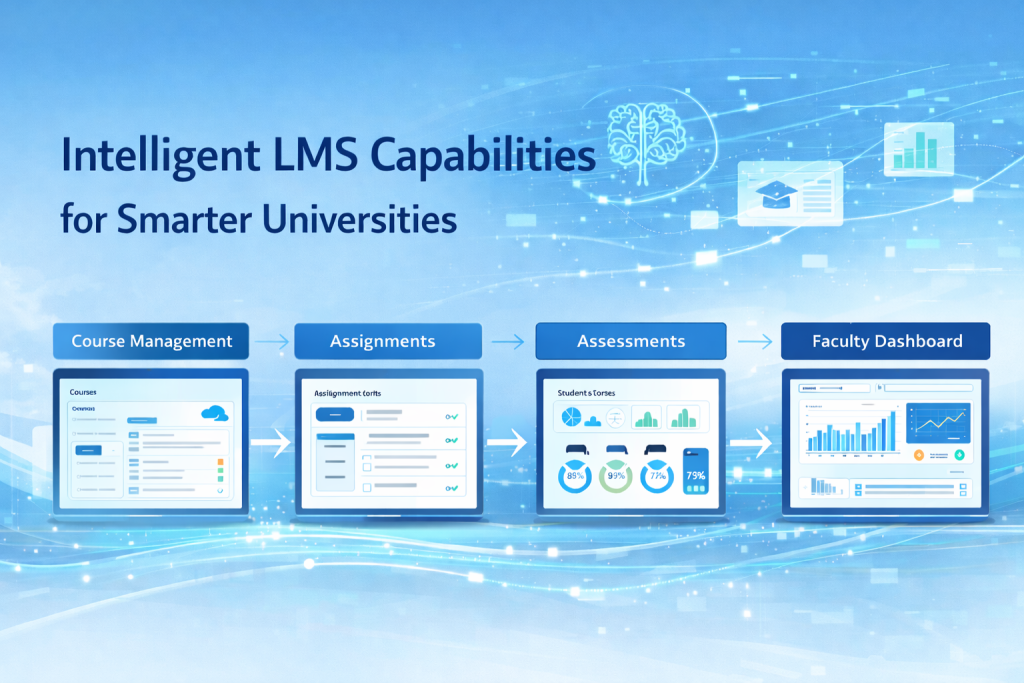
AI-powered Learning Management System capabilities dashboard for universities

University decision-makers have become far more strategic in evaluating LMS platforms. Basic functionality is no longer sufficient. Instead, institutions are prioritizing intelligence, scalability, and ecosystem integration.

Predictive Academic Intelligence

Modern universities want early warning systems. An advanced AI LMS platform should identify:

  • At-risk students
  • Low engagement patterns
  • Course-level performance gaps
  • Attendance-risk correlations

Consequently, leadership teams can intervene before problems escalate — a challenge widely discussed in student risk detection strategies.

Unified Academic Visibility

Fragmented dashboards create confusion. Institutions now prefer a cloud-based LMS that integrates seamlessly within a broader Education Management System.

Key expectations include:

  • Single academic view across departments
  • Real-time performance monitoring
  • Automated alerts for stakeholders
  • Cross-functional data flow

This unified approach aligns with best practices in evaluating an Education Management System.

Automation-First Workflows

Manual academic processes slow institutions down. Therefore, universities increasingly demand automation in areas such as:

  • Assignment workflows
  • Evaluation cycles
  • Course publishing
  • Faculty notifications
  • Student communications

Automation not only saves time but also reduces operational errors, as highlighted in AI-driven administrative automation.

Mobile-First Learning Experience

Today’s learners are mobile-native. As a result, the university learning platform must deliver:

  • Responsive student portals
  • Mobile assessments
  • On-the-go faculty tools
  • Instant notifications

Institutions that ignore mobile experience often see declining engagement, a pattern explored in AI-powered student portal strategies.

Strategic Advantages for Institutional Leadership

The decision to adopt an AI-Powered Learning Management System is no longer purely technical. It is strategic.

Improved Academic Governance

With AI-driven insights, administrators can monitor academic health continuously. Instead of reactive firefighting, institutions move toward proactive governance supported by modern AI-enabled academic management.

Data-Driven Decision Making

When learning analytics connect with institutional data, leaders can:

  • Identify program effectiveness
  • Optimize faculty workload
  • Monitor student progression
  • Forecast academic risks

Therefore, decisions become evidence-based rather than assumption-driven — addressing gaps often caused by limited student information visibility.

Scalable Digital Infrastructure

As universities expand programs and student populations, scalability becomes critical. A modern LMS in higher education must support institutional growth without performance bottlenecks.

Cloud-first ecosystems such as online classes and exams management demonstrate how scalable infrastructure supports uninterrupted academic delivery.

Stronger Compliance and Accreditation Readiness

Accreditation bodies increasingly expect documented academic processes. An intelligent platform automatically maintains audit trails, reports, and performance records.

Institutions pursuing stronger compliance maturity often align LMS strategy with accreditation management systems and improved institutional data readiness.

How Students and Faculty Experience the Transformation

Technology investments succeed only when end users feel the impact. Fortunately, AI-driven platforms deliver measurable improvements across the academic community.

Student Experience Improvements

Students benefit from:

  • Personalized learning recommendations
  • Early academic alerts
  • Faster feedback cycles
  • Centralized learning access
  • Greater academic transparency

These improvements closely align with outcome-focused frameworks such as outcome-based education and a dedicated outcome-based LMS approach.

Faculty Experience Improvements

Faculty members experience:

  • Reduced manual workload
  • Automated grading assistance
  • Better class performance insights
  • Streamlined course management
  • Improved student communication

Consequently, instructors can focus more on teaching quality rather than administrative overhead.

Warning Signs Your University Has Outgrown Its Current LMS

Many institutions continue using legacy platforms longer than they should. However, several indicators clearly signal the need for modernization.

Watch for these red flags:

  • Faculty relying on external tools outside the LMS
  • Delayed academic reporting cycles
  • Limited mobile usability
  • No predictive student alerts
  • Manual intervention required for routine workflows
  • Fragmented academic data across systems
  • Difficulty scaling new programs

If multiple symptoms appear, the institution is likely operating below its digital potential — a maturity gap often seen in university system maturity challenges.

Future Trends Shaping AI-Driven Learning Ecosystems

The evolution of AI in higher education is only accelerating. Universities planning long-term digital strategy should pay attention to emerging shifts.

Hyper-Personalized Learning Paths

AI will increasingly tailor course journeys based on student behavior, performance, and learning style.

Continuous Academic Risk Prediction

Predictive models will move from periodic analysis to continuous monitoring, enabling near real-time intervention — similar to modern AI-enabled exam readiness systems.

Intelligent Faculty Assistants

AI will support instructors with automated content suggestions, assessment insights, and engagement recommendations.

Unified Digital Campus Architecture

Forward-looking institutions are moving toward fully integrated Digital solutions for higher education, where LMS, academics, finance, and student lifecycle systems operate as one ecosystem.

Universities that delay this transition risk falling behind more agile competitors.

How iCloudEMS Enables Intelligent Digital Learning
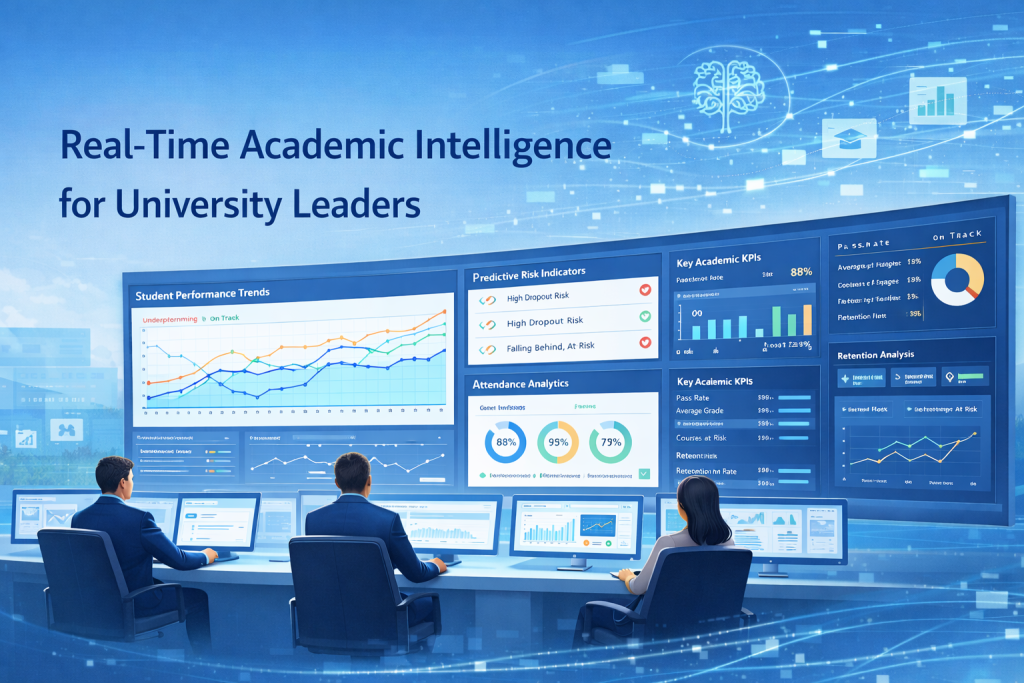
AI-powered academic intelligence dashboard for university leadership decision making

Institutions seeking a future-ready approach are increasingly adopting platforms that unify learning intelligence with institutional operations.

As part of its advanced Education Management System (EMS) framework, iCloudEMS delivers:

  • AI-powered academic monitoring
  • Cloud-native scalability
  • Real-time performance alerts
  • Integrated student lifecycle visibility
  • Automation-driven academic workflows
  • Mobile-first learning access
  • Unified institutional dashboards

Importantly, iCloudEMS approaches the AI-Powered Learning Management System not as an isolated module but as a connected intelligence layer within the broader digital campus — including solutions for university management and college management.

Therefore, universities gain not just a learning platform, but a coordinated academic ecosystem designed for long-term institutional growth.

Conclusion: The Upgrade Is No Longer Optional

Higher education is entering an intelligence-driven decade. Universities that continue relying on static learning platforms may struggle to meet rising expectations from students, faculty, and regulators.

An AI-Powered Learning Management System is rapidly becoming the foundation of modern academic strategy. However, the real advantage emerges when the LMS operates within a unified Education Management System (EMS) supported by robust Digital solutions for higher education.

The question is no longer whether institutions will upgrade.
The real question is how prepared they are for the transition ahead.

How prepared is your institution for AI-driven learning transformation? Share your perspective and experiences.

Frequently Asked Questions

What is an AI-powered Learning Management System?

An AI-powered Learning Management System uses artificial intelligence to analyze student behavior, automate academic workflows, and provide predictive insights. Unlike traditional platforms, it enables proactive academic support, personalized learning experiences, and real-time institutional visibility for universities.

Why do universities need AI in LMS platforms?

Universities need AI in LMS platforms to move from reactive to proactive academic management. AI helps identify at-risk students early, improves engagement tracking, automates routine tasks, and provides leadership with data-driven insights that enhance academic outcomes and operational efficiency.

How does an LMS improve student outcomes?

A modern LMS improves student outcomes by centralizing learning resources, enabling continuous assessment, providing faster feedback, and supporting personalized learning paths. When enhanced with AI, it can also predict academic risks and trigger timely interventions that support student success.

What features should universities look for in an LMS?

Universities should prioritize AI-driven analytics, mobile accessibility, automation capabilities, real-time dashboards, seamless integration within an Education Management System (EMS), and cloud-native scalability. These features ensure the platform supports both current academic needs and future institutional growth.

How is iCloudEMS different from traditional LMS platforms?

iCloudEMS delivers an AI-powered Learning Management System as part of a unified Education Management System (EMS). Instead of operating as a standalone tool, it connects learning data with the broader digital campus, enabling real-time academic visibility, automation-driven workflows, and intelligent decision support for institutional leadership.

Is a cloud-based LMS better for universities?

Yes. A cloud-based LMS offers better scalability, remote accessibility, automatic updates, and reduced infrastructure burden. For universities managing complex academic operations, cloud deployment also supports faster innovation and stronger system reliability.

Learning Management Software for Modern Institutions: Enabling Better Teaching and Stronger Academic Outcomes

How learning management software is helping institutions bring clarity, consistency, and confidence to teaching and learning

In many higher education institutions, conversations about teaching quality now begin with a question that isn’t about technology at all: why does teaching feel reliably strong in one department but inconsistent in another? That question — about clarity, continuity, and trust — is exactly where learning management software has quietly become indispensable. When configured and used thoughtfully, it becomes the system that helps institutions turn academic intent into measurable outcomes while supporting faculty and strengthening leadership oversight.

The evolving role of learning management software in higher education

A decade ago most platforms were simple content hosts: upload slides, collect submissions, push announcements. Those basics matter, but they do not create institutional coherence. Today’s institutions expect their learning platforms to do more — to connect course design, assessments, student engagement, and outcome measurement into one credible academic story.

If you want to signal this evolution clearly early in the article, point readers to a resource that explains LMS as an institutional pillar: learning management software. That page adds practical context for readers who want a focused primer on why the platform is more than a repository.

Modern learning systems are part of a larger shift toward evidence-driven academia: mapping curriculum to competencies, tracking attainment, and creating auditable academic trails. Many institutions are now combining learning platforms with outcome frameworks — see the Outcome-Based Learning Management System (OBE-LMS) to understand how course-level intent aligns to program-level outcomes.

Conceptual illustration showing a structured learning ecosystem managed by learning management softwareModern learning management software quietly connects courses, assessments, and outcomes into a single learning ecosystem.

What institutions really expect (and rarely say aloud)

Senior leaders rarely ask for more dashboards. They ask for confidence — confidence that their institution’s learning programs are consistent, defensible during reviews, and improving year on year.

That expectation translates into practical needs:

  • Clear mapping between course objectives, assessments, and outcomes.
  • Continuous evidence that students are meeting expected standards.
  • Trustworthy academic records that survive scrutiny during audits or accreditation.
  • Seamless, low-friction workflows so faculty can teach, not administer.

A succinct way to explain institutional positioning is to link to your brand hub: Digital solutions for higher education. It helps readers move from idea to product-level context without disrupting the leadership tone.

When teaching quality improves: structure, not control

Good teaching thrives when the environment reduces friction. It’s not about forcing conformity — it’s about giving faculty structures that let their craft shine. In my conversations with lecturers and deans, they repeatedly return to the same point: the difference between chaotic delivery and consistent excellence is often a shared course design process and a reliable way to evidence student progress.

Practical features that support that shift include course-file standards and easy course planning. If you want an example of how course documents can be systematised, see the iCloudEMS guide on how to design the course file. Small process changes here cut down faculty admin and let teachers invest time back into pedagogy.

When course design, assessment, and feedback are coordinated inside learning systems, faculty spend less time reconciling versions and more time iterating on what actually improves learning. Students, for their part, benefit from clearer expectations and coherent learning journeys.

Indian faculty member preparing course materials using learning management software in a university settingIndian faculty member preparing course materials using learning management software in a university setting

Outcome-based education: from policy to practice

Outcome-based frameworks look elegant on paper. Their success, however, is decided in the daily orchestration of courses and assessments. Learning management software becomes the practical tool that moves outcomes from concept to data.

When learning outcomes are embedded into course design and tracked through assessments, institutions can:

  • Measure attainment across cohorts, not just single exams.
  • Identify systemic gaps early — for example, a course where multiple sections underperform on the same outcome.
  • Use evidence in accreditation processes rather than relying on ad-hoc artifacts.

If you’re building the outcome story in your institution, link readers to the focused OBE resource: outcome-based learning. That makes the case that outcomes are most useful when they’re measurable and visible within the daily workflow.

Assessment intelligence, early support, and student success

Assessment is no longer just a summative stamp at the end of a term. Modern platforms provide course-level and program-level insights that help faculty intervene early. Predictive flags, engagement indices, and assessment analytics let teams support students before small issues become failures.

For example, institutions that add AI-assisted readiness tools to their exam ecosystem are better positioned to ensure integrity and preparedness. If you want a concrete exploration of these capabilities, see AI-enhanced exam readiness. The key is simple: use intelligence as an early-warning and support mechanism, not as a replacement for academic judgment.

Academic governance, visibility, and trust

This is the leadership chapter: where visibility matters most. Deans, registrars, and accreditation teams need reliable evidence. They do not need noise; they need curated signals that answer the questions they will be asked under pressure:

  • Are our programs delivering the competencies we claim?
  • Can we demonstrate consistent assessment standards across departments?
  • Where are the immediate risks, and what mitigation is underway?

That’s where targeted governance tools help. For accreditation workflows and automated evidence collection, link to the accreditation management system. When leaders can produce audit-ready evidence quickly, institutional confidence increases and stress during review cycles falls.

Leadership also needs consolidated reporting and analytics. A high-level benefits page explaining reporting capabilities is helpful here — see how iCloudEMS is beneficial to higher education institutes for a broader view of reporting and governance features.

Faculty remain central — systems are in service of teaching

A recurring fear is that systems will replace judgment or reduce academic agency. The opposite is true when systems are designed for support. They let faculty focus on pedagogy by taking care of version-control, assessment consistency, and compliance overhead.

Practical faculty benefits include:

  • Reusable assessment banks and rubrics.
  • Simple course clones that preserve learning outcomes across sections.
  • Integrated feedback loops to speed up formative assessment.

Those are functional wins that translate into time for mentoring, curriculum iteration, and higher-quality student interactions.

Student experience and continuity

A learning system must serve students first — by making learning predictable, accessible, and continuous. Mobile access, single-sign-on for course materials, and transparent assessment timelines reduce anxiety and increase engagement.

If you mention mobile support in your section, link to the evidence page about mobile features: smart mobile app facilities. That helps operational teams see the student-facing side of a learning strategy.

Integrating learning management software into an Education Management System (EMS)

Learning systems gain power when they are part of a broader institutional platform. Framing them within Digital solutions for higher education and an Education Management System (EMS) positions them as academic infrastructure, not point solutions. That broader context improves governance, data consistency, and operational scalability.

When LMS sits inside an EMS, the benefits compound: admission and student records feed into learning histories, assessment outcomes feed into program reviews, and leadership dashboards draw from consistent, centralised data. This alignment makes change sustainable rather than episodic.

Moving forward with confidence: practical next steps for leadership

If you are a Dean, Registrar, or Head of Academics, here are pragmatic actions that turn intent into outcomes:

  1. Map outcomes to practice. Start with a single program and map its core outcomes to assessments and course activities. Use the OBE guidance as a reference. (OBE-LMS resource)
  2. Pilot faculty-centred workflows. Remove low-value admin work for one department and measure time saved. Reinvest that time into pedagogy.
  3. Design leadership signals. Define 4–6 KPIs that leadership truly cares about and make sure the learning system surfaces them (quality checkpoints, outcome attainment, progression risk).
  4. Prepare evidence for accreditation. Build audit trails as you teach — not after. The accreditation system guidance shows how. (accreditation management system)
  5. Prioritise student continuity. Ensure mobile and portal access is seamless for students so engagement metrics are meaningful. (smart mobile app facilities)

Conclusion

Institutions succeed when they bring clarity to teaching, support to faculty, and confidence to leadership. Learning management software, when treated as a strategic element of an Education Management System (EMS), enables that clarity. It’s not about more technology — it’s about connecting academic intent to observable student learning in ways that help people make better decisions.

If you’d like one practical next step: pick one program, map its core outcomes, and run a short six-week pilot with faculty volunteers. The insights you gain will be immediate and instructive.

If you want more detail on any of the implementation steps above, I can expand any section — from outcome mapping to pilot design — and provide editable templates.

Frequently Asked Questions: Learning Management Software

What is learning management software in higher education?

Learning management software is a platform that organises course delivery, assessment, feedback, and outcome tracking for institutions. It helps structure teaching, engage students, and provide leadership with institutional-level insights.

How does learning management software improve teaching quality?

By creating clear course structures, aligning assessments with outcomes, and automating low-value administrative work, learning management software enables faculty to focus on pedagogy and mentoring.

Can learning management software support outcome-based education?

Yes. Modern systems let institutions map assessments to learning outcomes, track attainment across cohorts, and use evidence during program reviews and accreditation.

What role does AI play in learning management software?

AI typically provides insights — for example, identifying engagement patterns or early risk indicators — that help faculty and leaders act earlier. It supports decision-making without replacing human judgment.

How does learning management software support accreditation?

When outcomes, assessments, and evidence are recorded within a system, institutions can produce audit-ready reports and documentation more efficiently. Automated accreditation workflows reduce last-minute admin pressure.

Is learning management software only for online learning?

No. It supports on-campus, blended, and remote learning by providing consistent structures, transparent assessment processes, and centralised academic records across all modalities.

How does learning management software fit within an Education Management System (EMS)?

Within an EMS, learning management software integrates with admissions, student records, exams, and reporting to create a unified academic environment — a strategic asset for long-term institutional resilience.

How iCloudEMS can be a key enabler to promote OBE in Higher Education Institutes

In today’s fast-paced world, the outcome of learning is assessed according to the comprehensive development of an individual. Thus, to address the worldwide needs of 21st-century society, tertiary education must educate graduates with professional knowledge/skills and all-around qualities. 

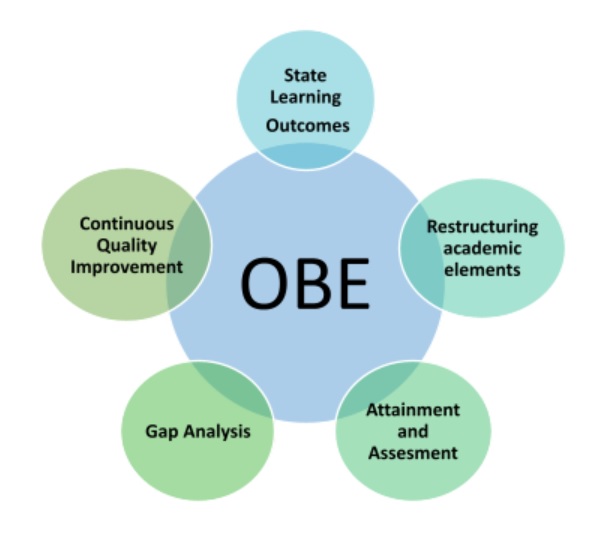
Nowadays, various countries’ higher education institutes emphasize continuous quality improvement by reforming their curriculum, planning, and assessing learning outcomes at all levels. The accomplishment of outcomes is believed to be analyzed using evidence of learning to ensure learning outcomes are met.

Outcome-based education (OBE) is a student-centric educational paradigm that directs each level of learning on the accomplishment of learning outcomes. OBE emphasizes professional knowledge, skills, talents, values, and attitudes over the educational process. 

OBE is a student-centered strategy that fosters hands-on learning opportunities to improve the information, skills, and personality qualities that students acquire at the conclusion of a program or course. Curriculum, pedagogy, and evaluation procedures are completely focused on expected goals to be accomplished by students after completion of their course or program. 

Students assume more responsibility for their educational pursuits under OBE implementation and can work more actively in line with their learning trajectory. Teachers also get feedback on the effectiveness of the teaching and learning strategies they use in the classroom via outcome-based assessment.

The teaching methods used in the OBE paradigm are tailored to each student’s unique requirements and are mandated to use active pedagogical techniques to empower real-world, technology-driven, field-based abilities that may illustrate the relationship between theory and its applications.

The assessment techniques include practical assessment techniques such as open book assessments, assignments, project demonstrations, and others that may demonstrate how well objectives have been reached and, ultimately skill set and values in learners.

We at iCloudEMS understand the 21st-century education demands and facilitate Higher Education Institutes to empower a learner-centric education system that can well prepare graduates to contribute in a globalized knowledge-driven world. Our key cutting-edge features and services include;

  • A cloud-based server that can store a lot of data and records for easy record management, enabling instructors to keep track of how their students are doing with their course objectives.
  • Time-saving tools for attendance management, assignment submission that automate the design of schedules, publication of assignments, and results reporting for academic staff.
  • Digital course baskets that simplify the choice of courses and their allocation according to the Choice Based Credit System for a flexible and dynamic learning environment.
  • OBE-LMS promotes an outcomes-oriented culture by developing interesting course materials and tasks using innovative approaches for accurately mapping and designing course outcomes.
  • Our Accreditation management system automates OBE-assisted executions and digitizes the foundational work to save up staff time and resources from completing repetitive, tiresome duties. 
  • Student-lifecycle management system, which allows users to quickly and easily access all aspects of a student’s academic career and fosters an environment for continuous quality improvement. 
  • A system for online classes and exams that encourages the strategic execution of OBE in all pre-and post-exam tasks, from creating question banks to disseminating final results, with utmost care to developing and outlining every component with outcomes.

In a nutshell, iCloudEMS digitizes all-academic and non-academic functions of Higher Education Institutes to develop and establish a student-centric culture. We make you embrace the OBE paradigm in educational processes and systems that prepare the youth to think beyond academics and reflect real-life characteristics to enter the globalized workforce.

Why Online Examination System is a Better Option for Higher Education Sector

The Human Resource Development Ministry has always encouraged Higher Education Sector to expand their digital capabilities for upskilling their students according to demand of 21st century Education system.

Now the Quality Education is not confined to four walls of classroom, digitization has facilitated uninterrupted education regardless of time and space. It is well said that

“The students of the future will demand the learning support that is appropriate for their situation or context. Nothing more, nothing less. And they want it now the need arises. Not sooner, not later. Mobile devices will be a key technology for providing that learning support.” — Dr. Marcus Specht

COVID-19 pandemic pushed all the Higher Education Institutions (HEIs) to showcase their best skill and converted their education model online.

It was very challenging time for Education sector but as far as technology implementation is concerned, it proved a blessing in disguise.

Leveraging technology enabled accessibility of Quality Education and Assessment to all students globally.

iCloudEMS understands the skill-oriented demands of modern Education system. We encourage HEIs across India to implement student-centric learning in digital ecosystem.

Our Online Examination system fosters paperless approach to conduct all examination activities from pre-examination to post-examination.

We offer cloud-based platform to conduct and evaluate flawless examination in HEIs. We promise to understand the complexities of tedious examination activities and offer our best services to save your priceless time and efforts.

All stakeholders of HEIs can make use of our Online Examination utilities in following ways: 

Faculty

  • Can use ingenious Question paper formation approach to prepare papers of different difficulty levels.
  • Can make use of pre-structured Question bank and templates to construct question papers.
  • Can formalize outcome-based questions under the framework of OBE and Bloom’s taxonomy.
  • Can safeguard the integrity and transparency of Examination with LIVE proctoring.
  • Can utilize on-screen evaluation and reporting tools for tamper-free assessment. 

Students

  • Can live through the comprehensible digital examination and evaluation system.
  • Can access their records anytime and track their learning trajectory
  • Can self-govern their learning matrix and accomplishment of learning goals with respect to their holistic development.

Administration

  • Can have quick access to huge records with a few clicks only.
  • Can retrieve earned credits of every student at each level using digital academic bank.
  • Can experience effortless management of valuable resources and a seamless workflow.

Management

  • Can scrutinize digital ecosystem of examination and evaluation settings anywhere and anytime.
  • Can maintain the integrity of Examination system and foster continuous improvement in academic standards.

We at iCloudEMS will be glad to empower online governance of vital tasks of HEIs from admissions to accreditation. Now you can easily invest your precious time in nurturing a student-centric learning environment. 

Give us a chance to serve you and we are ready to demonstrate how you can make the best use of our cloud-based web space and transform your Institute from Good to Great.

How Hybrid learning has become an adequate Education Model in Higher Education Institutes

The use of Information and Technology has been increasing since a long time. However, pandemic COVID-19 has made it to gain incredible momentum.

Shifting from Classroom learning to Online mode due to sudden closure was a challenge for educators and learners. But our education administration did not leave any stone unturned in making the accessibility and availability of Quality Education globally.

Online education was a difficult initiative, but its promising results were observed. Students experienced self-govern learning and the instructors could follow their learning trajectory easily, that bridged the learning gap between

Now as the situations started to become better, one more curling from Online to Classroom learning has not been less than a challenge for many students. Many Students feel more comfortable in learning under digital ecosystem. This requirement germinated an admirable Learning model i.e., Hybrid Learning. them.

What is Hybrid learning

In a hybrid learning environment, students have the choice of learning at the location of their own choice. In this model instructors can utilize the digital services like video conferencing technology and LMS to make the session available simultaneously for the in-class and remote students.

Advantages of Hybrid Learning

Hybrid learning is a model developed by combining the features of both Online and in-person learning strategies that gives rise to a seamless instructional approach irrespective of the students’ location, and its various advantages can be observed as:

– > It supports flexible learning where students have freedom to learn at their own space that aids convenience in the achieving their learning
outcomes.
– > It gives better exposure towards interactive peer learning as both in-site and remote students are connected for learning sessions at same time.
– > It fosters self-management and disciplined approach in students for the accomplishment of their learning goals.
– > It enables the best use of resources, as different resources can be used to make concepts clear according to requirement of course and topic.

Hybrid approach has not only been proved advantageous in teaching-learning, but also for administration and management of Education Institutes. Therefore Higher Education Institutes are working exceptionally well in stretching their digital capablities in line with the demands of 21 st century education system.
We at iCloudEMS always take care of visionary needs of Higher Education Institues. Our following unique products and services have encouraged student-centric learning and facilitated their administartive functions consistently.

– > We offer cloud-based platform to effortlessly manage enormous amounts of data and reports.
– > Our dedicated managed services offer seamless management of their administrative and non-administrative operations.

– > We deliver digital choice-based credit system, that facilitate faculty and students to select and allocate courses.
– > Our personalised learning management system supports creative teaching and boosts student engagement in sessions.
– > We allow students to learn at their own pace and space through an online repository using their login information.
– > We present digital setting for the administration and preparation of on line examination and evaluation while protecting system integrity.
– > Our dashboard reflects Student lifecycle management system enables effectively tailor future plans for students’ overall development.
In a nutshell, we can say that Hybrid learning is a comprehensive technological Education model that can deliver Quality Education without any time or space constraints.
We at iCloudEMS make every effort to digitally strengthen organizational and administrative arrangements of Higher Education Institutes to nourish the learning preferences of 21st century’s youth.

Boost the Classroom Attendance and Minimize the attendance management with Our Cloud-Based Attendance Management System

We live in the digital world where access to any information is possible with a couple of clicks only. Although, there are immense resources present for each and every topic, yet we need a mentor who can facilitate our learning and help us to gain knowledge from the best available resources. We have an abundance of text books on every subject, still the role of instructors can never be ignored to make us understand Between Lines.

It is necessary to channelize the energy of youth in constructive ways to make them grow and shine in the global arena. Here comes the importance of discipline learning, and attendance of students in Higher education is more concerned with the development of discipline and personal relationships among students. Thus, it is necessary to motivate the students of Higher Education Institutes to be regular in classes where they can participate in active and cooperative learning.

Apart from boosting attendance in HEIs, there is one more important concern is to maintain the analytics of students’ attendance by regular tracking and managing attendance records. Manual management of such functions is a tedious and error-prone task. However, thanks to the Cloud-based management system that acts as a digital companion in solving such issues and saves the valuable time and efforts of the instructors.

iCloudEMS is a trustworthy digital partner of Higher Education Institutes (HEIs) that offers cutting-edge products and managed services for the smooth and automated workflow of institutions. Our attendance management services boosts efficiency and decreases workload of teachers and administrators by tracking real-time attendance and seeking solutions for absentees. We promote a paperless approach for generation of multiple type attendance reports while avoiding redundant or missed data entry. The key purpose of our attendance support system is to enhance the attendance in classroom along with minimization of attendance management tasks that include:

Transparent attendance insights: We offer dashboard attendance marking that makes the attendance analytics easily presentable to all the stakeholders of HEIs. Students can easily observe the real-time attendance trajectory and govern their attendance & learning in no time. 

Synchronous attendance notifications: Our digital attendance services allow the synchronous mail and notification of absentees to the students as well as to their parents that has proven to maintain a good attendance record without any manual efforts. 

Integrating Feedback with learning: We propose an innovative learning management system that includes feedback after learning sessions, assisting the teachers to understand the learning gap and promoting the students’ interest and retention in the classroom.

Understanding the students’ cognitive abilities: We encourage the designing of outcome-based curriculum and assessment under the framework of Bloom’s taxonomy that fosters deeper learning and skill development in students by increasing students’ engagement and interest in classroom activities.

Paperless attendance reports: Our Cloud-based attendance services can easily generate visual attendance analytics including charts and statistics online, on multiple criteria that can be accessed anytime and anywhere. These reports can act as an early warning indicator for the students failing in different criteria that allow them to take necessary action on time.

iCloudEMS is a market-leader assisting Higher Education Institutes to accomplish their Institutional goals and save valuable time of the associated staff by eliminating their manual efforts in daily tasks so that they can invest their efforts in more productive goals.

How digitization encourages the student-centric learning in Higher Education Institutes

In the 21st Century, technology acts as a catalyst of creativity and innovation to improve the quality and significance of education and learning. Today the youth is more interested in becoming active learners and want to govern their own learning where the major responsibility of Higher Education Institutes is the development of Critical thinking, Creativity, Communication and Collaboration in the learners. Integrating technology into conventional teaching-learning practices enhances digital literacy skills that open the doors of a wide range of opportunities for youth.

Let’s examine how technology can improve the educational outcomes for students:

Students’ Interest and demand: We are living in the world of gadgets. Students outside the campus are used to their smartphones and laptops for their entertainment. So, using these gadgets as their instructional tools where instructors act as facilitators helps to create a conducive and dynamic learning environment for the achievement of their academic goals. 
Learners’ Engagement in Classroom: Technology enhances the creativity of teaching approaches that has the potential to change the traditional teacher-centred learning environment into one where students are more actively engaged in performing and learning. Nothing is more satisfying than witnessing your pupils actively participating!

Self-regulated Learning: All students are blessed with different capabilities. However, it is difficult for instructors to manually manage their teaching momentum according to the learning needs of students, but the usage of ICT tools and digital services makes self-regulated and independent learning possible for students. Moreover, educators can also identify the learning gaps easily and help individual students according to his learning requirements.   

Self-govern learning: It is a studied fact that if students are made to take ownership of their own learning, they are more likely to carefully track their learning trajectory and take the lead to achieve their objectives. Digitization allows students to build a regular routine for students to revisit their goals and decide what is working for them in their plan of success.

iCloudEMS complements the traditional ecosystem of Higher Education Institutes with its digital capabilities and allows its learners to timely attain their academic goals. We promise to bring creativity in the classroom that reduces the gap between teaching-learning and assist the instructors to cater the assorted needs of their all learners. Our innovative products and services make the academics and research free from physical boundaries for the instructors and the students, that promote student-centric learning in HEIs:

  • We offer a cloud-based cyberspace where instructors can access, process, and keep track of their massive data and records that can be fetched without any time or place constraints. 
  • Now attendance taking and tracking is no longer a tedious task for teachers because now they can maintain error-proof attendance records of all students with a few clicks only. 
  • Instructors and students can easily be networked 24*7 for regularly updating the schedule of classes, setting due dates for assignments, and posting them online. 
  • Students can easily register and access their desired courses from anywhere at any time by using our web-based communication tools.
  • Our integrated feedback services allow students to give feedback on the learning sessions that helps the instructors to follow their learning trajectory.
  • We save valuable administration hours with our cutting-edge Online Examination System that gives a digital examination portal with LIVE proctoring to maintain an integrity of the system.
  • Teachers and Students can enjoy our quick evaluation approach along with easy-to-read OBE mapped digital statistics reports that reflect students’ performance under the framework of Bloom’s Taxonomy.

iCloudEMS fosters a learner-centred environment in HEIs that is not restricted to physical limitations and encourages a paperless administration. We take care of 21st century education needs and synthesizes technology integrated innovative learning ways to connect and learn from real-life situations.

How can Higher Education Institutes Leverage Automation to Accomplish their Academic Goals

In today’s world, where everyone is surrounded by gadgets, the stakeholders in Higher Education Institutes can efficiently automate their workflow to make best of their important time and accomplish their learning goals. 

Now there is no need to spend numerous hours doing tedious and repeated tasks such as attendance tracking, admission and examination activities. The cutting-edge technologies are changing the ways of performing administrative and non-administrative activities in Higher Education Institutes(HEIs).

Learners are overwhelmed with abundant information on the Internet, so they no longer enjoy the traditional practices of one size fits all and automation has encouraged Individual learning rather than group learning in HEIs. The digital facilitators complement the physical facilitators in HEIs to bring revolution in the Education sector and put emphasis on holistic development of youth.

Automation

The term automation in Education deals with leveraging labour-saving mechanisms to promote Quality Education System in Education Institutes.  The instructors can resolve the intricacies of daily activities with a couple of clicks and spend more time serving their learners. 

Automation not only saves time but also proves to be more cost effective in the long run. Various advantages of automation can be seen as:

  • Instructors can spend quality time on delivering skills and knowledge according to 21st Century education demands to shape bright minds. 
  • Students can learn at their own pace and at their space that enables them to follow their learning trajectory.
  • Administration can be benefited with the paperless approach to perform various admission and examination activities.
  • Automation of education processes like grading and attendance decreases the risk of errors and missing data.
  • Automation of progress records helps the stakeholders to follow the milestones and decide the further steps to be taken.

Let’s have a virtual tour on digital capabilities of iCloudEMS that can comply with the institutional workflow with the visionary requisites and rules, allowing faculty members to be more creative and channelize their efforts in a more effective way. The Higher Education Institutes

  • iCloudEMS streamlines the admission process by maintaining students’ databases on cloud with all of their relevant personal and academic details, that can be retrieved at any time for preserving and updating records.
  • Specialized Managed services for the ERP of HEIs, in order to automate and streamline administrative and non-administrative activities of colleges and universities.
  • We offer an automatic schedule generation system that can create numerous sorts of timetables, such as class-by-class, room-by-room, and faculty-by-faculty without any conflicts or redundancies.
  • Personalized Learning Management System that permits the creation of an online repository of lecture notes and other study material that can be quickly downloaded for course file documentation.
  • Our Online Examination system provides a digitally governed cyberspace that can optimize the overhead cost of resource management keeping the integrity of system at priority. 
  • We empower the smooth implementation of Outcome based Education in HEIs and ensure the continuous quality improvement of the system.
  • We propose an ICT based curriculum designing approach under the framework of OBE and Bloom’s taxonomy framework.

The Bottom Line

The above-mentioned features can be taken only a glance of benefits that you can reap with iCloudEMS. Apart from them, there are numerous activities such as attendance monitoring, record maintenance, accreditation groundwork and so on, which can be performed at your fingertips that saves your ample time to build a productive and efficient work system.

How Outcome Based Education empowers Quality Learning in Higher Education

Unlike the traditional education system, that is more focussed on what teacher teach rather than what their pupils learn, Outcome-based education (OBE) places the student at the centre of the educational system and focuses on what the student is expected to achieve at the end of their course rather than how they achieved it. Outcome-based education is an educational strategy in which curriculum decisions are centred on the outcomes that students should demonstrate by the conclusion of the course-professional knowledge, skills, abilities, values, and attitudes-rather than the educational process. It emphasises the importance of knowing your eventual destination before embarking on your journey. Tertiary education must equip graduates with both professional knowledge/skills and all-round traits in order for them to meet the diverse but global needs of 21st century society. Today higher education institutes in various countries are emphasising on continuous quality improvement by reforming their curriculum, plan and assess learning outcomes at all levels, collect evidence of learning and analyse outcomes accomplishment using a variety of assessment techniques, to guarantee that the learning outcomes are actually met.

What makes OBE different from Traditional Education System

Change is inevitable in today’s dynamic world, and that also demands from the education system to update and adapt their approaches and parameters in all spheres. OBE is a pedagogical model in which curriculum, pedagogy, and assessment processes are reconstructed to reflect the attainment of high-order learning rather than the accumulation of course credits. Unlike traditional education, which emphasises what is taught, OBE emphasises what is learnt. The latter is a student-centred approach that includes practical learning experiences to enhance the knowledge, abilities, and traits that students get at the end of a programme or course. Traditional education is based on rigid curriculum and standardized practices, in which students gather under one roof at a specific time to be instructed by a teacher. Learners interact with peers or ask faculty members questions once a lecture is over. This suggests that the effectiveness of the educational system is mostly determined by the teacher’s efficacy and classmates’ knowledge base. On the other hand, OBE is a system of education based on specific outcomes. It focuses on the skill sets that students will need when they finish their education. Activities in and out of the classroom are planned to assist students in achieving these goals.

How OBE is a Revolutionary Practice in Indian Higher Education System

OBE has been adopted by the majority of countries around the world. The signatories are obligated to implement the programme outcomes in accordance with the benchmarked outcomes set forth by the Washington Accord (WA) to make the Indian Higher Education system at par with the global standards.

The OBE paradigm is more focused on clear understanding of the ultimate result to achieve for both students and teachers. Students and teachers have a clear understanding of their learning outcomes that allows them to plan and streamline learning activities to actualize the desired outcomes. 

OBE is a flexible learning approach where learning becomes skill-based, and teachers are able to create lessons and practises to meet the requirements of their students. Unlike the rigid traditional education system, OBE is mostly student-centered, with teachers serving as guides who promote student involvement at each learning stage. Students self-govern their learning and take greater ownership of their learning activities. The assessment practices in OBE are consistent with stated outcomes and more accurate as it allows students to evaluate each other, self-evaluate, and have employers evaluate their performance. 

Outcome-based assessment provides educators with feedback and information on the success of the teaching and learning techniques they use in the classroom. This has a positive and significant impact on the creation of more responsive and adaptable teaching strategies that assist students in achieving their educational goals.

Role of iCloudEMS in technological accomplishment of OBE framework in Higher Education institutes

iCloudEMS has a unified cloud-based platform that assists institutions and teachers in defining outcomes, mapping assessments, implementing course correction methods, and tracking outcome achievement. Today most accreditation and regulatory authorities choose OBE to assess an institution’s quality standard, OBE platforms are in high demand among higher education institutions. We have designed NBA and NAAC-related OBE modules to meet this high demand and streamline difficult procedures.

We provide stepwise digital assistance in defining, mapping, and tracking all the learning outcomes including Program Outcomes (PO), Program Specific Outcomes PSO, Course Outcomes (CO). 

You can get the details of these outcomes in our other OBE related blogs 

iCloudEMS ensures a paperless approach to encourage the environment sustainability in Higher Education Institutes, moreover we take care of all the assorted needs of stakeholders to obtain and compile the OBE friendly data and reports with a couple of clicks only. Our following revolutionary products and services guarantee the seamless management of all the administrative and no-administrative operations in Higher Education Institutes.

  • A cloud-based server that can store a vast amount of data and records for convenient record management, allowing teachers to monitor the progress of their students’ course outcomes.
  • Time-saving solutions that automate attendance records, timetable creation, assignment publishing, and results reporting for faculty personnel.
  • Digital strategies for course selection and allocation that support the Choice Based Credit System and encourage a flexible and dynamic learning culture.
  • OBE-LMS promotes outcomes-oriented learning by offering engaging course content and assignments using a creative result designing and mapping process.
  • The implementation of OBE has become critical in lubricating the accreditation wheels in Higher Education Institutes, and our Accreditation Management System automates and aligns the accreditation preparation work under the OBE model.
  • Student-lifecycle management system that enables students to access their whole academic experience with only a few clicks, enabling student-centric learning and encouraging the Continuous Quality Improvement ecosystem.
  • Online Classes and Examinations system to promote strategic execution of OBE in all pre and post examination activities, ranging from the preparation of question papers to the publication of final results, all of which are concerned with the design and mapping of all components with predetermined outcomes.
  • A user-friendly and cost-effective portal with rich reporting capabilities for quick statistical analysis at all levels.

Finally, it can be concluded that, to embrace OBE’s fundamental goals, everything in educational processes and systems should be based on results; outcomes that go beyond academics and reflect real-life characteristics in youth to enter the workforce as professionals. iCloudEMS stimulates the redesigning of various academic elements including outcomes-oriented teaching and learning, as well as assessment tasks, to ensure that students are prepared not just for academic achievement, but also for life success.

How iCloudEMS encourages Blended and Hybrid learning in Higher Education Institutes

The world has adapted many ‘New Normal’ outcomes generated in the light of pandemic COVID-19. Thanks to the advanced Information and technology practices, that have evolved as backbone to renovate the traditional education sector and made it realize its actual potency. Our education administration has shown its unbelievable agility to get trained and leverage the latest technologies in using online platforms to deliver Quality Education and bring the reforms according to the recommendations of NEP 2020 in this challenging time. Blended and Hybrid learning are also the modifications embraced by the Education system to avoid uninterrupted learning in the time of uncertainties. 

Difference between Hybrid and Blended Learning

The terms Blended learning and Hybrid learning are used interchangeably most of the time as both incorporate technology in teaching-learning practices to operate efficiently. However, the difference lies in the way to deploy the technological measures; Blended learning is concerned with leveraging technology in classroom learning activities to make the concept clearer and more understandable, while Hybrid learning model is the use of technology to make simultaneous learning sessions available for both the students present in the classroom as well as those present at their own place. 

Blended learning is not new model to be adopted, UGC has always put its best efforts to integrate technology in teaching-learning measures of Higher Education System but Pandemic has pushed to implement the same with no other option left whereas Hybrid learning model is an evolved learning model which makes the learning free from any physical barriers by using the digital platform effectively to open the way to explore new technologies to build upon the digital strengths and achieve the learning outcomes. 

Higher Education Institutes are required to take a few measures as mentioned below, for the operative implementation of constructive Blended/Hybrid learning that can ensure the quality teaching-learning experience

The Online Education System deployed in that time of emergency has made the world reimagine the unthinkable Education practices and future possibilities of using digital tools and technologies to make quality learning available to the student at every part of the globe. NEP 2020 has also advocated some visionary actions to promote the utilisation of technology in teaching-learning methods at Higher Education Institutes. It has recommended incorporating national digital platforms like SWAYAM and DIKSHA to foster multidisciplinary and flexible learning. The establishment of Virtual labs will also encourage hybrid/blended learning in Higher Education Institutes to offer equal access to excellent experiment-based knowledge.
NEP has also emphasised the role of special training and incentives for faculty members to motivate the student-centric learning and advanced pedagogical practices. It has fostered the development of an open, interoperable technology-based infrastructure in the education sector that can provide solutions to the country’s major difficulties, such as India’s size, variety, complexity and improve the digital divide constraints in learning.

Experts have stated that the use of technology driven learning and online platforms will continue to be appreciated and implemented in the post-pandemic Education landscape. Higher Education Institutes are fostered to develop their digital capabilities and explore the benefits of deploying Blended and Hybrid learning model given as:

For the Students:

  • Flexible and Self-paced learning
  • More engaging sessions than chalk and board ones
  • Can govern their own learning.
  • Can follow their learning trajectory.

For the Faculty:

  • Can be more collaborative and creative than classroom sessions
  • Can easily track the learning milestones.
  • Can be more time saving than manual handling of academic functions.
  • Can experiment with more pedagogical practices for deeper learning.

For the Administrators:

  • Can be labour-saving than manual administration.
  • Can easily train and upskil the instructors.
  • Can have a bird-eye view of academic and non-academic operations anytime and anywhere.
  • Better course and faculty management.

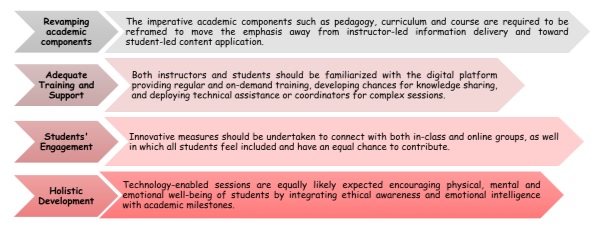
Although,the transition of incorporating technology in Education practices brings lot of advantages for every stakeholders yet Higher Education Institutes should prepare themselves to address a few challenges along with such as digital infrastructure that consists of advanced and collaborative digital tools and services to create a secure and updated experience, regular training and support for instructors and students to use updated digital platform and technologies etc.

Therefore a strong technology foundation has become the need of the hour for Higher Education Institutes for achieving the learning goals of the 21st century education system.

iCloudEMS has always  taken the utmost care of digital needs of Higher Education Institutes in order to host a digital ecosystem and support student-centered learning. We have always extended our utilities to empower uninterrupted learning experience in every situation. Our primary characteristics that address the technological requirements in the course of implementing Blended and Hybrid learning models in Higher Education Institutes are listed below.

  • Cloud-based platform for seamless management of massive data and reports.
  • Specialized managed services for the sustenance of Higher Education Institutes’ ERP systems, that brings digital transformation in handling administrative and non-administrative operations in Colleges and Universities. 
  • We make the course choice and allotment sample for faculty and students under the framework of Choice based Credit System.
  • We provide a cloud-based personalised Learning management system to increase student engagement and encourage advanced pedagogy in the teaching-learning.
  • Students can access the study material through an online repository using their login credentials, allowing them to learn at their own speed and bridging learning gaps.
  • At the end of each topic, rating and feedback systems aid instructors in gaining insights into students’ learning curves and strategic planning of their pedagogical approaches.
  • Our interactive Learning Management System (LMS) supports a variety of multimedia formats to help students visualize concepts better.
  • Outcome-based education (OBE) has become a must-have for achieving learning objectives. Our outcome-based LMS links teaching and assessment procedures with OBE and Bloom’s taxonomy to assist teachers in the definitive assessment of cognitive abilities of students.
  • One of the most essential aspects of education transformation is on-demand examination. The Online Exam Management system provides a disciplined environment for the planning and governance of on-demand examinations while maintaining system integrity.
  • Our specialised Student lifecycle management system promotes student-centered learning by integrating a student’s entire academic journey onto a single dashboard that provides an overhead view of the students’ activities and progress, allowing for more efficient tailoring of future plans for students’ overall development.

It can be summarized that in this world of uncertainties, we all are required to learn the way to survive in the digital ecosystem. The fundamental necessity is to strengthen the digital infrastructure of Higher Education Institutes for enriched quality education management without any time or space constraints. Blended and Hybrid learning are tech-integrated models that nourish the 21st century skills in the students in a multidisciplinary culture. iCloudEMS digitally facilitates the organizational and administrative arrangements of Higher Education Institutes to support student-centric and flexible learning that can fulfil the learning preferences and needs of the modern era youth.

Role of iCloudEMS in Enhancing efficiency of Higher Education Institutes in the Era of Digitalization of Higher Education: A Glance

Digitalization of Higher Education: A Brief Overview

In the last two decades, particularly at the turn of the twentieth century, the advancement in science and technology transformed higher education. The Education Technology (ET) with the help of Information and Communication technology (ICT) democratized higher education, consequently it brought learners to the global platform where they can exchange their knowledge. Considering the advancement of science and technology, the governments of the different countries have access to higher education, regardless of their gender, ethnicity, or social, geographic, or economic background. They emphasize that education should facilitate good access to labor and skills across the country. Lifelong learning is important in order to help not only individuals but also society and the labor market at large to adapt and innovate in the different domains of human knowledge. However, the process of digitization opens avenues for access to education and for cooperation. Further, new, innovative, and varied forms of teaching and learning are being used in regular campus-based courses by combining analogue and digital media (blended learning), and new models are being provided for purely online-based learning processes.

The process of the digitalization of higher education is recognized as an efficient, diverse, and robust sector in almost every country in the world. It has become a tool for making fundamental changes to the processes, content, and forms of work that can present higher education in a better position to achieve the goals of education and research including high quality and relevance, and access to education for all. In this connection, Open Educational Resources (OERs) are the best examples which can be accessed anytime, and anywhere. OERs can be reused, revised, retained, remixed, and redistributed. 

The primary goals for digitalization of higher education and ICT in the higher education may be identified as:

  • High quality in education and research
  • Research and education for welfare, value creation, and adaptation
  • Good access to education
  • An efficient, diverse, and robust higher education sector and research system

However, in order to meet the above goals, the process of digitization of higher education, and ICT in the higher education must support the following goals:

  • Course Instructors have high levels of digital and pedagogical skills (knowledge of how to use digital tools to promote learning in their subjects). 
  • Course Instructors can exercise their choice for a wide range of applications and digital tools and services that support the implementation of education, from planning, through teaching itself and interaction with students/stakeholders both internally and externally, to take a follow up and evaluation of students at individual and group levels.
  • Teachers can be encouraged to focus on the development of higher education-oriented activities by collecting documented results in the field of education.

Significance and Advantages Roles of Integrating iCloudEMS in Digital Higher Education

The iCloudEMS facilitates digital learning in higher education. The different significant functions of iCloudEMS have enriched the teaching-learning environment in the students-centric classrooms of the twenty-first century. It not only helps the course instructors and learners to maintain learning processes or make learning happen smoothly, but it also diminishes the distance between the teacher and the teacher, by supporting and connecting both digitally.  In recent years, iCloudEMS has played a significant and key role in the digitalization of higher education. The major advantages of this software include— transforming universities and colleges by helping them become digital, which leads to enhanced quality education, personalized learning, blended classroom experience, learner-centric classroom and higher industry collaboration, driving newer revenue streams and increasing productivity of all stakeholders – Students, Faculty, Management, Accreditation bodies, Alumni and Industry experts.

The software, iCloudEMS governs digital space to automate and simplify the tiresome and redundant activities of accreditation. The comprehensive Accreditation Management System of iCloudEMS enables an error-free mapping of learning outcomes which further aligns with vision and mission of an institution. It enables faculty members to be more creative and channelize their efforts in a more productive way as we are here to take care in aligning their workflow in compliance with the visionary requisites and guidelines. Consequently, the enhanced efficiency of the institute deliberates on the quality monitoring and improvement.
In the 21st century, marked as an era of competitive environment, it is essential for Higher Education Institutes to invest in a digital partner like iCloudEMS that can align the workflow with the visionary strategies of the institute to ensure quality assurance and enrichment of efficiency of its employees, staff, learners etc.

  • iCloudEMS has a dashboard entry of students’ databases with all their necessary personal and academic details at the admission stage that can be easily fetched any time for maintaining and updating records.
  • Manages services to the ERP of Higher Education System to automate and simplify the administrative and non-administrative tasks of Colleges and Universities.
  • iCloudEMS has an automatic timetable generation system to prepare multiple types of timetables i.e., class wise, room wise, faculty wise without any clashes and redundancy.
  • Personalized learning management system to create an online repository of lecture notes and facilitates other study material that can be easily downloaded for documentation of course files.
  • The Online Examination system of iCloudEMS fosters examination process and makes the evaluation procedure easier. It reports in the OBE paradigm including all imperative COs-Pos, mapping analytical reports to gauge the abilities of students and empower continuous quality improvement.
  • Semester-wise mapping and evaluation of students’ performance against PO parameters.
  • Incorporate direct/indirect assessment tools to measure the attainment of each PO.
  • More focus is on rote learning than the achievement of 21st century competencies.
  • Map COs with POs appropriate to the levels of Bloom’s Taxonomy
  • Develops appropriate ICT based and learner-oriented Pedagogy Framework Tools to enhance efficiency of course instructors to design, develop, monitor and review curricula based on the stakeholder’s /Industry / Expert feedback.
  • Includes references to appropriate learning material for all the defined outcomes, and integrates case study, unsolved problems, and resources in the respective outcomes.

How Outcome-based learning can advance the knowledge and skill in youth

Outcome-based education (OBE) is a visionary objective to bring reform in higher education for the upskilling of students according to the demands of 21st century society. Our traditional education system is more focused on rote learning and less emphasis is given to improve the skills of students including communication skills, interpersonal skills, analytical skills, working attitude etc. that enable them to meet the global demands of the 21st century.  OBE is a student-centric education paradigm that measures the students’ progress in terms of predefined outcomes so as to attain knowledge, skills and attitude to compete with their global counterparts. 

Implementation of OBE framework

In the world of multidisciplinary and flexible learning, it is essential to encourage the effective implementation of Outcome based education models in Colleges and Universities. To implement the OBE model, the first step is to outline a set of learning outcomes and once the outcomes are structured, all the imperative components and activities of learners are framed in line with the desired outcomes and the learners are encouraged to demonstrate the outcomes to gauge their learning achievements.

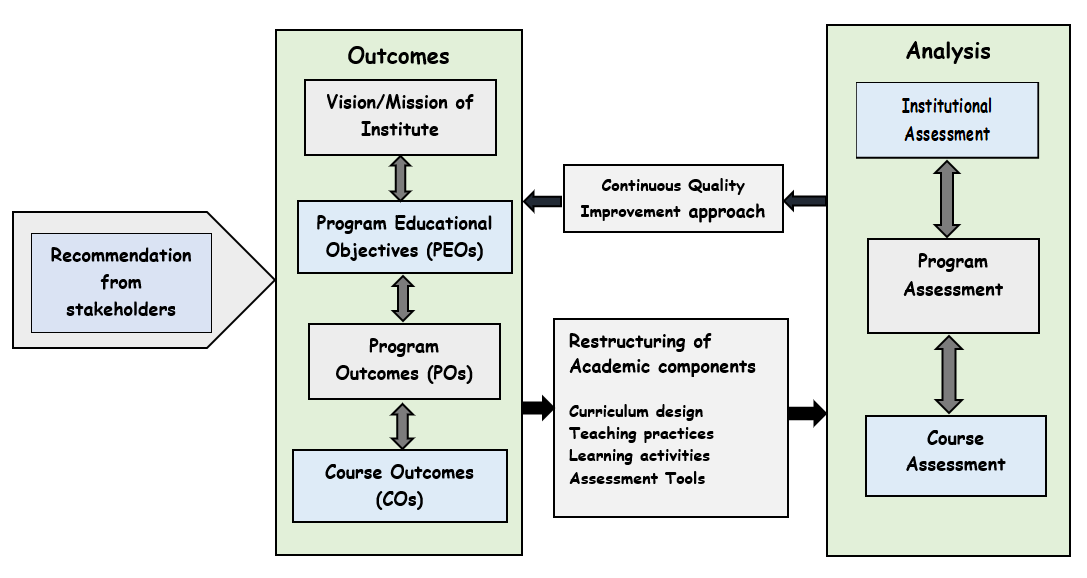
OBE framework consists of following components:

  • Vision and Mission
  • PEOs
  • POs
  • COs

Program Educational Objectives (PEOs): Program Educational Objectives (PEO) are predefined attributes or qualities or specific goals that students are expected to demonstrate in their career and professional life after the completion of program. These objectives are framed by taking inputs from the industry partners, students, parents, alumni, faculty and administration and are synced with the Vision and Mission of the department.

Program Outcomes (POs): POs are narrow statements that give the competencies, knowledge and behaviour attributes of students through the journey of their learning program. 

Course Outcomes (COs): COs are statements which are more specific to the courses/subjects and are narrower statements that describe the learning expectations from students at the end of each course.

OBE Framework

After the course outcomes have been determined, the assessment techniques must be devised to measure the attainment level of stated outcomes. Assessment is necessary to govern whether a student or learner has achieved the goals set for him. The outcomes will be used as a feedback approach to maintain and enhance the quality in the future. Depending on the desired course outcome, an appropriate assessment method must be chosen.

Analysis of OBE model

The analysis under OBE implementation constitutes Direct and Indirect assessment methods to gauge the learning abilities of students. Direct Assessments measures are devised by the faculty to analyse how well the student has learnt. Direct assessment procedures include assignment, exam, term paper, project, Laboratory Tests, Quizzes etc.

Indirect assessment measures are more concerned with the student’s perspectives, than how well he has learned the course. Unlike Direct methods, under which evidence of students’ learning are collected in the form of results, indirect measures require the faculty to infer the cognitive abilities of students from feedback, surveys, teaching evaluations etc. 

Attainment and Mapping of Learning Outcomes

COs are framed for each course by its respective faculty member using the appropriate action verbs from Bloom’s taxonomy from the first year to the end of the programme Then, using predefined correlation values a mapping matrix is created between COs and POs, under which value 3 is assigned, if the CO matches strongly with a particular PO criterion; 2 if it matches moderately or 1 if the match is low else mark with “ – ”  The total attainment of a program’s outcomes (POs) is calculated by combining direct and indirect attainment numbers in a predetermined proportion and comparing them to a set value. Any differences from the target value calls for the quality improvement measures.

There are many benefits of OBE including:

  • The structuring of outcomes and its analysis of attainment increase the commitment and participation of all stakeholders.
  • The clarity of learning outcomes, makes the room for teaching practices to be more creative and result oriented.
  • The OBE implementation in Colleges and Universities enhances international recognition and job chances on a global scale for graduates.
  • Graduates with professional and soft skills, social responsibility, and ethics are more employable and innovative.
  • The OBE paradigm empowers the graduates to flourish in their fields and reach new heights in their jobs and studies.

Technological OBE implementation in Higher Education Institutes

OBE has become the buzzword in the skill-oriented education system. Every Higher Education Institute is following the progressive OBE implementation path to produce the young mind who can add value to the society. But its implementation introduces challenges of exhaustive designing and mapping of learning outcomes at each stage for each student. But today technology has the solution to nearly all organizational problems. iCloudEMS is a pathfinder for all education management issues. We have come with the ground-breaking solutions to enhance the digital capabilities of Higher Education Institutes for OBE administration and accelerate continuous quality improvement. Our pioneering products and services are designed to achieve high standard in both administrative and non-administrative operations that include:

  • A cloud-based server that can hold a large number of data and records for easy record management, allowing teachers to track the learning status of their course outcomes.
  • Innovative technologies enabling faculty members to save their time by automating attendance records, timetable creation, assignment posting, and results reporting.
  • Course selection and allocation strategies that support Choice Based Credit System and empower a flexible and progressive learning culture. 
  • With a creative outcome designing and mapping methodology, OBE-LMS helps to promote an outcomes-oriented learning by providing interesting course content and assignments.
  • Implementation of OBE has become essential to oil the wheels of accreditation in Higher Education Institutes and our Accreditation management system automates and aligns the preparation work for accreditation under OBE model.
  • Student-lifecycle management system that allows students to access their whole academic experience with a few clicks, empowering student-centric learning and fostering the Continuous Quality Improvement ecosystem.
  • Online Classes and Examinations system to promote strategic execution of OBE in all pre and post examination activities, ranging from the preparation of question papers to the publication of final results, all of which take care of designing and mapping of all components with predetermined outcomes.
  • A cost-effective and user-friendly portal with robust reporting options for rapid statistical analysis at all levels.

Thus, OBE is a paradigm shift in the education system that is focused on successful learning and demonstration of knowledge, skills, abilities, values, leadership and judgement by students. In a convocation event held in a university it was well said by Shri Prakash Javadekar, MHRD that “Education should not just be input-led, but also be outcome-based”. He also added that “We can judge it by sensing whether the students, who have passed, think only of themselves or whether they think of the society also, whether they are good citizens and whether they are inculcating values to make society better,” 

iCloudEMS facilitates college administrators towards the methodical execution of all strategies and workflow under OBE ideology. We offer cloud capabilities to simplify error-prone and hectic analysis and mapping of COs, POs and PEOs. Our powerful analytic and reporting tools ensure the access of outcomes attainment at the fingertips of stakeholders.