

How Outcome Based Education empowers Quality Learning in Higher Education
Unlike the traditional education system, that is more focussed on what teacher teach rather than what their pupils learn, Outcome-based education (OBE) places the student at the centre of the educational system and focuses on what the student is expected to achieve at the end of their course rather than how they achieved it. Outcome-based education is an educational strategy in which curriculum decisions are centred on the outcomes that students should demonstrate by the conclusion of the course-professional knowledge, skills, abilities, values, and attitudes-rather than the educational process. It emphasises the importance of knowing your eventual destination before embarking on your journey. Tertiary education must equip graduates with both professional knowledge/skills and all-round traits in order for them to meet the diverse but global needs of 21st century society. Today higher education institutes in various countries are emphasising on continuous quality improvement by reforming their curriculum, plan and assess learning outcomes at all levels, collect evidence of learning and analyse outcomes accomplishment using a variety of assessment techniques, to guarantee that the learning outcomes are actually met.

What makes OBE different from Traditional Education System
Change is inevitable in today’s dynamic world, and that also demands from the education system to update and adapt their approaches and parameters in all spheres. OBE is a pedagogical model in which curriculum, pedagogy, and assessment processes are reconstructed to reflect the attainment of high-order learning rather than the accumulation of course credits. Unlike traditional education, which emphasises what is taught, OBE emphasises what is learnt. The latter is a student-centred approach that includes practical learning experiences to enhance the knowledge, abilities, and traits that students get at the end of a programme or course. Traditional education is based on rigid curriculum and standardized practices, in which students gather under one roof at a specific time to be instructed by a teacher. Learners interact with peers or ask faculty members questions once a lecture is over. This suggests that the effectiveness of the educational system is mostly determined by the teacher’s efficacy and classmates’ knowledge base. On the other hand, OBE is a system of education based on specific outcomes. It focuses on the skill sets that students will need when they finish their education. Activities in and out of the classroom are planned to assist students in achieving these goals.
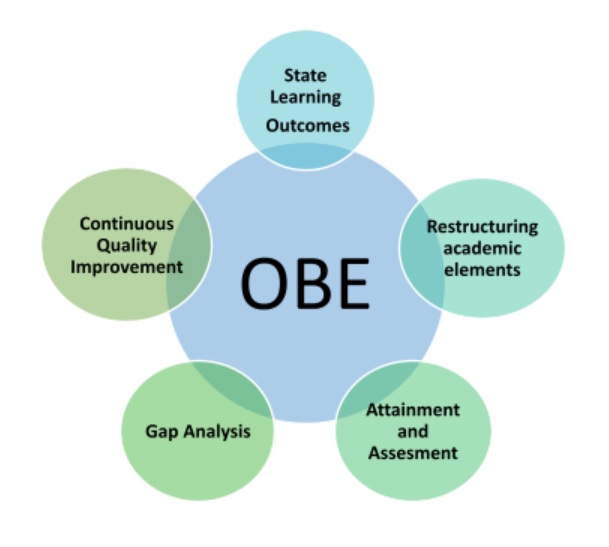
How OBE is a Revolutionary Practice in Indian Higher Education System
OBE has been adopted by the majority of countries around the world. The signatories are obligated to implement the programme outcomes in accordance with the benchmarked outcomes set forth by the Washington Accord (WA) to make the Indian Higher Education system at par with the global standards.
The OBE paradigm is more focused on clear understanding of the ultimate result to achieve for both students and teachers. Students and teachers have a clear understanding of their learning outcomes that allows them to plan and streamline learning activities to actualize the desired outcomes.
OBE is a flexible learning approach where learning becomes skill-based, and teachers are able to create lessons and practises to meet the requirements of their students. Unlike the rigid traditional education system, OBE is mostly student-centered, with teachers serving as guides who promote student involvement at each learning stage. Students self-govern their learning and take greater ownership of their learning activities. The assessment practices in OBE are consistent with stated outcomes and more accurate as it allows students to evaluate each other, self-evaluate, and have employers evaluate their performance.
Outcome-based assessment provides educators with feedback and information on the success of the teaching and learning techniques they use in the classroom. This has a positive and significant impact on the creation of more responsive and adaptable teaching strategies that assist students in achieving their educational goals.
Role of iCloudEMS in technological accomplishment of OBE framework in Higher Education institutes
iCloudEMS has a unified cloud-based platform that assists institutions and teachers in defining outcomes, mapping assessments, implementing course correction methods, and tracking outcome achievement. Today most accreditation and regulatory authorities choose OBE to assess an institution’s quality standard, OBE platforms are in high demand among higher education institutions. We have designed NBA and NAAC-related OBE modules to meet this high demand and streamline difficult procedures.
We provide stepwise digital assistance in defining, mapping, and tracking all the learning outcomes including Program Outcomes (PO), Program Specific Outcomes PSO, Course Outcomes (CO).
You can get the details of these outcomes in our other OBE related blogs
iCloudEMS ensures a paperless approach to encourage the environment sustainability in Higher Education Institutes, moreover we take care of all the assorted needs of stakeholders to obtain and compile the OBE friendly data and reports with a couple of clicks only. Our following revolutionary products and services guarantee the seamless management of all the administrative and no-administrative operations in Higher Education Institutes.
- A cloud-based server that can store a vast amount of data and records for convenient record management, allowing teachers to monitor the progress of their students’ course outcomes.
- Time-saving solutions that automate attendance records, timetable creation, assignment publishing, and results reporting for faculty personnel.
- Digital strategies for course selection and allocation that support the Choice Based Credit System and encourage a flexible and dynamic learning culture.
- OBE-LMS promotes outcomes-oriented learning by offering engaging course content and assignments using a creative result designing and mapping process.
- The implementation of OBE has become critical in lubricating the accreditation wheels in Higher Education Institutes, and our Accreditation Management System automates and aligns the accreditation preparation work under the OBE model.
- Student-lifecycle management system that enables students to access their whole academic experience with only a few clicks, enabling student-centric learning and encouraging the Continuous Quality Improvement ecosystem.
- Online Classes and Examinations system to promote strategic execution of OBE in all pre and post examination activities, ranging from the preparation of question papers to the publication of final results, all of which are concerned with the design and mapping of all components with predetermined outcomes.
- A user-friendly and cost-effective portal with rich reporting capabilities for quick statistical analysis at all levels.
Finally, it can be concluded that, to embrace OBE’s fundamental goals, everything in educational processes and systems should be based on results; outcomes that go beyond academics and reflect real-life characteristics in youth to enter the workforce as professionals. iCloudEMS stimulates the redesigning of various academic elements including outcomes-oriented teaching and learning, as well as assessment tasks, to ensure that students are prepared not just for academic achievement, but also for life success.

The Relevance of Formative and Summative Assessment: Enhancing Transparency in Evaluation by Using iCloudEMS
The term ‘Evaluation’ is an embodiment of a specific and transparent process of assessment of the performance of the learners of a specific course/program in the educational Institutes, for a specific program that aims to measure the potential, abilities, and skills of learners in the areas of cognitive approach of understanding or comprehending a subject or course or program in an effective way. However, the process of assessment facilitates both the course instructors as well as learners to monitor their progress towards achieving learning objectives and the desired goals conforming to the course syllabi/curriculum and expectations or visions of the institute. Generally, there are two types of assessments to measure the progress of the learners—A Formative Assessment and A Summative Assessment.
A Formative Assessment procedure refers to the teaching-learning and the assessment tools used throughout a class or course that help both the assessor and the assessed identify misconceptions, struggles, and learning gaps, while assessing and finding out ways to overcome or eliminate such gaps. A Formative Assessment process also facilitates learners to take ownership of their learning styles or give independent ways of learning styles when they understand its goals to pace and improve learning styles or achieve learning outcomes. Preferably, formative assessment strategies facilitate teaching and learning simultaneously. Nicol and Macfarlane-Dick suggest a Seven Principle Model (2007) that can enrich instructor’s strategies while rendering formative assessment to maintain transparency in evaluation, motivate learners, and enrich their learning experiences:
- Keep clear criteria for what defines good performance
- Encourage students’ self-reflection
- Give students detailed, actionable feedback
- Encourage teacher and peer dialogue around learning
- Promote positive motivational beliefs and self-esteem
- Provide opportunities to close the gap between current and desired performance
A Summative Assessment helps the course instructor evaluate learners’ learning potentials and styles, comprehension, knowledge gained during interaction or learning of the course, proficiency, or success after the completion of a unit, course, or program. Further, Summative Assessments are almost always formally graded and often heavily weighted (though they do not need to be). Summative assessment can be used to great effect in conjunction and alignment with formative assessment. Because summative assessments are usually higher stakes than formative assessments, it is especially important to ensure that the assessment aligns with the goals and expected outcomes of instruction. The following points may be considered for deliberation on the process of summative assessment to maintain transparency in evaluation, and motivate learners:
- Use a Rubric or Table of Specifications
- Design Clear, Effective Questions
- Assess Comprehensiveness
- Make Parameters Clear
- Consider Blind Grading
The above pointers pertaining to the formative and summative assessment of learners clearly indicate that they are not only different in nature, but they also require separate strategies and plans to maintain transparency in the assessment of learners’ performance. The course instructors, therefore, need to design activities, tests etc. by considering their separate roles.
The Role of the Digital Platform—iCloudEMS in Enhancing Transparency in the Process of Evaluation and the Stakeholders’ Feedback
In the recent years, the Digital Platform—iCloudEMS has not only proved to be an integral part of the Education Technology (ET) to support the young and vibrant learners of the 21st century fulfill their dreams, but it has also focused on the universal call for education to all for the betterment of humans. It has bridged the gap between the academic institutes and the learners or parent or stakeholders by facilitating them with the free access to view the learners or wards performance at any time and anywhere. Further, it has eased the process of evaluation or assessment of the different courses or programs offered by an academic institute and supported the academic institutes showcase transparency in evaluation to enhance the confidence of the learners, guardian, and stakeholders. However, the iCloudEMS facilitates the following needs of the learners:
- The iCloudEMS plays a pivotal role in assessment of learners. It facilitates course instructors’ parental access to schedule activities appropriate for assessment (formative/summative as applicable) of learners. With its unique feature, parents and guardians can have access to their wards’ assessments.
- The iCloudEMS fosters diverse assessment options to the learners who come from diverse socio-cultural, economic, and educational backgrounds. With the support of the multiple formats, course instructors get the choice to design activities like short quizzes, Multiple Choice Questions (MCQs), basic questionnaires, warm up activities and other assessment activities. Similarly, learners have multiple formats for uploading their work like PDF, Screenshots, Podcasts, Videos by using the iCloudEMS as a digital platform.
- Further, being a digital platform, the iCloudEMS backs up the data of the learners to track their performance as well as the data of their assessment and attendance that helps the course instructors to be vigilant to learners’ progression with learning assignments. In this way, learners with weak comprehension or who need extra or remedial classes can easily be identified by the course instructors to plan the remedial/revision classes for them. Consequently, intelligent, brilliant, meritorious, and intelligible learners get motivated to participate in extracurricular activities for the development of their overall skills focusing on their personality.
- The students can check and verify on their own whether they have done it correctly or not and if they find that they have not done correctly, what is the correct method from the iCloudEMS portal. Moreover, the faculty can also upload the short questions and the probable answers for the same. It can appear to the learners if somebody writes a wrong answer.
- The learners can also view the Automatic attainment of formative and summative assessments. It can happen automatically based on the input provided in the beginning. The learners need not to do the cumbersome calculation for all the papers and all the examinations.
- The records of all the stakeholders including the industry can also be seen at any time and anywhere consequently, they can identify the attainment level of all the desired skills required by the industry.
- Finally, the iCloudEMS develops confidence among the learners as well the course instructors by providing a transparent digital feedback Management System. The learners can view their results and feedback of formative and summative assessments easily. The feedback and the results can also be shared to the parental page consequently, the parents have the opportunity to view the course-wise result of their wards. Moreover, the formative and summative assessment records become a permanent part of the learners’ aspirations and it is also stored for the permanent record of the institution for future perusal.

How Accreditation stimulates and appreciates the Quality and Excellence in Higher Education
In today’s globalised world, quality higher education is required to foster creativity, talent, innovation and research attitude in youth but under present dynamic situations, it is critical to guarantee that the educational institute accomplishes the learning outcomes and education meets the minimum criteria. Accreditation, a significant quality assurance instrument, is used to evaluate the national higher education system. Accreditation is regarded as a quality seal that certifies that an accredited institute or programme meets certain criteria. It serves two major purposes: quality assurance and quality improvement. Quality assurance is the process of determining a minimum acceptable standard of quality and performance in the public interest. Quality improvement is the process of providing a service that is designed to improve institutions and programmes through an external review process.
Quality and Excellence in Higher Education
Various people have different perspectives on quality. Nonetheless, everyone understands what “quality” means. The degree of satisfaction expressed by the consumer receiving the service can be used to rate the service’s quality. The definition of quality in the dictionary is “the degree of excellence.” It indicates that a product, organisation, or institution must have some key criteria, qualities, or distinguishing factor that provides satisfaction to the people who use the service. It has to do with people’s feelings of satisfaction and perceptions.
In different contexts, excellence in higher education can mean different things. It can be characterised as demonstrating an institution’s position and academic reputation from the standpoint of students. This, however, is contingent on the experiences of students and the purposes of the institutions. Accreditors have frequently used the phrase “excellence.” to determine the level of quality processes and services provided by institutions in order to ensure the satisfaction of stakeholders. Many accrediting authorities have described quality and excellence as a measurable parameter that include a mix of skills, knowledge, experience. as well as continuous improvement in outputs.
Need of Accreditation in Higher Education
Several events have occurred recently that have altered the perception of quality assurance standards in higher education. These include:
Growth and Development of Higher Education
The broadening of the foundations of elementary and secondary education has emerged from national initiatives to ensure education for all. As a result, demand for and availability of higher education has risen dramatically in recent decades. The fact that higher education is a visible component of society and contributes to national growth and well-being is now universally acknowledged by governments all over the world. Many institutions had to examine and vary not only their course offerings, but also many areas of their internal reorganisation and teaching-learning process as a result of the increased amount of activity and diversity of their student body. To ensure institutional responsibility to funding agencies and other stakeholders, the extent to which relevant institutional efforts adequately respond to changing societal and economic requirements must be examined.
Influence of Technology
Changes in study requirements, teaching and learning arrangements, and areas such as research organisation and university administrative practise have all been influenced by major advancements in information technology. There is a greater emphasis on multi-media tactics for boosting teaching and learning, which necessitates a rethinking of traditional quality assurance structures.
Alternative sources for Higher Education
The introduction of non-traditional higher education providers, such as open and virtual universities, private schools’ growth, multi-campus institutions’ growth, and franchising, has fractured the higher education market. As a result, quality assurance techniques that have shown to be effective for a system of essentially national, government-funded self-accrediting traditional and distant education institutions must be revisited.
Competitiveness on the global avenue
Most higher education institutions have proven to be quite effective and entrepreneurial in attracting students from both within and outside of their own country. Because there is a clear policy encouraging Indian students to pursue higher education overseas, it has become a significant contributor to India’s external accounts through fees paid by international students and the selling and promotion of services. Many other countries’ universities are likewise interested in enrolling students and delivering services. In a way, educational services are both imported and exported. India today finds itself in an international setting where the quality of tertiary education and research will determine its success.
Keeping all such parameters in consideration, it is believed that India would benefit from establishing a national system of external certification. The policies, attitudes, behaviours, and procedures required to ensure that quality is maintained and improved are referred to as Quality assurance. Accreditation is the process of determining whether or not a certain institution is eligible for a qualifying certificate. The status may have repercussions for the institution (e.g., permission to operate), its students (e.g., grant eligibility), and/or its graduates (e.g., qualifications for specific jobs).
Current Quality Assurance Practices in Higher Education
For the establishment and operationalization of higher education institutions, government organisations such as the University Grants Commission (UGC) and the All-India Council for Technical Education (AICTE) have developed regulations and recommendations. These bodies’ information can be utilised to make quality improvement and assurance decisions based on the data they collect and analyse. The credentials framework outlines the types of awards available in higher education, and apex authorities keep track of recognised programmes and providers.
Universities have internal mechanisms for evaluating new course ideas and promoting staff development, and most have established relationships with other universities to support staff exchanges, research collaboration, and course delivery benchmarking. A variety of mechanisms are in place for assessing and improving teaching, as well as reporting and scrutinising staff publishing and research records. The majority of promotion criteria centre on teaching excellence, research engagement, and community service initiatives.
For a variety of reasons, it has been standard practise to have external assessors conduct programme reviews in order to evaluate the quality of academic activities with that of other leading universities. External reviewers developed a quality assurance mechanism that relies on one or a combination of methodologies, the most important of which are self-studies or self-evaluation, peer review by expert panels, use of relevant statistical information and performance indicators, and service to key groups such as students, graduates, and employers.
Role of iCloudEMS to ensure quality and evaluating arrangements for the effective implementation of strategies for accomplishing specified goals in Higher Education Institutes.
With our innovative products and services, we at iCloudEMS are continually assisting Higher Education Institutes in improving their quality standards. Our Accreditation management system is a cloud-based programme with SIS and other modules that is designed for all sorts of technical and nontechnical Higher Education Institutes and delivers results in compliance with the Washington Accord, LIMA Accord, and Bologna Process.

• Accreditation bodies often demand and analyse data over a couple of years, but manually organizing and formatting such a vast volume of data is a time-consuming operation prone to redundancy and missing data. Our cloud-based technology makes data management and rule-compliant formatting a breeze.
• Accreditation journey starts with self-analysis reports formation only. Our system can generate a range of self-assessment and analysis reports for your institution, such as SER/SAR/AQAR/IQAC/AACSB, with just a few clicks.
• Uploading data to accreditation portals is a pre-requisite prior to a peer team’s visit; our unique features make this process easier, including the possibility to use prefilled data on the portal during the multi-year data collection process.
• There are pre-defined questionnaires in line with different criteria of accreditation bodies, and the answers are requested to be entered through responses to such pre-set questions based on certain parameters. We digitally support in making data and results uploading easier and in the required manner only.
• Self-evaluation is a crucial part of the accrediting process, and reports are more effective than words at communicating findings. Throughout accreditation assessments and qualification analysis, we assist faculty members by automating the preparation of the main self-assessment reports, as well as various supplementary reports.
• Our expert database verification team investigates the standards and criteria to be certified by compiling and managing data in chronological order.
• Using our tiered evaluation approach, institutes can swiftly analyse the benchmarking standards and obtain a fast reckoner on the current situation.
• With only a few clicks, our user-friendly system assists governing bodies in conducting a fair and complete audit of well-organized data and reports.
It can be stated that iCloudEMS provides a well-managed digital environment for automating and simplifying the time-consuming and repetitive accrediting processes. For quality monitoring and improvement, our complete Accreditation management system allows for an error-free mapping of learning outcomes with the institute’s objective and vision. In today’s competitive environment, it’s more important than ever for Higher Education Institutes to invest in a digital partner like iCloudEMS that can align workflow with the institute’s strategic plans to assure quality assurance and improvement on a regular basis.

How iCloudEMS strengthens the digital capabilities of Higher Education with its Online Classes and Examination management system
Technology has proven its true potential by revolutionizing the conventional teaching learning methodologies and bringing the transformation in Higher Education. Our government has never left any stone unturned to leverage technology in stretching the wings of the Education system to make it accessible and affordable for every student worldwide. COVID-19 has accelerated the deployment of the Education Management System to support uninterrupted Education learning and administration. Online Classes and Examination management System is a cloud-based solution that simplifies the administration intricacies of Classes and Examination. It removes the physical barriers in delivering and assessment of student-centric quality education.
Now, let’s understand the importance of Online Classes and Examination system
Online Classes management:

COVID-19 has made the Institutes transform their traditional classroom-led teaching-learning practices with Online or Virtual learning sessions in blink of an eye and the best part is both faculty and students have leveraged the latest technologies to access quality E-learning and Examination. iCloudEMS has offered a plethora of digital possibilities for an enriching learning experience using online whiteboards, video conferencing, learning management system, instant messaging and many more tools to connect students and instructors any time and from anywhere over the internet. We cater the specific needs of learners with our versatile digital resources for both LIVE and recorded sessions to channelize the valuable efforts of instructors towards a flexible and progressive student-centric learning environment. The major advantages of our Online Classes product are:
- We deliver an online platform where both teachers and students are free to arrange their learning according to their mutual preferences and learning styles to fill in the gaps and improve outcomes.
- Our advanced learning methodology tends to promote pupil-teacher and peer networking across borders and cultural boundaries, making it easier to incorporate research and innovation into learning theories.
- We offer online cloud-based documentation and repository that makes 24/7 access to study materials and progress records that facilitates digital governance of learning goals.
- Our system is an economical learning investment that can easily be afforded with reasonable service subscriptions and a one-time hardware expenditure.
Online Examination and Evaluation:

iCloudEMS brings a comprehensive cloud-based Online Examination System that simplifies the myriad of tedious and challenging Examination and Evaluation responsibilities with efficient management of material and human resources. The important features of our product include:
- Automatic scheduling and posting of examination datasheets that eliminates expected scheduling conflicts between exams on the same day.
- Collaborative question paper setting mechanism that makes the faculty members to easily coordinate with each other and higher authorities to ensure outcome-based learning assessment that follows OBE and Bloom’s taxonomy guidelines.
- Automated approach for assigning invigilation duties and exam centre to faculty members on different groups of students that streamlines the administration to conduct multiple exams with many students at the same time.
- Our LIVE proctoring attribute includes fool proof invigilation feature that ascertains integrity of Examination under a reliable digital-driven environment.
- The digital ecosphere safeguards the purity of evaluation by making the answer sheets and results completely immune to tampering.
- We present a labour-saving strategy that minimizes the time of assessment and publishing results under a transparent avenue for all the stakeholders.
The importance of online education and on-demand examination has been advocated in the National Education Policy (NEP) 2020 to encourage skill-oriented learning practices. It galvanizes the use of digital platforms and the latest learning endeavors like national MOOC courses, DIKSHA and SWAYAM to empower sustained quality education globally. Recent unfavorable situations such as epidemics and pandemics have necessitated utilizing ICT-based education while addressing all potential hurdles. iCloudEMS is a game changer and has always been supportive of institutes’ technical demands in order to foster a modern education atmosphere in a digitally driven environment where one can reap the unseen benefits in situations where traditional classroom learning is not viable.

Implementation of iCloudEMS to Ensure Effective Execution of the New Education Policy 2020: Advantages of iCloudEMS in Higher Education Institutes
The twenty-first century has witnessed a tremendous change in every walk of life. The domain of human knowledge is one of them affected by the huge transformation of traditional human life into technology enabled ways of living to excel in rapid growth, creativity, development of critical thinking, and evaluative and cognitive skills. Considering these aspects, the New Education Policy 2020 focused on a holistic approach to education with the slogan ‘light but tight’ regulatory framework to ensure integrity, transparency, and resource efficiency of the educational system through audit and public disclosure while encouraging innovation and out-of-the-box ideas through autonomy, good governance, and empowerment. This National Education Policy envisions an education system that has its origin in Indian ethos. It explicitly believes in transformation of India education system in an innovative way and encourages sustainability into an equitable and vibrant knowledge society, by providing high-quality education to all to prepare India a global knowledge superpower. The aim of education should not only be cognitive development, but it should also aim ta building character and creating holistic and well-rounded individuals equipped with the key skills of the21st century learners. The experiential learning will be adopted, including hands-on learning, arts-integrated and sports-integrated education, story-telling-based pedagogy, among others, as standard pedagogy within each subject, and with explorations of relations among different subjects. Further, the NEP states that the curriculum and pedagogy of the higher education institutions must inculcate a deep sense of respect towards the Fundamental Duties and Constitutional values, bonding with one’s country, and a conscious awareness of one’s roles and responsibilities in a changing world among the learners. The vision of the Policy is to instill a deep-rooted pride in being Indian, not only in thought, but also in spirit, intellect, and deeds, as well as to develop knowledge, skills, values, and dispositions that support responsible commitment to human rights, sustainable development and living, and global well-being among the learners to reflect the image of a truly global citizen. The NEP encourages multidisciplinary and a holistic education system across the sciences, social sciences, arts, humanities, and sports for a multidisciplinary approach to ensure the unity and integrity of all knowledge to enhance competency at the global level. However, the NEP has laid emphasis on the conceptual understanding rather than tradition ways of rote learning or examination-oriented learning. It clearly states the especial attention on ethics and human and constitutional values like empathy, respect for others, cleanliness, courtesy, democratic spirit, spirit of service, self-esteem, respect for public property, scientific temper, liberty, responsibility, pluralism, equality, and justice.
To impart the quality education in the educational institutes and the achieve the goals set by the New Education Policy 2020, the software iCloudEMS plays a significant role in digitalization of learning material, and provides free access anytime, and anywhere. It helps universities and colleges streamline activities—academics, accreditation, admissions, administrative, HR, and outcome-based education. It empowers learners, faculty, and management to collaborate efficiently and use insights effectively, deliver benchmarking quality education while creating personalized learning experience.
Advantages of iCloudEMS to Foster Conducive Learning Environments and Effective Pedagogic Skills
The educational institutes, especially the higher educational institutes aspiring for providing high quality education to the 21st century learners can use this Information and Communication Technology (ICT) based software to achieve the goals of the New Education Policy 2020 and benefit their learners in different ways. Some of the remarkable advantages of iCloudEMS are given below:
- The New Education Policy emphasizes holistic development of learners to instill them with a logical decision-making power, from school education to the higher education and the iCloudEMS foster learning environment and opens avenues to access learning material from anywhere, anytime. Consequently, learners get opportunity to enrich their creative impulse and critical thinking.
- The New Education Policy promotes learners’ cognitive skills and comprehension abilities instead of emphasizing of the traditional ways of rote learning. The iCloudEMS helps learners to transform themselves into cognitive learners by inculcating life skills to interact and compete with the global learners.
- The New Education Policy focuses on learners’ critical, analytical, comprehensive, and competency-based learning skills and abilities. While iCloudEMS supports learners overcome barriers in developing these skills and makes learning strategies easier.
- The New Education Policy envisions on the learner-centric learning environments and iCloudEMS facilities learner-oriented classroom in a unique way. The classic features of the iCloudEMS fulfil needs of learners as well course instructors.
- The New Education Policy promotes outcome-based education where learners and teachers both are aware of the objectives of the outcome based-education, consequently they focus on the desired outcome to make learning comprehensive and effective. The iCloudEMS has been recognized as a milestone in enhancing efficiency and targeted skills of the twenty-first learners.
- As the NEP reiterates on the extensive use of technology in teaching and learning, removing language barriers, increasing access for Divyang students, and educational planning and management, iCloudEMS has proved to be one of the integral tools of imparting teaching-learning activities.
- The iCloudEMS conforms to the NEP (respect for diversity and respect for the local context in all curricula, pedagogy, and policy, always keeping in mind that education is a concurrent subject) and helps the Higher Education Institutes to impart quality education.
- Being one of the technological tools the iCloudEMS established synergy between learners and the course instructors which is core of the New Education Policy 2020.
- The NEP provides flexibility to the learners, so that learners can opt learning programs of their own choice, and thus decide their own paths in life by showcasing their talents and interests. To enrich teaching-learning experience and make learning learner centric, iCloudEMS helps educational institutes to execute the educational strategies of the NEP in an organized way.
- Being an integrated solution to conduct and manage virtual classroom settings and Online examination management for effectual educational activities, the software iCloudEMS fulfills needs of the NEP to conduct online blended and flipped classes. Thus, it caters needs of the stakeholders as well.

How iCloudEMS encourages Blended and Hybrid learning in Higher Education Institutes
The world has adapted many ‘New Normal’ outcomes generated in the light of pandemic COVID-19. Thanks to the advanced Information and technology practices, that have evolved as backbone to renovate the traditional education sector and made it realize its actual potency. Our education administration has shown its unbelievable agility to get trained and leverage the latest technologies in using online platforms to deliver Quality Education and bring the reforms according to the recommendations of NEP 2020 in this challenging time. Blended and Hybrid learning are also the modifications embraced by the Education system to avoid uninterrupted learning in the time of uncertainties.
Difference between Hybrid and Blended Learning
The terms Blended learning and Hybrid learning are used interchangeably most of the time as both incorporate technology in teaching-learning practices to operate efficiently. However, the difference lies in the way to deploy the technological measures; Blended learning is concerned with leveraging technology in classroom learning activities to make the concept clearer and more understandable, while Hybrid learning model is the use of technology to make simultaneous learning sessions available for both the students present in the classroom as well as those present at their own place.
Blended learning is not new model to be adopted, UGC has always put its best efforts to integrate technology in teaching-learning measures of Higher Education System but Pandemic has pushed to implement the same with no other option left whereas Hybrid learning model is an evolved learning model which makes the learning free from any physical barriers by using the digital platform effectively to open the way to explore new technologies to build upon the digital strengths and achieve the learning outcomes.
Higher Education Institutes are required to take a few measures as mentioned below, for the operative implementation of constructive Blended/Hybrid learning that can ensure the quality teaching-learning experience
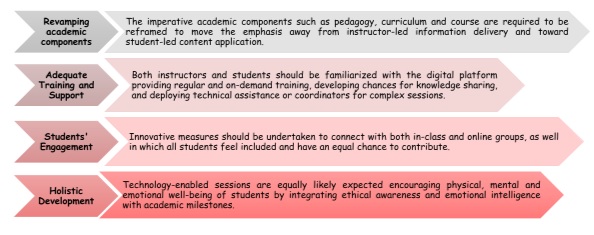
The Online Education System deployed in that time of emergency has made the world reimagine the unthinkable Education practices and future possibilities of using digital tools and technologies to make quality learning available to the student at every part of the globe. NEP 2020 has also advocated some visionary actions to promote the utilisation of technology in teaching-learning methods at Higher Education Institutes. It has recommended incorporating national digital platforms like SWAYAM and DIKSHA to foster multidisciplinary and flexible learning. The establishment of Virtual labs will also encourage hybrid/blended learning in Higher Education Institutes to offer equal access to excellent experiment-based knowledge.
NEP has also emphasised the role of special training and incentives for faculty members to motivate the student-centric learning and advanced pedagogical practices. It has fostered the development of an open, interoperable technology-based infrastructure in the education sector that can provide solutions to the country’s major difficulties, such as India’s size, variety, complexity and improve the digital divide constraints in learning.
Experts have stated that the use of technology driven learning and online platforms will continue to be appreciated and implemented in the post-pandemic Education landscape. Higher Education Institutes are fostered to develop their digital capabilities and explore the benefits of deploying Blended and Hybrid learning model given as:
For the Students:
- Flexible and Self-paced learning
- More engaging sessions than chalk and board ones
- Can govern their own learning.
- Can follow their learning trajectory.
For the Faculty:
- Can be more collaborative and creative than classroom sessions
- Can easily track the learning milestones.
- Can be more time saving than manual handling of academic functions.
- Can experiment with more pedagogical practices for deeper learning.
For the Administrators:
- Can be labour-saving than manual administration.
- Can easily train and upskil the instructors.
- Can have a bird-eye view of academic and non-academic operations anytime and anywhere.
- Better course and faculty management.
Although,the transition of incorporating technology in Education practices brings lot of advantages for every stakeholders yet Higher Education Institutes should prepare themselves to address a few challenges along with such as digital infrastructure that consists of advanced and collaborative digital tools and services to create a secure and updated experience, regular training and support for instructors and students to use updated digital platform and technologies etc.
Therefore a strong technology foundation has become the need of the hour for Higher Education Institutes for achieving the learning goals of the 21st century education system.
iCloudEMS has always taken the utmost care of digital needs of Higher Education Institutes in order to host a digital ecosystem and support student-centered learning. We have always extended our utilities to empower uninterrupted learning experience in every situation. Our primary characteristics that address the technological requirements in the course of implementing Blended and Hybrid learning models in Higher Education Institutes are listed below.
- Cloud-based platform for seamless management of massive data and reports.
- Specialized managed services for the sustenance of Higher Education Institutes’ ERP systems, that brings digital transformation in handling administrative and non-administrative operations in Colleges and Universities.
- We make the course choice and allotment sample for faculty and students under the framework of Choice based Credit System.
- We provide a cloud-based personalised Learning management system to increase student engagement and encourage advanced pedagogy in the teaching-learning.
- Students can access the study material through an online repository using their login credentials, allowing them to learn at their own speed and bridging learning gaps.
- At the end of each topic, rating and feedback systems aid instructors in gaining insights into students’ learning curves and strategic planning of their pedagogical approaches.
- Our interactive Learning Management System (LMS) supports a variety of multimedia formats to help students visualize concepts better.
- Outcome-based education (OBE) has become a must-have for achieving learning objectives. Our outcome-based LMS links teaching and assessment procedures with OBE and Bloom’s taxonomy to assist teachers in the definitive assessment of cognitive abilities of students.
- One of the most essential aspects of education transformation is on-demand examination. The Online Exam Management system provides a disciplined environment for the planning and governance of on-demand examinations while maintaining system integrity.
- Our specialised Student lifecycle management system promotes student-centered learning by integrating a student’s entire academic journey onto a single dashboard that provides an overhead view of the students’ activities and progress, allowing for more efficient tailoring of future plans for students’ overall development.
It can be summarized that in this world of uncertainties, we all are required to learn the way to survive in the digital ecosystem. The fundamental necessity is to strengthen the digital infrastructure of Higher Education Institutes for enriched quality education management without any time or space constraints. Blended and Hybrid learning are tech-integrated models that nourish the 21st century skills in the students in a multidisciplinary culture. iCloudEMS digitally facilitates the organizational and administrative arrangements of Higher Education Institutes to support student-centric and flexible learning that can fulfil the learning preferences and needs of the modern era youth.

How iCloudEMS helps the Higher Education Institutes to manage the entire lifecycle of their students
Students are the core stakeholders in an educational institution; they are the assets of the institutions and they are in charge of bringing distinct vitality to the setting. Once an individual becomes a student of Institution, its responsibility is to make them shine in every sphere of their life by cultivating the bond between students and their alma mater during graduation and beyond. To build a strong relationship that can meet the needs of 21st century students, there must be a well-defined approach towards regular interaction, timely information, and completing the necessary steps to access the actionable data of every student without any time or place constraint.
Student lifecycle is nothing but the whole journey of an individual’s growth in his education ecosystem from being prospective to alumni. This lifecycle of students consists of a myriad of episodes that generate a huge amount of data and many challenges along with regarding compiling and managing such data to achieve great learning outcomes. The meaningful management of the students’ data is the key to attract future generations in an educational institute. Following are the important points of consideration in the path of student lifecycle management:
- Actionable data to access and process anytime and anywhere
- Best action plans to convert the best prospective students.
- Powerful analytical tools to fetch the required statistics.
- Leveraging best available technology for the best possible data management.
Today the main challenge before the Higher Education Institutes is not to get acquainted with the potential of technology to solve their day-to-day complexities while to choose the best product and technology that can keep up with advancements of new needs of student lifecycle management. iCloudEMS is a pioneer of offering advanced technological solutions for seamless resources and workflow management in Higher Education Institutes. Our Student Lifecycle Management System is a comprehensive cloud-based solution to automate and integrate the entire academic journey from inquiry to alumni of all the students in a college or university.
The important functionalities of our labour-saving mechanism include:
Enquiry to Enrolment: Our student lifecycle management system uses interactive dashboards to bring together students, instructors, parents, and administration to guarantee that efficient management of admissions operations. Our cutting-edge features promise to convert potential leads, computerised all pre-admission procedures such as forms, student information, documents, and more. Our intelligent system ensures the enrollment of the right student with complete digital support for all post-admission activities including registration ID, fee payment, document verification, course assignment, roll number, library cards, and so on.
Course Management: Our course management module complies with the UGC and MHRD’s Choice Based Credit System (CBCS) standards. Students can enrol in the courses of their choice to earn the program’s required credits. We present a user-friendly interface for selecting core and elective courses as well as their other characteristics. Our smart utilities categorize students for course delivery, assignments, and evaluation in accordance with the course, regardless of semester or programme.
Examination Management: Our Student lifecycle management system facilitates many pre and post arduous examination related activities for instructors and students, such as hall tickets, room allocation, examination schedule, question paper, final marks, records, and so on in a secure and protected cyberspace taking integrity as a top priority. The live proctoring option in online Exam administration ensures a stress-free exam under close monitoring. We make post-examination processes and result processing simple, quick, and error-free.
Training & Placement: Our smart platform serves as a conduit for contact between students, institutes, and employers. Students can register for regular training and placement updates on the digital platform, and institutes can undertake different connected duties on a unified digital space. It also endorses the employer feedback process, which improves career planning and increases placement possibilities.
Alumni relationship management: Our web-based Student lifecycle management fosters alumni-institute collaboration. We offer cloud-based storage and retrieval of vast amounts of data of former pupils. It allows alumni to provide comments on curriculum and other areas in order to improve the campus in all aspects. Our fast-track interaction services mobilizes and nurtures the relationship with pass outs.
Benefits to the stakeholders: iCloudEMS has always fulfilled its promise to cater the assorted needs of all stakeholders of Higher Education Institutes with its ingenious products and services.
Our ground-breaking Student Lifecycle Management System allows faculty members of Higher Education Institutes to access a centralised database of prospective and alumni students for regular information updates, synchronous data access and processing. It guarantees to save their time and effort in tracking and analysing their pupils’ performance under OBE and Bloom’s taxonomy levels mapping framework.
We offer a centralized cyber platform to students, where they can conveniently update their information for various purposes such as fee payment, hall ticket, and timetable.They will be able to easily post their assignments and receive results via a secure online platform. They have all-time access to their attendance and performance records and can also obtain regular training and placement information.
We deliver an easy-going approach to the parents when it comes to online admissions responsibilities, such as form generation and course placement for their ward. They can get complete insights into their children’s attendance and performance records and can always participate in their children’s learning and other activities.
We make it possible to bring the entire institute under one roof and create a transparent system where management can always have an overhead view of students’ details and progress records.
In a nutshell, it can be stated that with its all-inclusive Student lifecycle management system, iCloudEMS aids Colleges and Universities in accessing and processing a plethora of information with a few clicks, anytime and everywhere throughout all students’ academic journeys. It provides a technologically advanced ecosystem for administration and students to streamline student recruitment and management, allowing them to focus their time and energy on more innovative aims.

Role of iCloudEMS in Enhancing efficiency of Higher Education Institutes in the Era of Digitalization of Higher Education: A Glance
Digitalization of Higher Education: A Brief Overview
In the last two decades, particularly at the turn of the twentieth century, the advancement in science and technology transformed higher education. The Education Technology (ET) with the help of Information and Communication technology (ICT) democratized higher education, consequently it brought learners to the global platform where they can exchange their knowledge. Considering the advancement of science and technology, the governments of the different countries have access to higher education, regardless of their gender, ethnicity, or social, geographic, or economic background. They emphasize that education should facilitate good access to labor and skills across the country. Lifelong learning is important in order to help not only individuals but also society and the labor market at large to adapt and innovate in the different domains of human knowledge. However, the process of digitization opens avenues for access to education and for cooperation. Further, new, innovative, and varied forms of teaching and learning are being used in regular campus-based courses by combining analogue and digital media (blended learning), and new models are being provided for purely online-based learning processes.
The process of the digitalization of higher education is recognized as an efficient, diverse, and robust sector in almost every country in the world. It has become a tool for making fundamental changes to the processes, content, and forms of work that can present higher education in a better position to achieve the goals of education and research including high quality and relevance, and access to education for all. In this connection, Open Educational Resources (OERs) are the best examples which can be accessed anytime, and anywhere. OERs can be reused, revised, retained, remixed, and redistributed.
The primary goals for digitalization of higher education and ICT in the higher education may be identified as:
- High quality in education and research
- Research and education for welfare, value creation, and adaptation
- Good access to education
- An efficient, diverse, and robust higher education sector and research system
However, in order to meet the above goals, the process of digitization of higher education, and ICT in the higher education must support the following goals:
- Course Instructors have high levels of digital and pedagogical skills (knowledge of how to use digital tools to promote learning in their subjects).
- Course Instructors can exercise their choice for a wide range of applications and digital tools and services that support the implementation of education, from planning, through teaching itself and interaction with students/stakeholders both internally and externally, to take a follow up and evaluation of students at individual and group levels.
- Teachers can be encouraged to focus on the development of higher education-oriented activities by collecting documented results in the field of education.
Significance and Advantages Roles of Integrating iCloudEMS in Digital Higher Education
The iCloudEMS facilitates digital learning in higher education. The different significant functions of iCloudEMS have enriched the teaching-learning environment in the students-centric classrooms of the twenty-first century. It not only helps the course instructors and learners to maintain learning processes or make learning happen smoothly, but it also diminishes the distance between the teacher and the teacher, by supporting and connecting both digitally. In recent years, iCloudEMS has played a significant and key role in the digitalization of higher education. The major advantages of this software include— transforming universities and colleges by helping them become digital, which leads to enhanced quality education, personalized learning, blended classroom experience, learner-centric classroom and higher industry collaboration, driving newer revenue streams and increasing productivity of all stakeholders – Students, Faculty, Management, Accreditation bodies, Alumni and Industry experts.
The software, iCloudEMS governs digital space to automate and simplify the tiresome and redundant activities of accreditation. The comprehensive Accreditation Management System of iCloudEMS enables an error-free mapping of learning outcomes which further aligns with vision and mission of an institution. It enables faculty members to be more creative and channelize their efforts in a more productive way as we are here to take care in aligning their workflow in compliance with the visionary requisites and guidelines. Consequently, the enhanced efficiency of the institute deliberates on the quality monitoring and improvement.
In the 21st century, marked as an era of competitive environment, it is essential for Higher Education Institutes to invest in a digital partner like iCloudEMS that can align the workflow with the visionary strategies of the institute to ensure quality assurance and enrichment of efficiency of its employees, staff, learners etc.
- iCloudEMS has a dashboard entry of students’ databases with all their necessary personal and academic details at the admission stage that can be easily fetched any time for maintaining and updating records.
- Manages services to the ERP of Higher Education System to automate and simplify the administrative and non-administrative tasks of Colleges and Universities.
- iCloudEMS has an automatic timetable generation system to prepare multiple types of timetables i.e., class wise, room wise, faculty wise without any clashes and redundancy.
- Personalized learning management system to create an online repository of lecture notes and facilitates other study material that can be easily downloaded for documentation of course files.
- The Online Examination system of iCloudEMS fosters examination process and makes the evaluation procedure easier. It reports in the OBE paradigm including all imperative COs-Pos, mapping analytical reports to gauge the abilities of students and empower continuous quality improvement.
- Semester-wise mapping and evaluation of students’ performance against PO parameters.
- Incorporate direct/indirect assessment tools to measure the attainment of each PO.
- More focus is on rote learning than the achievement of 21st century competencies.
- Map COs with POs appropriate to the levels of Bloom’s Taxonomy
- Develops appropriate ICT based and learner-oriented Pedagogy Framework Tools to enhance efficiency of course instructors to design, develop, monitor and review curricula based on the stakeholder’s /Industry / Expert feedback.
- Includes references to appropriate learning material for all the defined outcomes, and integrates case study, unsolved problems, and resources in the respective outcomes.
How Outcome-based learning can advance the knowledge and skill in youth
Outcome-based education (OBE) is a visionary objective to bring reform in higher education for the upskilling of students according to the demands of 21st century society. Our traditional education system is more focused on rote learning and less emphasis is given to improve the skills of students including communication skills, interpersonal skills, analytical skills, working attitude etc. that enable them to meet the global demands of the 21st century. OBE is a student-centric education paradigm that measures the students’ progress in terms of predefined outcomes so as to attain knowledge, skills and attitude to compete with their global counterparts.
Implementation of OBE framework
In the world of multidisciplinary and flexible learning, it is essential to encourage the effective implementation of Outcome based education models in Colleges and Universities. To implement the OBE model, the first step is to outline a set of learning outcomes and once the outcomes are structured, all the imperative components and activities of learners are framed in line with the desired outcomes and the learners are encouraged to demonstrate the outcomes to gauge their learning achievements.
OBE framework consists of following components:
- Vision and Mission
- PEOs
- POs
- COs
Program Educational Objectives (PEOs): Program Educational Objectives (PEO) are predefined attributes or qualities or specific goals that students are expected to demonstrate in their career and professional life after the completion of program. These objectives are framed by taking inputs from the industry partners, students, parents, alumni, faculty and administration and are synced with the Vision and Mission of the department.
Program Outcomes (POs): POs are narrow statements that give the competencies, knowledge and behaviour attributes of students through the journey of their learning program.
Course Outcomes (COs): COs are statements which are more specific to the courses/subjects and are narrower statements that describe the learning expectations from students at the end of each course.
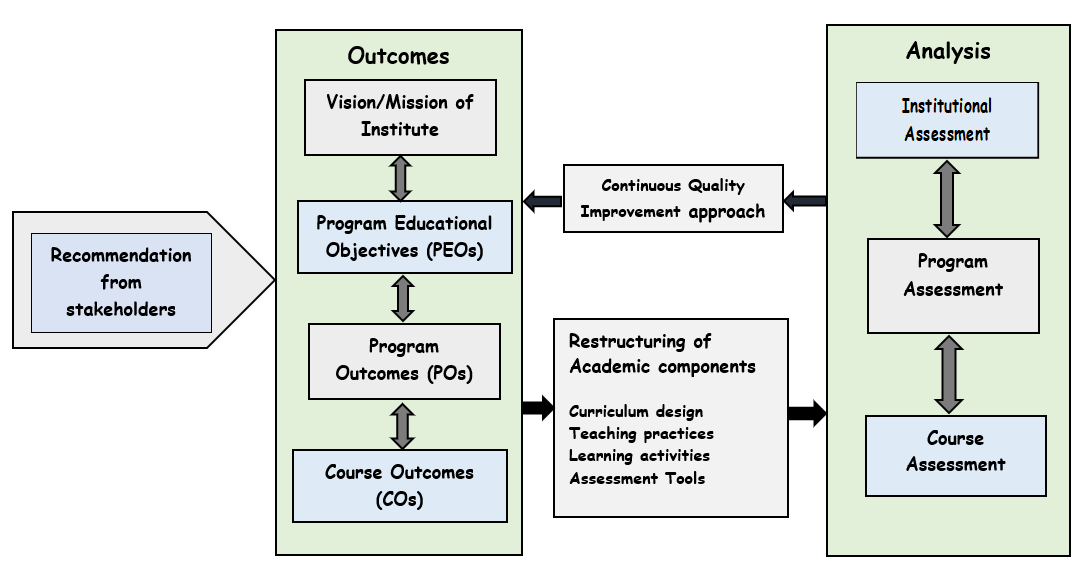
OBE Framework
After the course outcomes have been determined, the assessment techniques must be devised to measure the attainment level of stated outcomes. Assessment is necessary to govern whether a student or learner has achieved the goals set for him. The outcomes will be used as a feedback approach to maintain and enhance the quality in the future. Depending on the desired course outcome, an appropriate assessment method must be chosen.
Analysis of OBE model
The analysis under OBE implementation constitutes Direct and Indirect assessment methods to gauge the learning abilities of students. Direct Assessments measures are devised by the faculty to analyse how well the student has learnt. Direct assessment procedures include assignment, exam, term paper, project, Laboratory Tests, Quizzes etc.
Indirect assessment measures are more concerned with the student’s perspectives, than how well he has learned the course. Unlike Direct methods, under which evidence of students’ learning are collected in the form of results, indirect measures require the faculty to infer the cognitive abilities of students from feedback, surveys, teaching evaluations etc.
Attainment and Mapping of Learning Outcomes
COs are framed for each course by its respective faculty member using the appropriate action verbs from Bloom’s taxonomy from the first year to the end of the programme Then, using predefined correlation values a mapping matrix is created between COs and POs, under which value 3 is assigned, if the CO matches strongly with a particular PO criterion; 2 if it matches moderately or 1 if the match is low else mark with “ – ” The total attainment of a program’s outcomes (POs) is calculated by combining direct and indirect attainment numbers in a predetermined proportion and comparing them to a set value. Any differences from the target value calls for the quality improvement measures.

There are many benefits of OBE including:
- The structuring of outcomes and its analysis of attainment increase the commitment and participation of all stakeholders.
- The clarity of learning outcomes, makes the room for teaching practices to be more creative and result oriented.
- The OBE implementation in Colleges and Universities enhances international recognition and job chances on a global scale for graduates.
- Graduates with professional and soft skills, social responsibility, and ethics are more employable and innovative.
- The OBE paradigm empowers the graduates to flourish in their fields and reach new heights in their jobs and studies.
Technological OBE implementation in Higher Education Institutes
OBE has become the buzzword in the skill-oriented education system. Every Higher Education Institute is following the progressive OBE implementation path to produce the young mind who can add value to the society. But its implementation introduces challenges of exhaustive designing and mapping of learning outcomes at each stage for each student. But today technology has the solution to nearly all organizational problems. iCloudEMS is a pathfinder for all education management issues. We have come with the ground-breaking solutions to enhance the digital capabilities of Higher Education Institutes for OBE administration and accelerate continuous quality improvement. Our pioneering products and services are designed to achieve high standard in both administrative and non-administrative operations that include:
- A cloud-based server that can hold a large number of data and records for easy record management, allowing teachers to track the learning status of their course outcomes.
- Innovative technologies enabling faculty members to save their time by automating attendance records, timetable creation, assignment posting, and results reporting.
- Course selection and allocation strategies that support Choice Based Credit System and empower a flexible and progressive learning culture.
- With a creative outcome designing and mapping methodology, OBE-LMS helps to promote an outcomes-oriented learning by providing interesting course content and assignments.
- Implementation of OBE has become essential to oil the wheels of accreditation in Higher Education Institutes and our Accreditation management system automates and aligns the preparation work for accreditation under OBE model.
- Student-lifecycle management system that allows students to access their whole academic experience with a few clicks, empowering student-centric learning and fostering the Continuous Quality Improvement ecosystem.
- Online Classes and Examinations system to promote strategic execution of OBE in all pre and post examination activities, ranging from the preparation of question papers to the publication of final results, all of which take care of designing and mapping of all components with predetermined outcomes.
- A cost-effective and user-friendly portal with robust reporting options for rapid statistical analysis at all levels.
Thus, OBE is a paradigm shift in the education system that is focused on successful learning and demonstration of knowledge, skills, abilities, values, leadership and judgement by students. In a convocation event held in a university it was well said by Shri Prakash Javadekar, MHRD that “Education should not just be input-led, but also be outcome-based”. He also added that “We can judge it by sensing whether the students, who have passed, think only of themselves or whether they think of the society also, whether they are good citizens and whether they are inculcating values to make society better,”
iCloudEMS facilitates college administrators towards the methodical execution of all strategies and workflow under OBE ideology. We offer cloud capabilities to simplify error-prone and hectic analysis and mapping of COs, POs and PEOs. Our powerful analytic and reporting tools ensure the access of outcomes attainment at the fingertips of stakeholders.

A guide on various aspects of Accreditation and how iCloudEMS automates the groundwork of Accreditation for Higher Education Institutes
India has the largest pool of Universities and Colleges to offer Higher Education but with the increase in the number of Higher Education Institutes, the responsibility also gets increased to maintain quality and standards in education. Globalization has removed the boundaries of learning and innovation; thus, exceptional strategies and efforts are necessary to integrate the Indian education system with world-class regulations such as to explore its true potential. The 21st century education system demands improvement in many horizons of our education system including trained staff, infrastructure, facilities, curriculum, assessment that can develop youth with the competencies such as critical thinking, communication skills, research, problem solving skills etc. Our government has brought many meticulous reforms for the development of a globally competitive Higher Education System and encouraged us to make India, the preferred global destination for higher studies.
Accreditation and its need: The modern education system is more focussed on the holistic development of students that can inculcate professional and technological skills to make them capable of entering in the challenging world. The quality of education standards is required to be raised or maintained continuously to meet the academic demands of the 21st century. Accreditation is a self-raised process of an educational program or institution that involves a systematic mechanism to ascertain that they meet strict quality operational standards.
While enrolling for a program in an institute, accreditation is the important aspect to look for the reliability of a degree program or institute to check, whether or not the services meet or exceeds minimum quality standards that becomes helpful to student for choosing recognized institution or program.
Some Important Accreditation Bodies Include:
- UGC (University Grants Commission)
- AICTE (All India Council for Technical Education
- AIU (Association of Indian Universities)
- NAAC (National Assessment and Accreditation Council)
- NBA (National Board of Accreditation)
- NIRF (National Institutional Ranking Framework)
- AIMA (All India Management Association)
- DCI (Dental Council of India)
- DEC (Distance Education Council)
- MCI (Medical Council of India)
- NCTE (National Council for Teacher Education)
- PCI (Pharmacy Council of India)
- VCI (Veterinary Council of India)
- NCHRH (National Council for Human Resource in Health)
The Process of Accreditation is more or less the same for all accreditation bodies. Generally, the whole process includes following phases from registration to results:
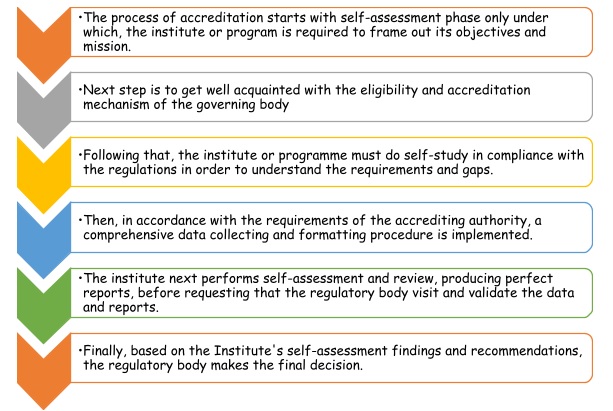
Importance of Accreditation: Accreditation plays a significant role due to following reasons: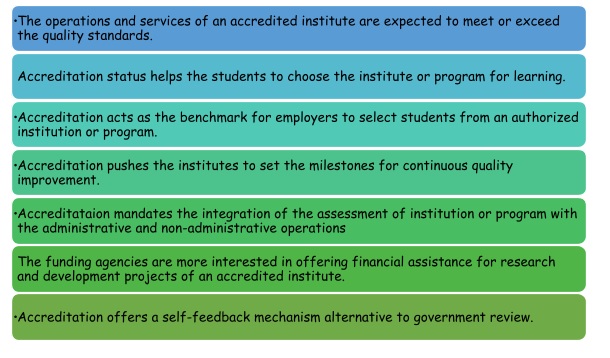
With reference to the above context, one can easily observe the potential of accredited institutes to ensure accountability in the institutes among students and families for their upskilling and advance learning. To achieve the best place in accreditation, institutes are required to undergo rigorous processes for data and reports compilation. We at iCloudEMS are always assisting Higher Education Institutes in upgrading their quality standards with our ingenious products and services. Our accreditation management system is a cloud-based software
which includes SIS and other modules, and is designed for all types of technical and nontechnical Higher Education Institutes, delivering results in accordance with the Washington Accord, LIMA Accord, and Bologna Process.
- Accreditation bodies typically require an analyse data span of several years, but manually organising and formatting such a large amount of data is a laborious process that is prone to redundancy and missing data. Our cloud-based system makes data administration and formatting compliant with rules much easier.
- With only a few clicks, our system can generate a variety of self-assessment and analysis reports, such as SER/SAR/AQAR/IQAC/AACSB, that are necessary for your institution.
- Today, it is essential to upload data to accreditation portals prior to the visit of a peer team; our unique functions make this process easier, including the ability to use prefilled data on the portal during the multiple-year data collection process.
- The information is primarily requested to be entered via responses to a few predetermined questions with respect to different criteria. Our system facilitates the data and results uploading in the same approach.
- Examining one’s own abilities is an important step in the accreditation process, and reports communicate results more effectively than words. We help faculty members by automating the generation of the main self-assessment report, as well as various supporting reports, during accreditation assessments and qualification analysis.
- Through the compilation and management of data in chronological order, our skilled database verification team examines the standards and criteria to be confirmed.
- Institutes can quickly examine the benchmarking standards and acquire a ready reckoner on the present state using our tiered evaluation procedure.
- Our user-friendly system helps the governing bodies in fair and thorough audit of well-organized data and reports with a couple of clicks only.
It can be concluded that iCloudEMS offers well governed digital space to automate and simplify the tedious and repetitive activities of accreditation. Our comprehensive Accreditation management system enables an error-free mapping of learning outcomes with the institute’s mission and vision, for quality monitoring and improvement. Today in the competitive era, it is the best time for Higher Education Institutes to invest in a digital partner like iCloudEMS that can align the workflow with the visionary strategies of the institute to ensure quality assurance and improvement on a regular basis.
